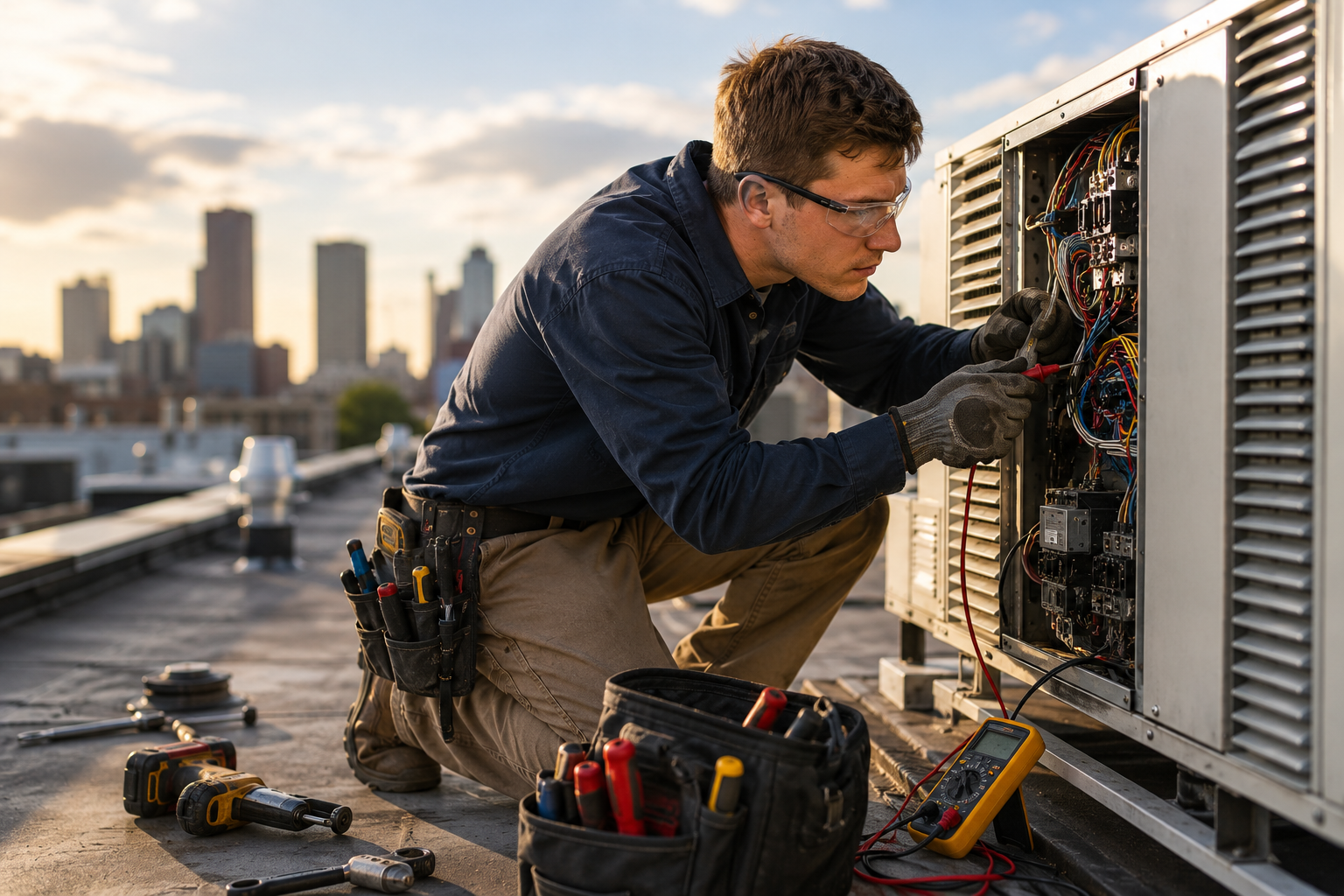
Cale Mouser uses a computer. He is not trapped inside one.
At 23, he repairs diesel engines, teaches diesel technology at North Dakota State College of Science, and has built a career many college graduates are still trying to find. His work is not just physical. It is diagnostic. A tractor, a truck, or a 53-foot semi comes in with a problem, and the question is not simply what the screen says. The question is what the machine is actually doing.
Recently, Mouser told The Guardian, he diagnosed a transmission problem “where the computer didn’t even know anything was wrong.”¹
That may be the part of the future Gen Z is beginning to notice: the jobs that survive AI are not necessarily the jobs furthest from technology.
For a long time, the safest advice sounded like a map out of physical work. Go to college. Get the degree. Find the office. Sit at the screen.
Now the screen looks less safe.
That may be one reason more young people are looking toward the trades. This spring, undergraduate certificate programs grew sharply, while graduate enrollment softened. Programs in repair, mechanics, and health fields drew more students. The financial logic is not hard to see. A certificate or associate path can mean less debt, earlier wages, and a skill that does not live entirely inside a laptop.²
But the interesting question is not whether Gen Z is right to look at the trades.