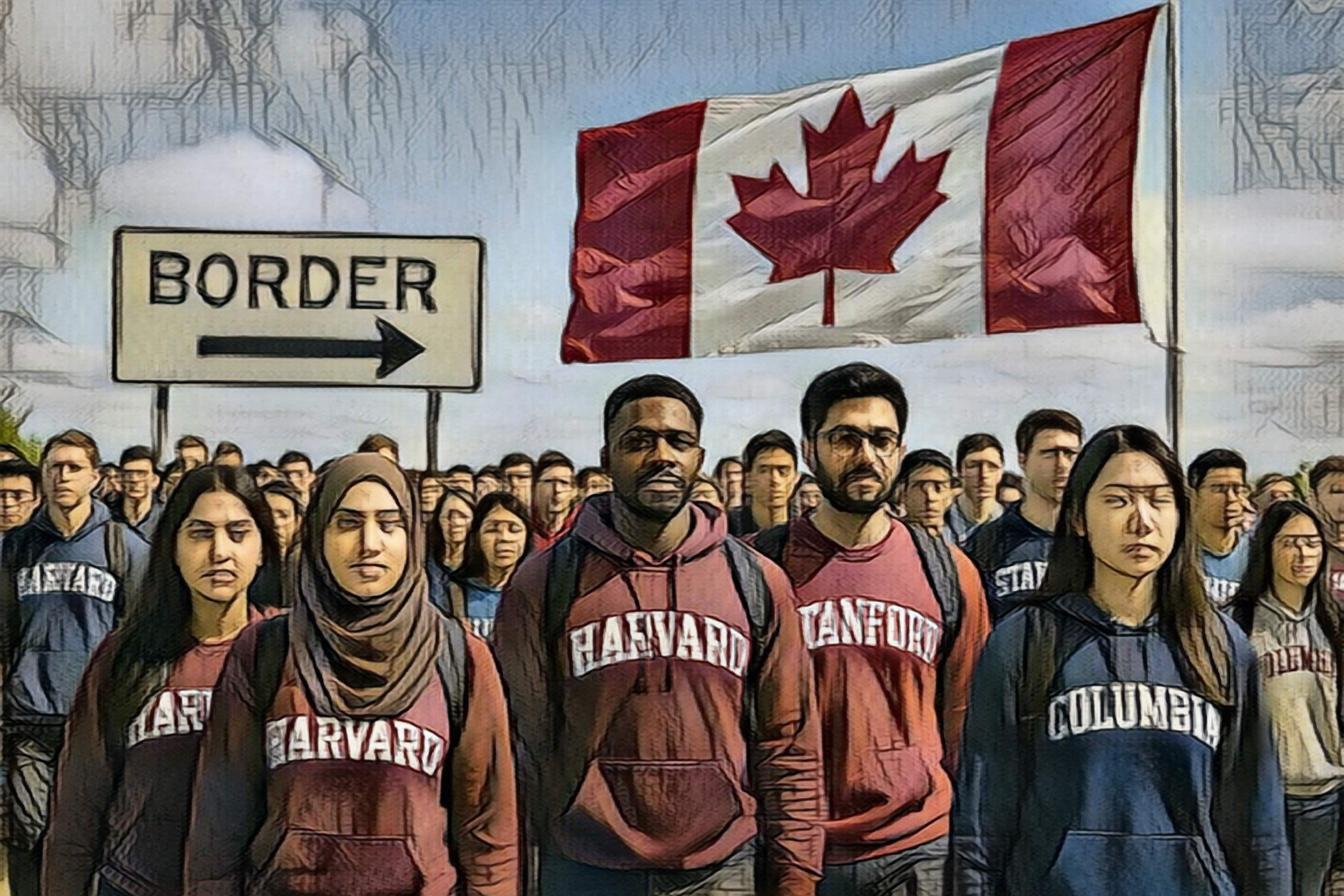
Day 98. Harvard sued the U.S. government. Overnight, international students were stripped of their visas. By noon, three Ivy League departments and a biotech CEO were on the line with Canadian immigration. Same question, different voices: How fast can you get our people in?
America was locking out its talent. Canada had an opportunity
“Every time the U.S. slams a door, Canada should be holding one open—with a scholarship, a job, or a lab key.”
Since late March, more than 1,000 international students across 160 U.S. campuses have had their visas revoked or their status terminated. The policy—dressed in the language of “national security”—has gutted classroom rosters and sent researchers scrambling for safe harbor. Canada, if it moves fast and smart, could turn this moment into a windfall of talent and economic growth. But the window is narrow, and the stakes are high.
As the American academic exodus gathers steam, Canadian institutions are quietly making moves.
By the time Stanford canceled its visiting scholar program, Montreal’s AI sector had already onboarded dozens of displaced postdocs from Berkeley. Waterloo and McGill were holding quiet conversations about dual-degree programs that bypass the provincial attestation bottleneck. The model is simple: split residency, shared supervision, double the prestige—and tuition.
“A well-structured cotutelle program turns a displaced PhD into a cross-border asset.”
The tuition dollars aren’t trivial. Under one such partnership, domestic doctoral students pay $28,000 annually while accessing U.S. labs and corporate sponsors. Quebec’s 2024 pilot did more than waive red tape. It brought in $4.2 million in tuition and projected $18 million in lifetime tax contributions from just 200 students. One year. One loophole. That’s the math.