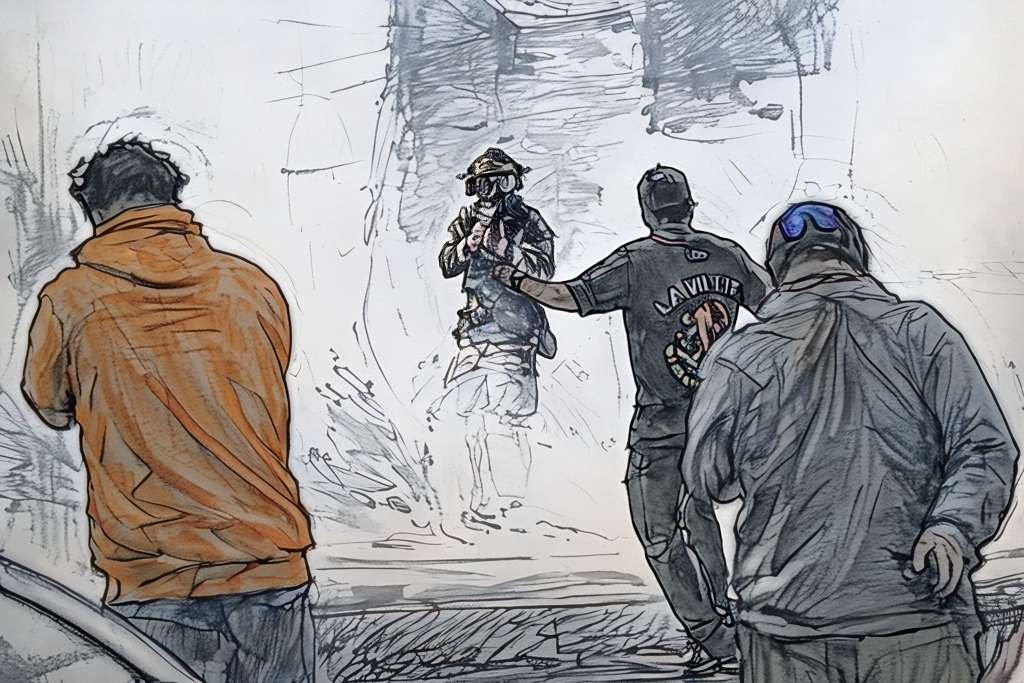
The first thing you notice at Broadview isn’t the shouting, it’s the wind. It knifes across 25th Avenue, lifting cardboard placards that say “No Kings, No Camps,” and scuttling empty water bottles toward the ICE gate. The fence still smells faintly of pepper spray, even a week after the last dispersal. Someone’s chalked the word “Rebellion?” in pink near the curb. The “free-speech” zone, demarcated by city barricades and a federal injunction, is just wide enough for a brass band and a priest.
Mayor Katrina Thompson stands beside a generator-powered floodlight, coat zipped to the chin. “We didn’t choose to have this facility in our community,” she says again, voice even. “But it’s here. And so are Broadview residents.” The cameras catch the quote. They don’t catch the scent—tear gas lingering in the seams of the pavement—or the moment a state trooper wipes pepper foam off his own visor. This time, the agents stayed back.
“A protest does not become a rebellion—merely because of sporadic and isolated incidents of unlawful activity.”¹ The Seventh Circuit’s opinion arrived with surgical understatement, parsing 10 U.S.C. § 12406 (the statute that governs when the President can federalize state National Guard troops in rebellion or crisis) like a blueprint for what didn’t happen. Protesters didn’t breach federal buildings. Police weren’t overwhelmed. The court described crowds “never exceeding 200,” a single spike to 300. The most violent night? Sept. 26, when federal agents deployed gas and pepper balls against a line of clergy and neighbors, then claimed the protests showed “extraordinary risk.” The court disagreed.
“Political opposition is not rebellion.” That line—quiet, clinical—became the week’s refrain.
Inside the sealed court filings, affidavits from Broadview Police documented quick containment. DHS officials admitted they didn’t need to intervene the following week. ICE’s own logs showed record removals during the protests, hardly the picture of a system paralyzed by unrest. Mid-October saw local officers return to regular rotation—no Guard, no joint command.