The mystery behind Burnt Jacket Mountain’s new owner reveals more than a land sale—it exposes the fragile threads holding a community to its place
The first cold snap barely showed itself—just a skim of frost on the ferns—but it changed the woods in the way only Mainers notice. Burnt Jacket Mountain gave off that unmistakable smell of old lumber warming in thin sunlight, a resin-sweet breath rising from the forest floor. Beverly Burgess caught it before she caught sight of anything else. She always led with her nose; her son used to say she could smell November before the calendar did.
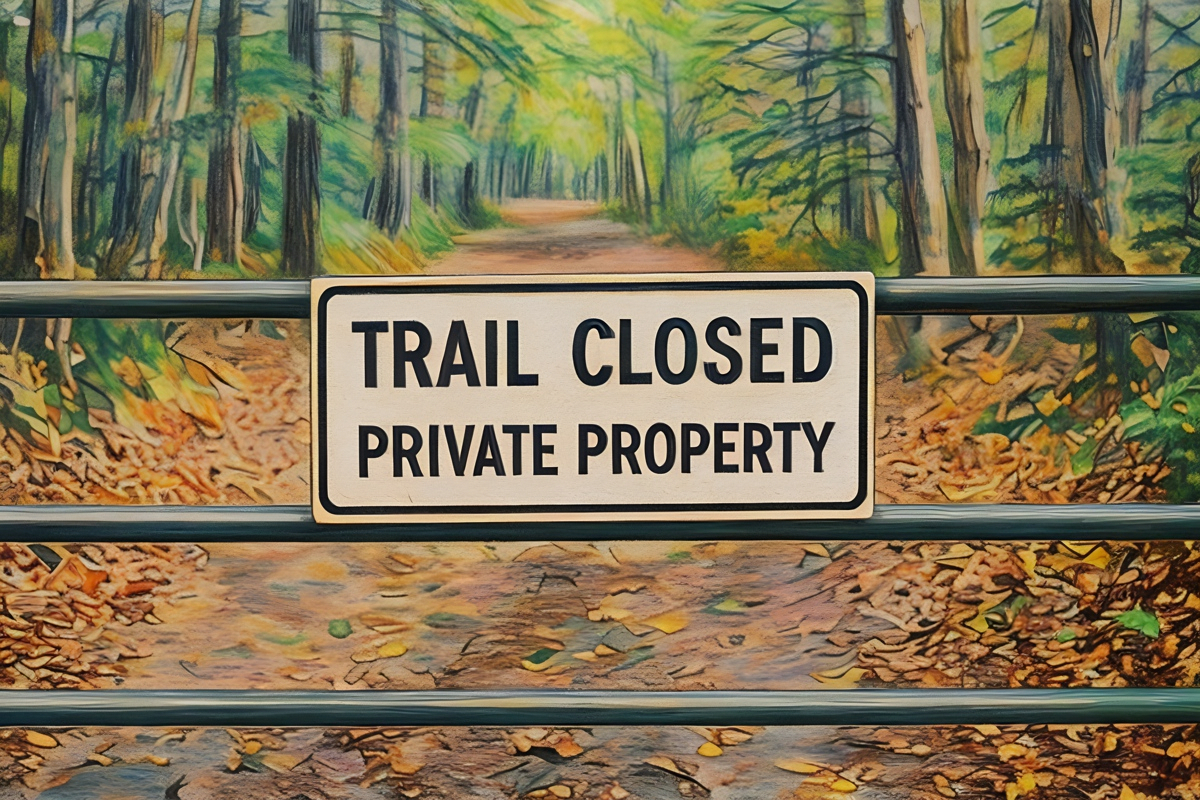
She walked up the turnout expecting the usual narrow gap in the trees. Instead she stopped short. A new steel gate sealed the entrance, the paint still factory-clean. Sunlight bounced off its polished bars in sharp little flashes. A sign—TRAIL CLOSED – PRIVATE PROPERTY—hung stiffly, as if someone had bolted it on in a hurry. Beverly touched the gate the way a person touches a forehead in doubt, half-hoping the metal wouldn’t feel as cold as it looked. Later she told a reporter she didn’t know “why or for what purpose” the land had been bought, only that the closure “saddened residents and caused concern for local businesspeople.”¹⁴ But her private reaction was smaller and heavier: “This doesn’t feel right.”
Across the cove, Nancy Thorne and Don Campbell were already up. Don rinsed the coffee filter with habitual care. Nancy stepped in clutching her phone like bad news. “They blocked it,” she said. They didn’t need to specify what “it” was.
By midmorning they stood at the gate themselves. Frost had melted into tiny glass beads on the branches, catching the light like scattered sequins. Machinery hummed deeper in the woods—contractors trenching cable lines, cutting new scars into the soil. Nancy stared past the bars as if expecting an old timber-company foreman to appear and give an explanation. Nothing moved but the drifting meltwater.