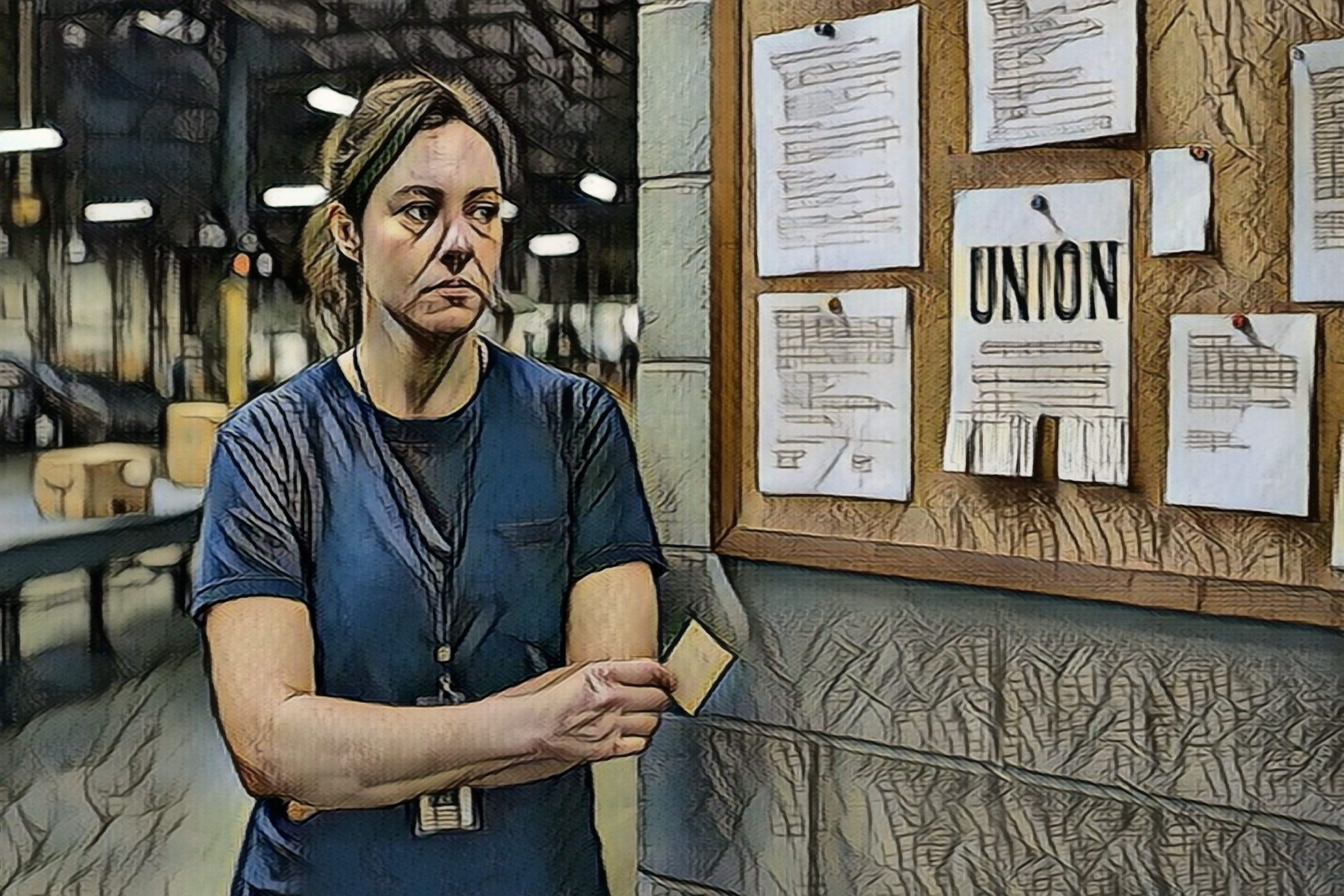
The belts never stopped. They hummed through her wrists and into the bone, a vibration older than the building. On her first break, she passed the corkboard in Receiving. The flyer was pinned low, half-covered by a lost-and-found notice. She didn’t read it—just caught the headline’s bold UNION in the corner of her eye. Outside, trucks idled where her grandmother once parked after night shifts at GM. Same concrete. Different rules.
The old plant still carried a ghost of oil, papery dust, pallets thumping, scanners chirping, belts humming like a distant highway. She tightened the wrap on her wrist, tugged a tote closer, and watched a label stick at a crooked angle. Her grandmother’s breakroom stories—coffee burnt and endless, Marlboros curling in the ashtray—floated up sometimes when she was near Dock 4. Forklifts sighed past, horns squeaked at the turns. Her grandmother used to talk about the union hall as if it were a second home. A contract was a rail you could grip. Economists later named that postwar moment the Great Compression: wages narrowed quickly in the 1940s and stayed tight for decades. Different noise; a sturdier, steadier floor beneath your boots.
“I grew up in that compression,” said Jake Rosenfeld, a labor historian at Washington University. “For ordinary workers, wages rose with productivity. By the ’80s, that tie snapped—and we’ve been drifting ever since.”
The belts carried more than boxes; they carried the memory of promises once kept.
She kept a chipped mug in her locker and a tiny aloe at home she forgot until it drooped, then revived with a guilty soak. Sundays she played goalie in a pickup league. At work, her trick was private: match her breath to the belt—four beats, inhale on two. It didn’t fix the quota. It made the hour move. By the time the warehouse went up on the plant’s bones, the math had shifted. The federal minimum wage froze at $7.25 in 2009 and hasn’t budged since. Rents rose.