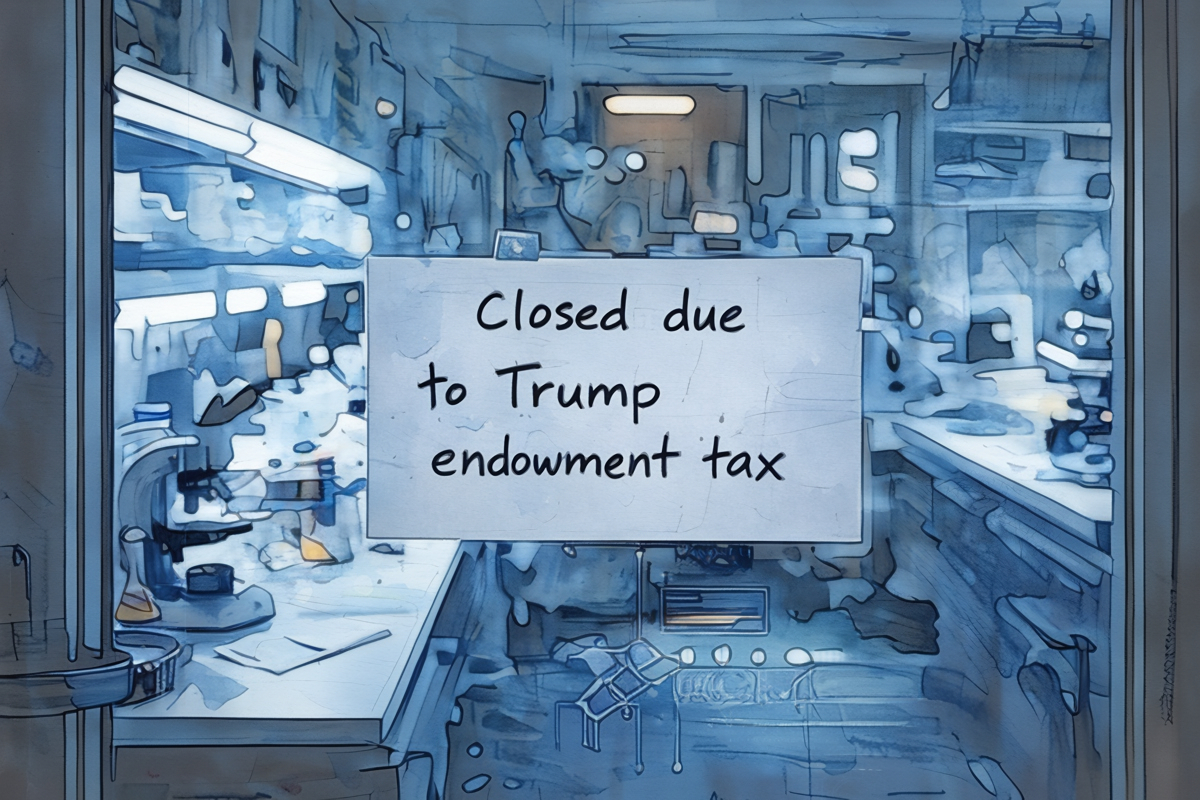
Trump’s endowment tax targets the universities that train scientists, regulators, and medical leaders—and slows the system that produces them.
The smell comes first: hot dust and steam, the metallic breath of a radiator waking up inside Yale’s Sterling Memorial Library. It knocks once, then again, sharp and insistent, the sound of infrastructure doing what it was built to do under pressure. At the circulation desk, a woman who has spent her career keeping the machinery of scholarship running—routing grant funds, processing faculty access, smoothing the quiet frictions that let research happen—stands motionless over her phone.
The email she’s rereading is not about speech codes or campus politics. It is about money. About a federal tax change that reaches directly into the institutions where the country trains its future scientists, surgeons, regulators, cabinet secretaries, and judges. It explains, carefully, that planning contingencies are underway. Hiring pauses are possible. Budget discipline will be required.
Then comes the line that changes how the room feels: layoffs may be necessary.
The radiator hisses, indifferent.
From the outside, Trump’s endowment tax is marketed as a corrective. Reuters described the contrast succinctly: *The political sales pitch calls it a tax on “elite hoards.” The operational reality is a new, recurring claim on money universities already promised—often to specific purposes, often to students.*¹ The distinction matters because this policy does not skim excess at the margins. It attaches itself to the financial engines that keep large research universities running and pulls, predictably and repeatedly.