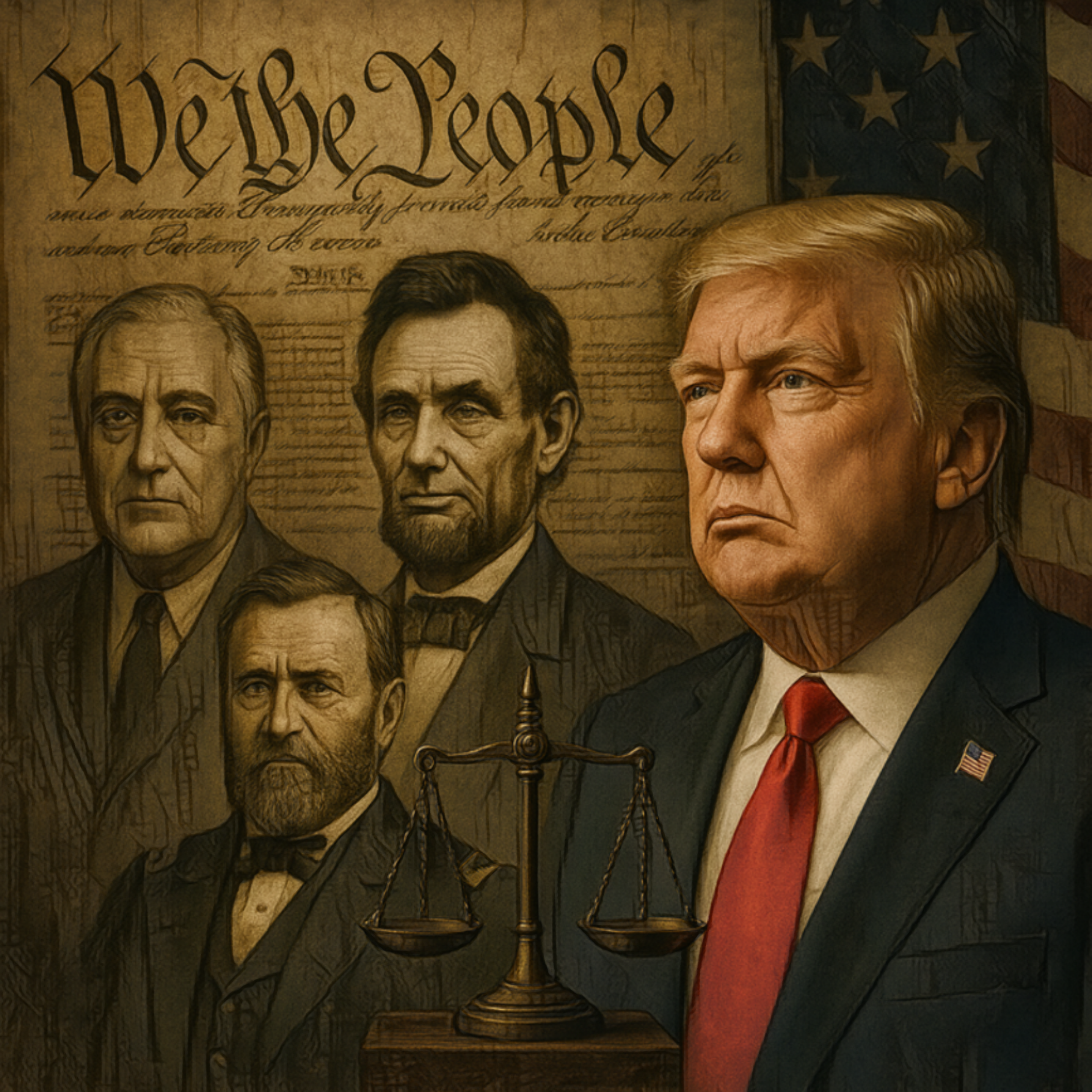
The order to remove 120,000 Japanese Americans came with a stroke of a pen. No charges. No trials. Just buses and barracks and years of silence. President Franklin D. Roosevelt called it military necessity. The Constitution didn’t get a vote.
“It’s always a crisis. That’s when the rules get rewritten.”
From John Adams to Donald Trump, presidents have repeatedly used the cover of crisis to suspend, ignore, or bulldoze constitutional protections. Sometimes they came with Congressional approval. Sometimes they didn’t. Either way, the damage lingered—on paper, in precedent, and in people’s lives.
Abraham Lincoln set the tone. On April 27, 1861, he suspended habeas corpus in Maryland as the Civil War exploded. Riots flared, trains burned, and Washington teetered. Lincoln bypassed Congress, ignored Chief Justice Taney’s ruling in Ex parte Merryman, and detained dissenters—including a newspaper editor whose grandfather wrote the national anthem.
“The Constitution bent, but it didn’t break. Not yet.”
Two years later, Congress backfilled the legality with the Habeas Corpus Suspension Act. And in 1866, the Supreme Court checked the damage, declaring in Ex parte Milligan that civilians couldn’t be tried in military courts where civil ones still functioned. The balance tipped, then steadied.
Ulysses S. Grant learned from Lincoln, but tightened the lens. In 1871, facing violent KKK uprisings, he suspended habeas corpus in nine South Carolina counties—with Congressional blessing this time. The aim wasn’t national stability. It was Black safety. It worked, briefly. Then Reconstruction buckled under white backlash, and federal protections receded like a tide.
“When it’s temporary, we call it emergency power. When it’s permanent, we call it tyranny.”
By the 20th century, crisis had become routine.