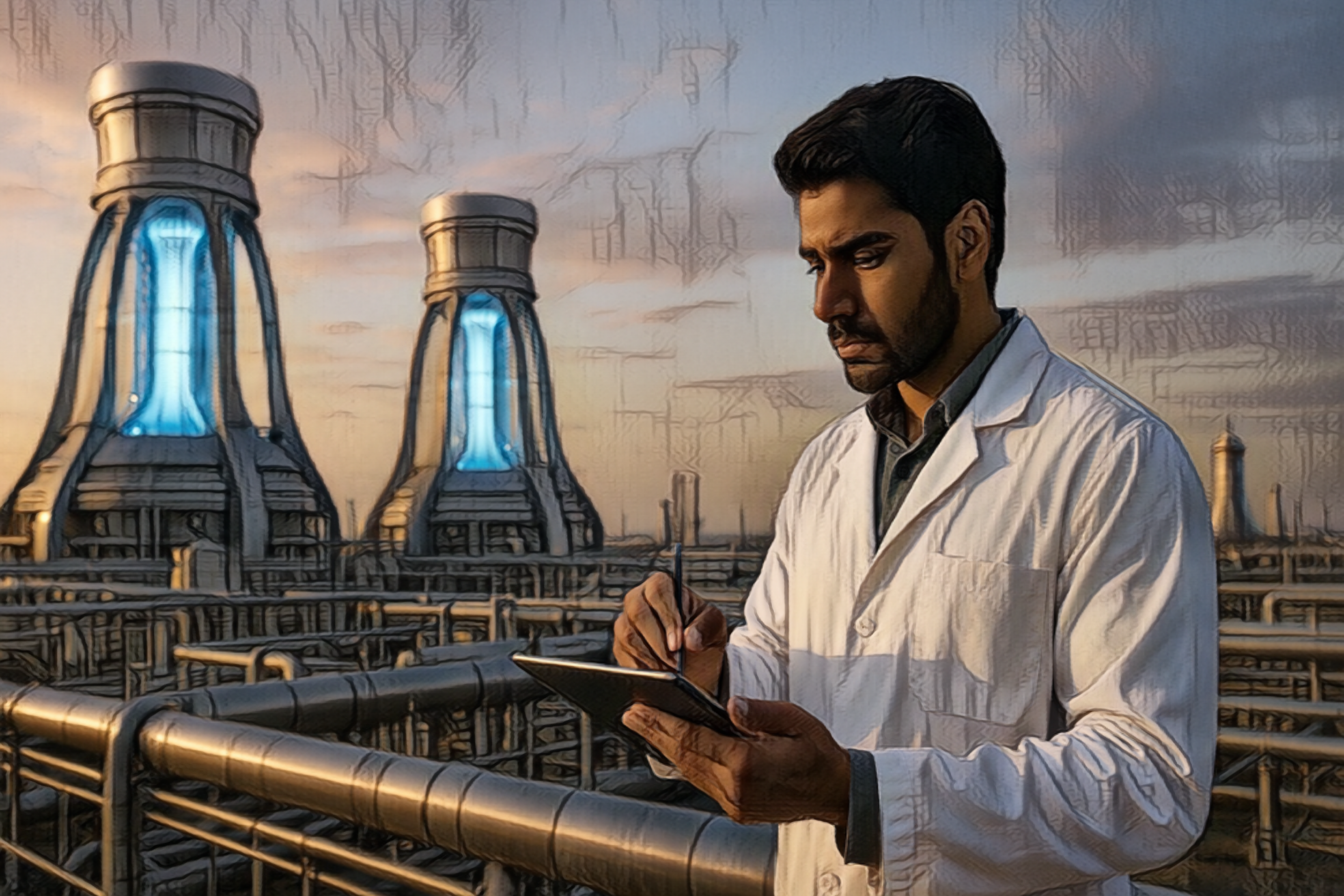
The control capsule at the coastal fusion farm doesn’t just hum—it trembles like an old loom. Samir Patel runs his thumb along the console’s chipped paint the way he used to smooth burrs on his father’s textile machine in Mumbai. Outside, gulls carve the fog into ribbons. The panel glows insistent red: reroute through Circuit 9. On paper the AI is flawless. In Samir’s body, the memory is louder. He can still feel 2034, the algorithmic reroute that melted a substation and dropped Los Angeles into a hush he’ll never forget—elevators frozen, NICUs moved by hand, a city breathing through its teeth. He doesn’t press accept. He chews a fennel seed, overrides the sequence, and listens as the turbines grumble back into alignment. Five minutes lost. Billions saved. Later, a sterile email blinks: “Compensation adjustment approved.” He laughs once, without mirth. In 2040, the value you bring is often the mistake you do not allow.¹
“The best jobs of 2040 aren’t about speed. They’re about living with the weight of hesitation.”
Down the line, the current Samir steadied arrives in a small clinic where his cousin, Dr. Aisha Moreno, flips on the nanobot scrubbers and—out of habit—glances at the backup generator gauge. Years ago, during a citywide outage, she stitched wounds by candlelight; the reflex never left. The room smells faintly of rosemary. “Antiseptic feels too cold,” she tells new nurses, and hums a bolero as the genome projector wakes.
Her patient today is the daughter of a retired firefighter, and the detail cuts close to home. Aisha is a physician, not a firefighter, but her own mother had worn that uniform, breathed that smoke, and carried those exposures until they shortened her life.