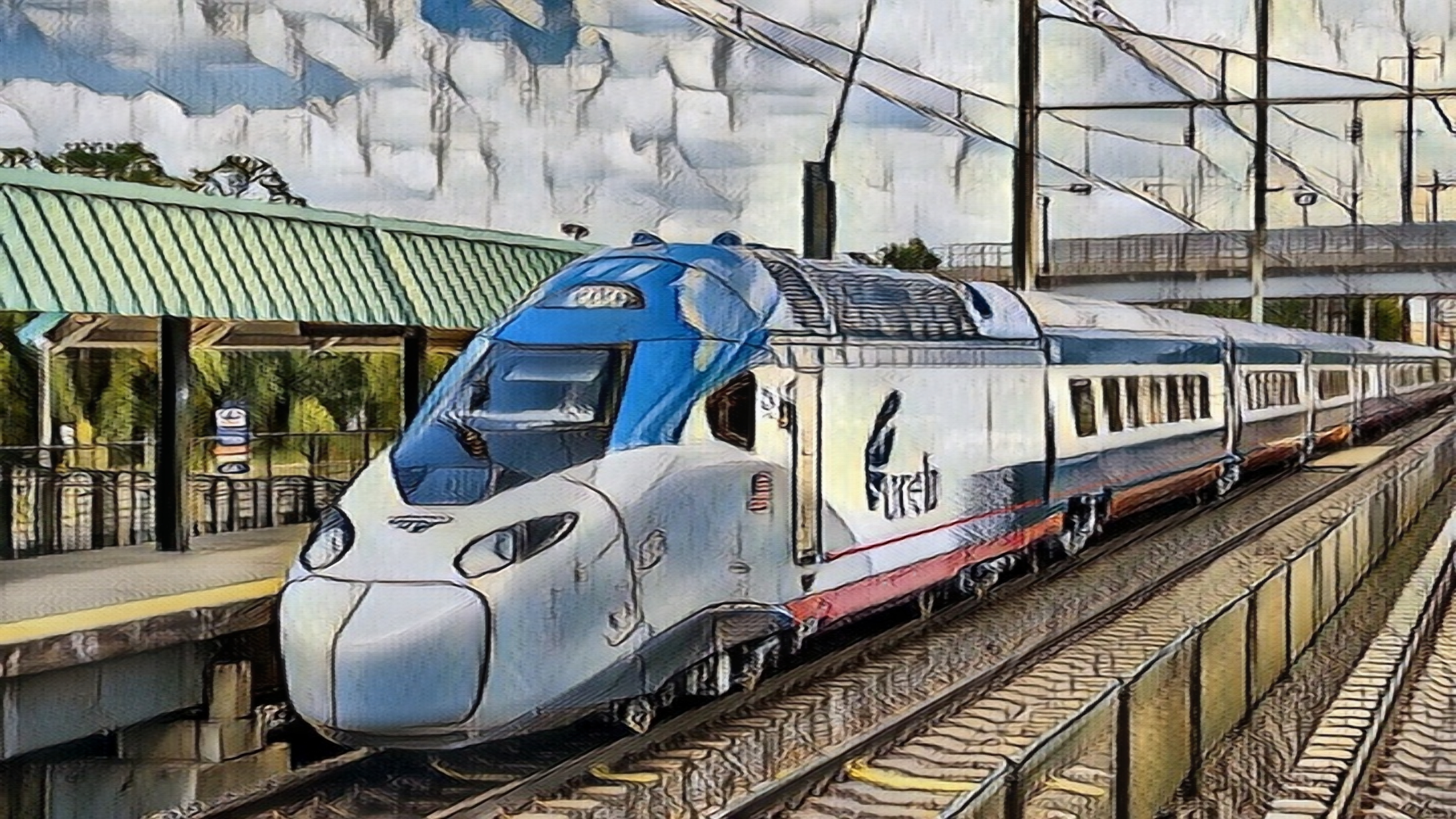
The first thing you feel isn’t the speed. It’s the lean.
Just past New Rochelle, the new Acela banks into a long curve like a skater carving across clean ice. The seat holds firm, the HVAC hums low, and beneath your feet the train wants to run. The screen says 97 mph.
A few rows back, a woman commuting from Stamford glances up from her phone and mutters, “At this pace, I could beat it on foot.” A few heads nod. It doesn’t land as a joke—just recognition.
The train was designed to cruise at 160. Today, it isn’t even close. And in an era when every mile by rail saves fuel, cuts emissions, and spares the gridlocked interstate, that gap feels heavier than ever.
“Faster shoes,” a conductor says, grinning as he walks the aisle, “but it’s still a gravel road.”
He doesn’t need to explain. Everyone on this line has lived the contradiction. The Avelia Liberty train, Amtrak’s sleek replacement for the aging Acela fleet, is ready. The track isn’t.
This mismatch has haunted American rail for generations. The Northeast Corridor is the busiest passenger rail line in the Western Hemisphere—and one of the oldest still in service. Some bridges date to the 1800s. Curves were laid for steam. Signals predate satellite TV. In 1975, Senator Vance Hartke warned Congress, “We are running tomorrow’s trains on yesterday’s rails.” The FRA responded by setting formal speed ceilings, encoded in track classes. Class 8 track allows 160 mph. But it’s a brittle ceiling. One cracked tie can drop a bullet to a crawl. A single sagging wire slices the limit in half.
Between New York and New Haven, where the curves tighten and Metro-North dispatchers juggle commuter traffic, the new Acela rarely breaks 100. The tilt system makes it feel smoother. But not faster.
Back in 2016, when then–Vice President Joe Biden unveiled a $2.45 billion federal loan to buy these trainsets, the promise was speed. Alstom, the French company that built the original Acela, would deliver a faster, roomier replacement.