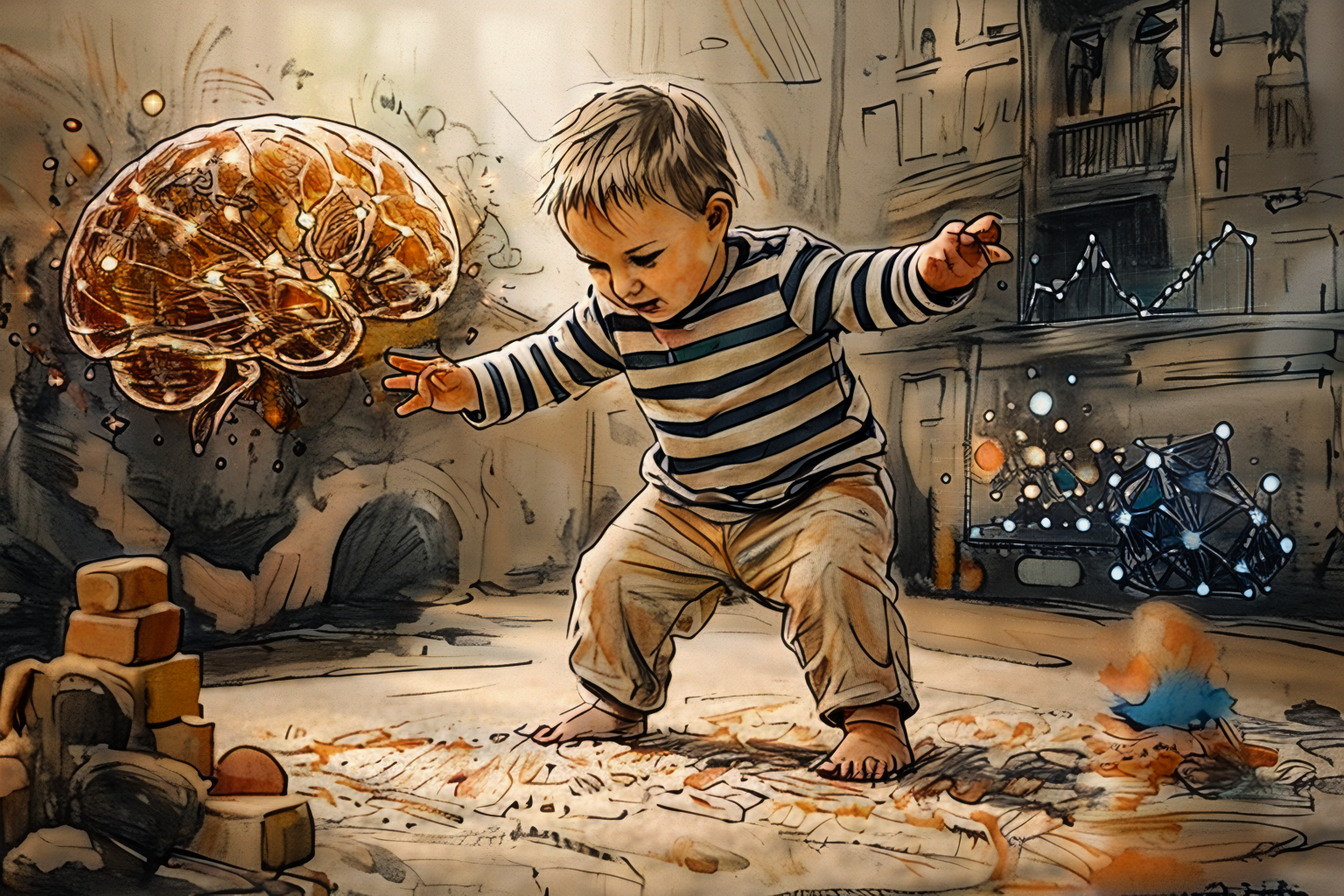
About a year ago I was sitting on the living-room floor watching my grandson try to walk.
He had decided, with the absolute confidence of a one-year-old, that upright travel was clearly the next step in life. Unfortunately his legs hadn’t quite received the memo yet, so the result looked less like walking and more like a series of small negotiations with gravity.
He would take three determined steps forward, wobble slightly, lean into the next one, and then slowly collapse onto the carpet.
What struck me wasn’t the falling. It was the speed of the adjustments.
Each attempt looked a little different from the one before. His feet spread wider. His body leaned forward earlier. His arms shot out instinctively the moment his balance began to go.
Nobody had explained the physics of balance. There were no instructions, diagrams, or equations.
His brain was simply running the oldest learning loop on Earth.
Try something. See what happens. Adjust. Try again.