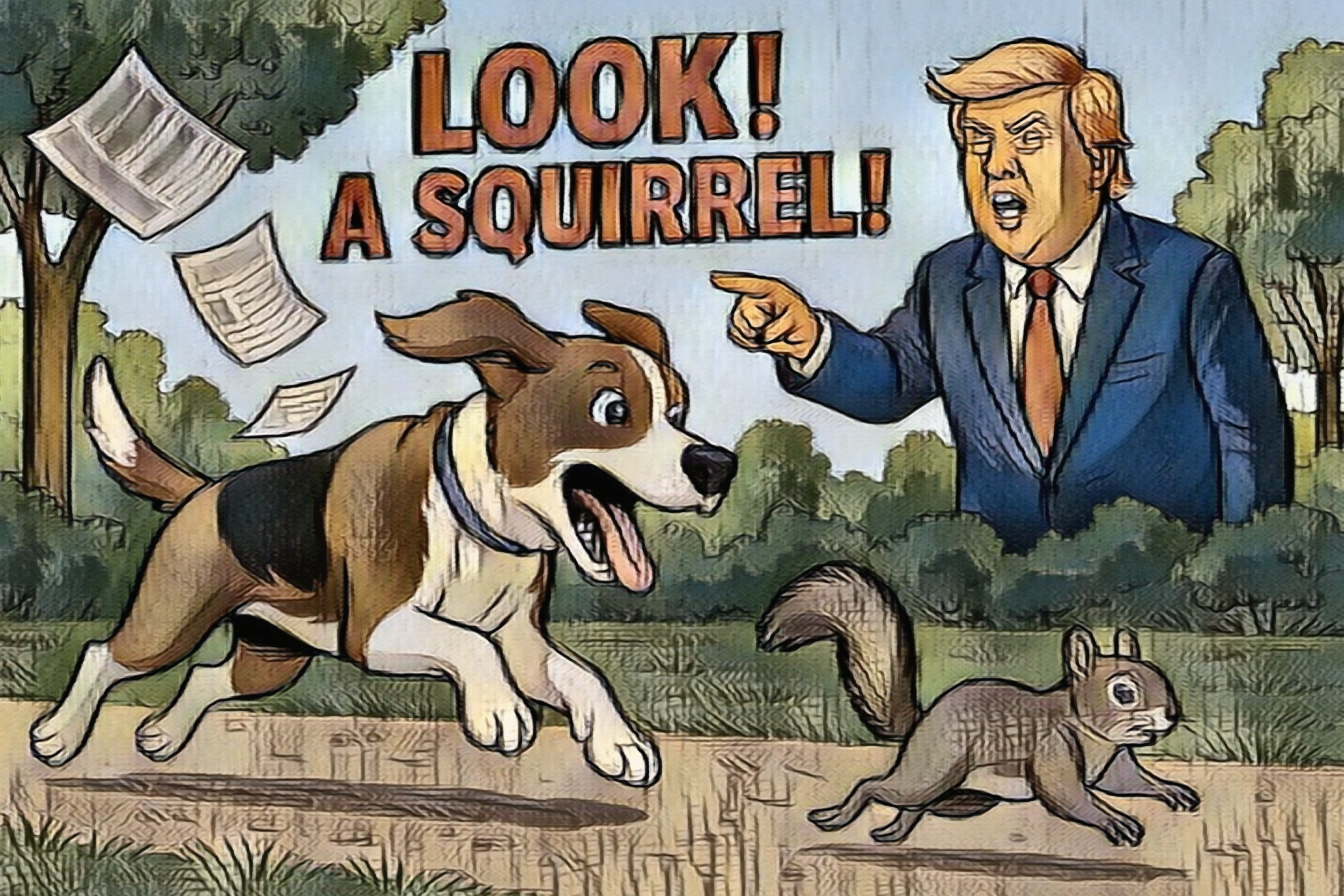
On the morning of November 4, 2024—forty-eight hours before the most consequential election in a generation—Donald Trump tweeted, in all caps, about a squirrel.
Not metaphorically. Literally.
“SO SAD WHAT THEY DID TO PEANUT!! A BEAUTIFUL AMERICAN SQUIRREL MURDERED BY GOVERNMENT GESTAPO. ANIMALS LAST, ILLEGALS FIRST!!”
The post lit up MAGA forums, hit Fox News by noon, and by sundown, Trump’s running mate JD Vance was onstage in Pennsylvania demanding justice for the Instagram-famous rodent.
“The same government that lets criminals run wild doesn’t want you to have pets.”
It had all the substance of a tabloid hoax—and still, it dominated every major network. Coincidentally, that was the same day early voting reports showed record turnout among young progressives and independents—two groups the Trump campaign had failed to move. By the next morning, no one was talking turnout. They were talking about Peanut.
When reality gets inconvenient, Trump doesn’t retreat. He performs.
He’s spent nearly a decade perfecting the art of narrative warfare. In media theory, it’s called strategic distraction. Trump’s version is simpler: flood the system, hijack the signal, say the most outrageous thing in the room. Doesn’t have to be true. Just has to trend.
“Trump doesn’t care about the downside effects of negative attention. He views all attention as valuable.” That line from MSNBC’s Chris Hayes isn’t commentary—it’s playbook. In the attention economy, visibility is power. Shame, scandal, even absurdity—it all converts.
Psychologists call it narcissistic personality disorder. In behavioral terms, it’s a self-referential orientation: the self must be seen, defended, applauded.