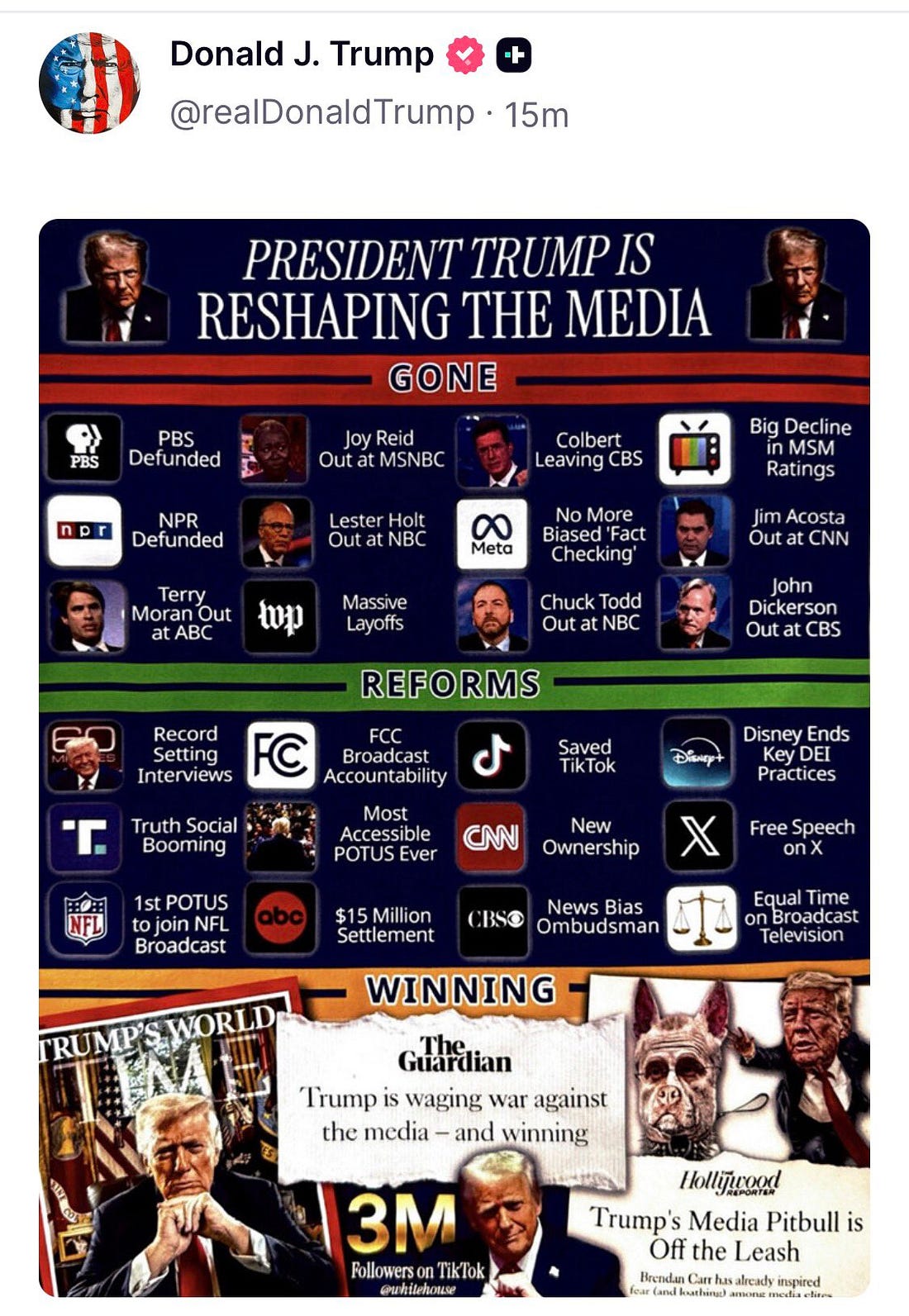
“Trump is waging war on the media… and winning.” –The Guardian
The badge scanner at the Pentagon press entrance gives a short electronic beep.
A reporter slides the credential across the reader, signs a revised access form at the desk, and hands it back to the staffer watching the line of journalists moving toward the briefing room. The badge still works, but the permission behind it has changed.
Under rules introduced during the Trump administration’s second term, reporters covering the Defense Department must acknowledge that their credentials can be revoked if officials determine they improperly sought certain categories of information from Pentagon employees.¹ No newsroom closes because of that policy, and no journalist is jailed for publishing a story, yet the document on the desk captures a quieter shift.
Press freedom in practice runs on what might be called conditional access: the right to publish remains intact, but the ability to gather information increasingly depends on staying within boundaries defined by the people being covered. When those boundaries tighten, journalism does not disappear—it adapts.
The Constitution protects publication.
Reporting depends on proximity, and proximity is easier to control than speech.
For years, Donald Trump framed his relationship with the press as confrontation rather than negotiation, repeatedly telling supporters that **“the fake news media is the enemy of the American people.”**² During the recent escalation of the Iran conflict, the rhetoric sharpened further,