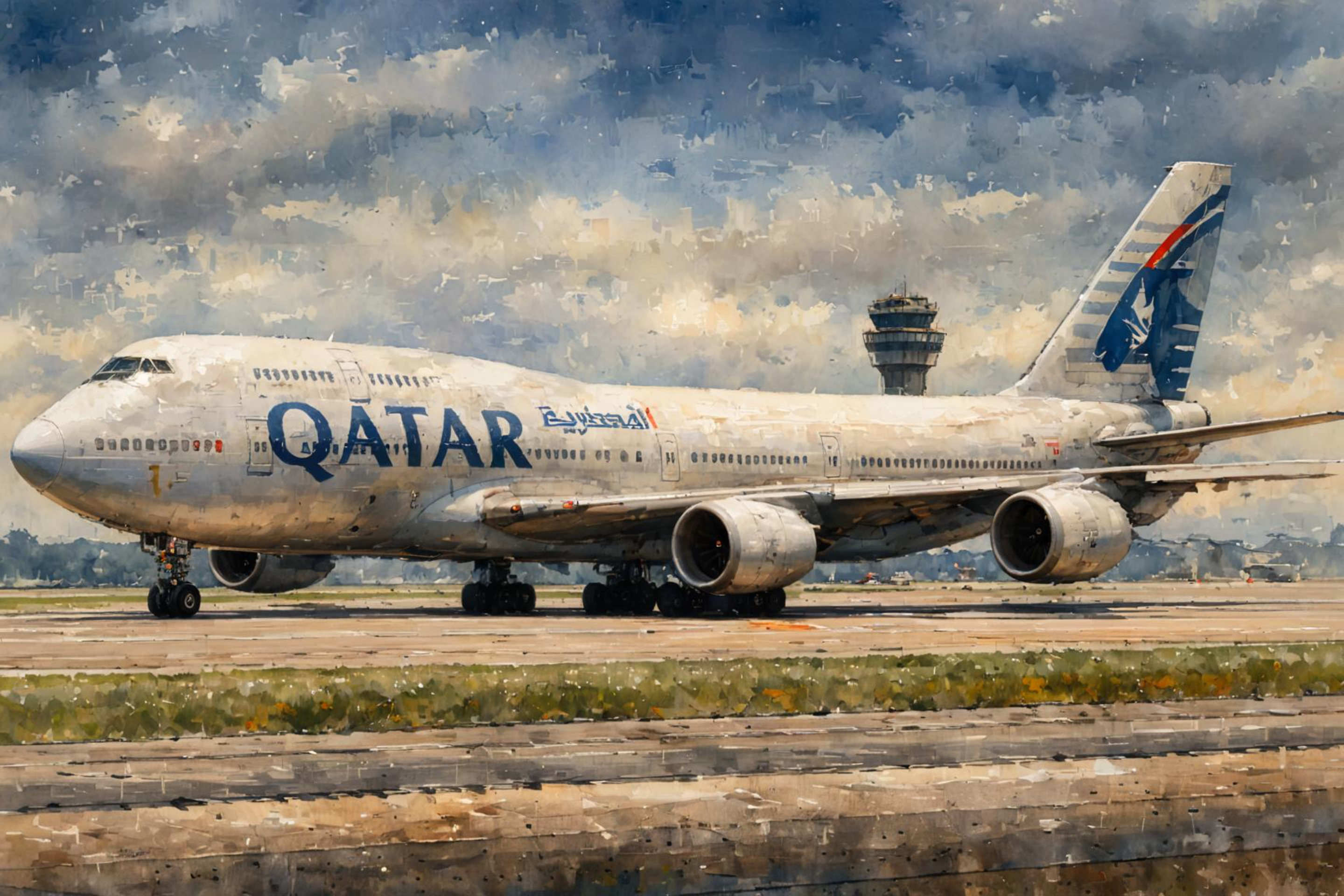
The smell hit first — not jet fuel, but the sterile tang of fresh paint, the kind that tries to pass for cleanliness. On the edge of Joint Base Andrews’ tarmac in late March, Cole Harrington stood with a press badge slapping against his blazer in the wind. Above him, the Qatar jet loomed, its nose pitched higher than the control tower, its white fuselage gleaming in hard noon light.
Harrington’s Iron Ledger blog drew millions of readers with swaggering takedowns of “Beltway pearl-clutching.” In 2017, when Trump faced emoluments lawsuits, he’d mocked them as “lawyers hunting for a clause to hang a president with.” But something about the card on the boarding stairs — “Presented to the President of the United States by His Highness the Emir of Qatar” — no mention of the Air Force, no mention of the United States government — lodged in his mind like grit.
Inside, the air was chilled, faintly perfumed. Cream leather seats. Gold trim. A lounge with a chandelier trembling slightly as the engines idled. An Air Force major began to explain “retrofit cost projections,” then stopped, as if remembering the rules. The next day, Harrington replayed Richard Painter’s warning on NPR: “This definitely violates the foreign emoluments clause unless Congress gives consent.” This time, it didn’t sound like theater.
He began calling around at night, headphones in, his screen glowing against the dark. A State Department contact told him the Boeing 747-8’s market value could exceed $350 million before retrofitting — costs the Air Force’s own estimates put at up to $920 million. That’s more than the GDP of Samoa, he typed into his notes.
In the Library of Congress, he read accounts of how, in 1840, Congress ordered Martin Van Buren to auction Arabian horses gifted by the Imam of Muscat, with proceeds to the Treasury — a move meant to head off whispers of foreign influence when the republic’s institutions were still fragile. In 1862, Abraham Lincoln declined elephants from the King of Siam, accepting only other tokens for the nation.