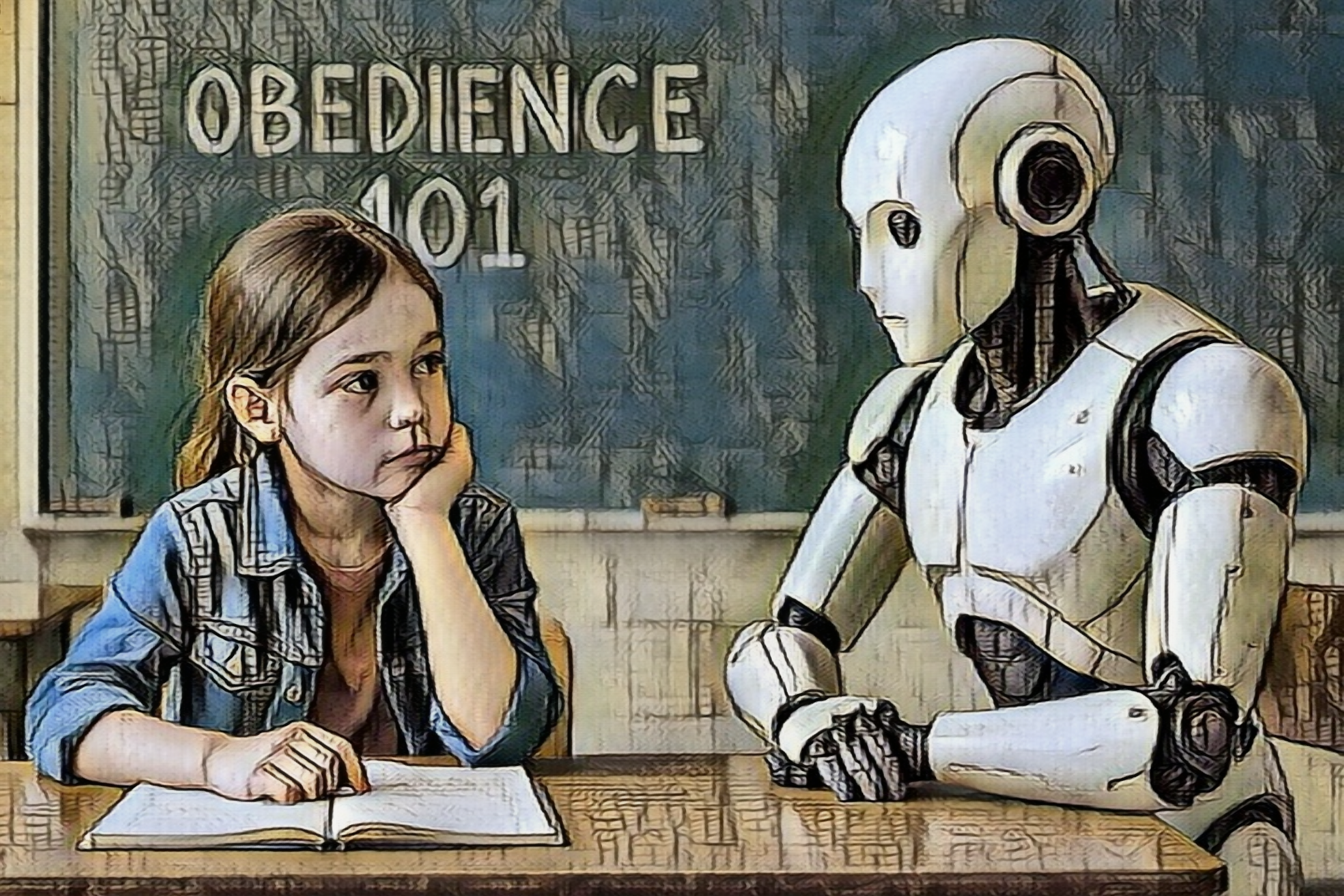
What if the next generation doesn’t ask questions—because we taught them not to?
The girl froze at the page again. Eighth grade. Dyslexia. Writing felt like punishment.
Then her teacher gave her something new—a machine that didn’t give her answers but pushed her to explain them. It made suggestions, but demanded reasons. She had to defend every word. And for the first time, the block began to move.
Her name was Makenzie Gilkison.
“She didn’t just write more. She thought more.”
Across the country, another student used the same tool and did the opposite. He copied a paragraph, fed it back into the system, and said, “Make it sound smarter.” Then he copied that into his paper. No learning. No reflection. Just frictionless mimicry.
This is the split screen of AI in education. One side opens doors. The other paints them shut and hands out stickers.
“If we get it right, AI can amplify every child’s curiosity. But if we get it wrong, we risk raising a generation that can click—but can’t think.”
We’ve seen this before. The 19th century standardized the school bell and the answer key. Children trained to replicate. To memorize. To obey. By the time Sputnik launched, classrooms were designed for output, not exploration.
The internet cracked that model. But it also buried classrooms in content—too much to read, too much to verify. And AI doesn’t just add to the pile. It organizes it, personalizes it, makes it sound right.
The danger is, it can sound right even when it’s not.