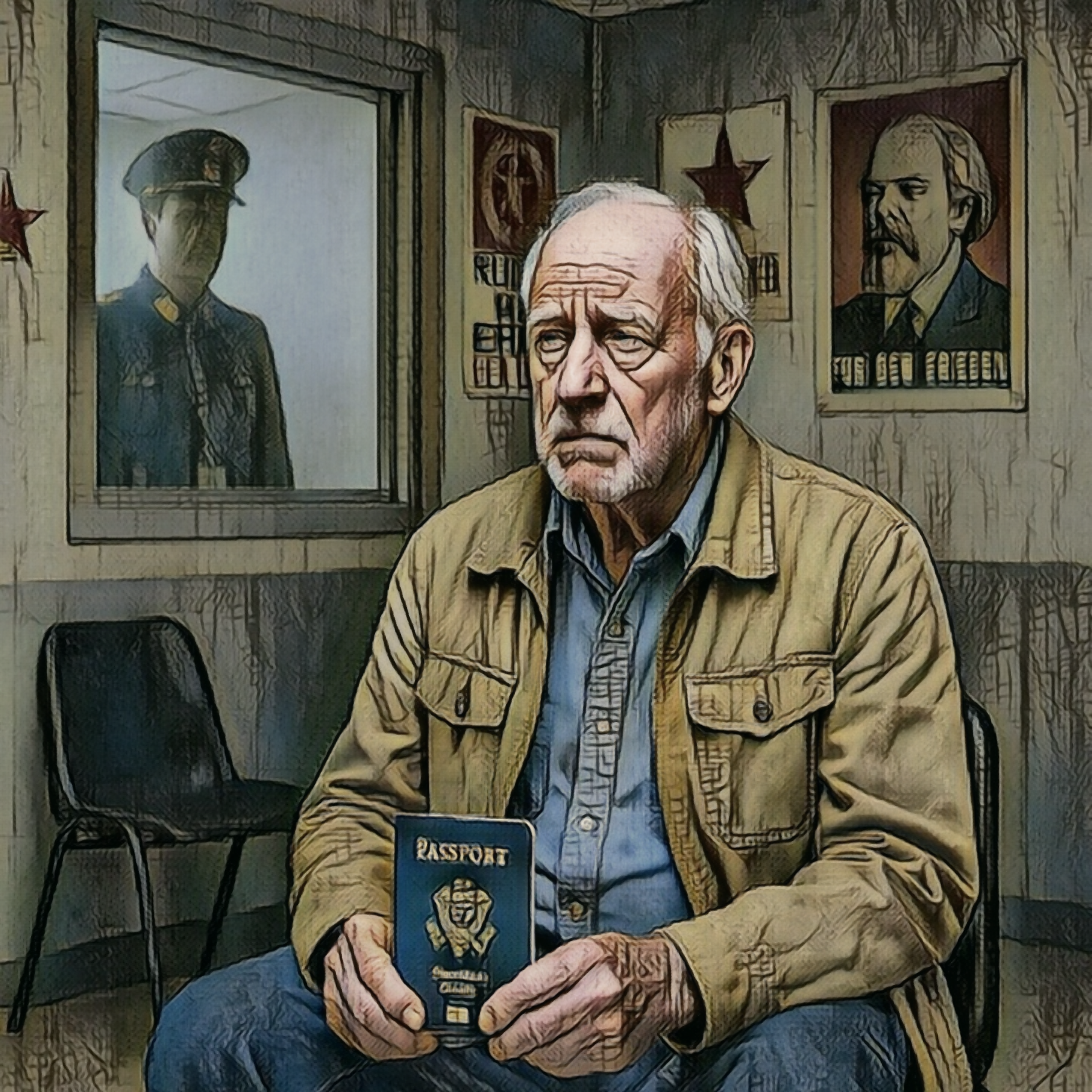
It doesn’t start with tanks in the streets. It starts with a passport that never arrives.
In East Germany, if you wanted out, you had to apply. You sat in a gray room with a low ceiling and explained yourself. If you were lucky, they let you leave quietly. If you weren’t, you lost your job, your neighbors stopped speaking to you, and the Stasi followed your daughter to school. The strategy was deliberate: drain the troublemakers, keep the rest afraid.
They let the loud ones leave to silence the rest.
This wasn’t just Cold War paranoia. It was policy. And not just there. Cuba, China, Russia—autocracies have long used emigration not just as escape, but as weapon. It’s called the targeted safety valve. Dissidents apply to go, thinking they’re escaping. What they don’t see is that their exit is by design.
We like to imagine democracy dies with a bang. A coup, a crackdown, a dictator at a podium. But more often, it dies with paperwork. With forms filed, approvals delayed, and flights booked in secret. The government lets the loudest voices slip away, counting on the rest to shut up or break down. It works more often than not.
Exit becomes the enemy of voice.
The irony is brutal. Those who want to fight are too valuable to risk—and too dangerous to keep. So regimes open a door, just wide enough for a few to walk through. But the door leads out, not in.
This isn’t history trivia. It’s playbook. In the U.S., where democracy now trembles under legal warfare and cultural siege, the question is no longer, “Could it happen here?” It’s “What do we do when it does?”