A Newfoundland Chronicle
We’re on vacation. I’m in Nova Scotia, but I keep thinking about my many visits to Newfoundland. This is biased: St. John’s—and really all of Newfoundland—is one of my favorite places on Earth. Years ago, I picked up a copy of Rogues and Branding Irons by Jack Fitzgerald. It was sharp and strange and local, filled with characters who didn’t fit anywhere else.
That book returned to me with the smell of salt and spring chill. And with it, the question: how many countries—because Newfoundland was once its own—have such a short, strange, loud political history?
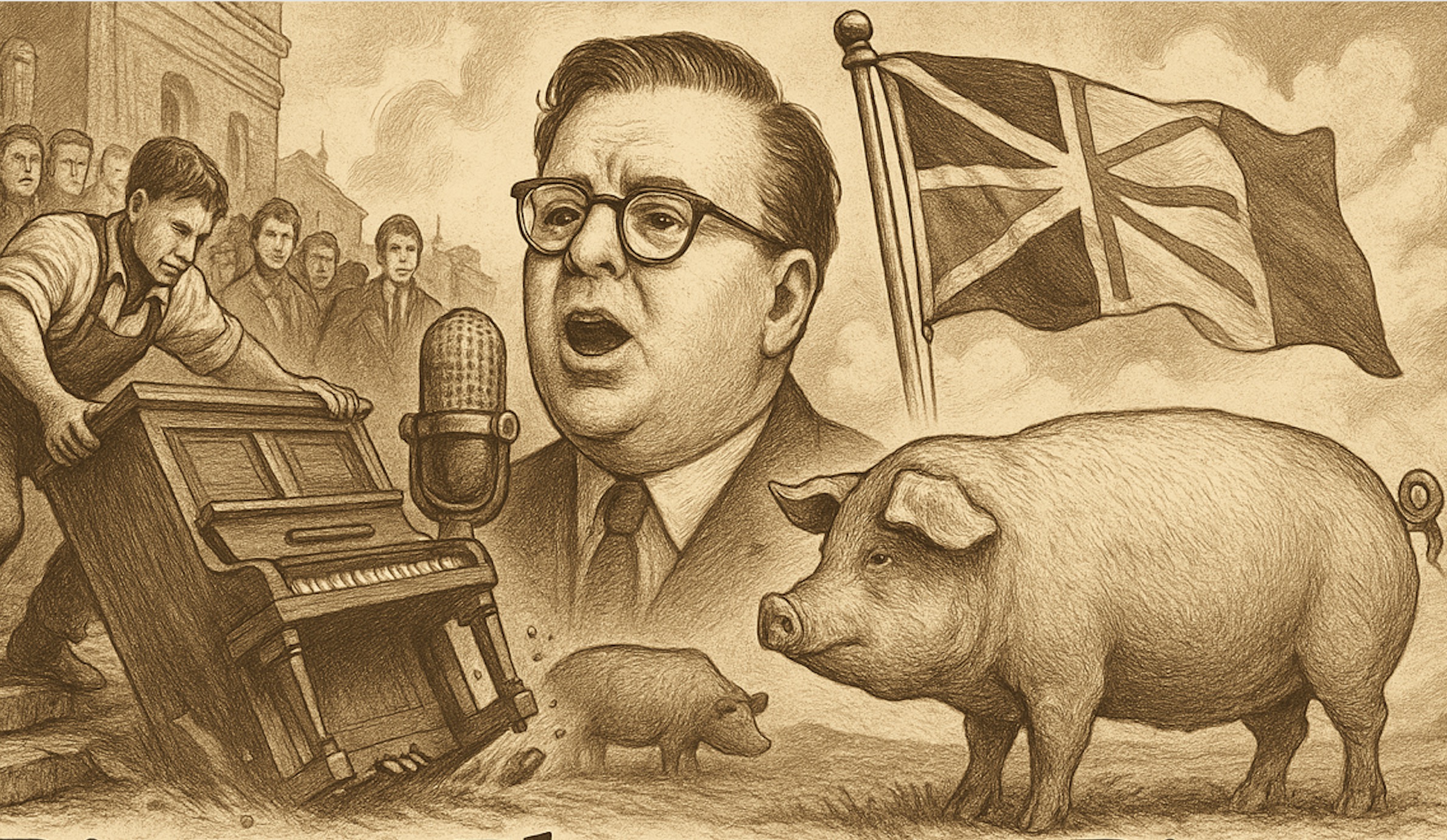
Start with the piano.
They hauled it out of the Colonial Building in the chaos of April 1932—legs splintering, keys jangling. A single, stubborn B-flat rang out before the whole thing gave way: ivory, felt, and timber exploding in Bannerman Park like punctuation at the end of a bad decade¹.
Sir Richard Squires was already bleeding by then. He’d tried to flee but was caught and clubbed by a crowd that no longer believed in petitions.
“Sometimes you smash the music to be heard.”
Two years later, Newfoundland voted to suspend self-government. A British-appointed Commission took over in early 1934. But something had snapped that night—not just in politics, but in the island’s self-image.
Squires hadn’t started corrupt. A gifted orator from Harbour Grace, he rose on promises of reform. But as the economy buckled, he doubled down on patronage. By 1923, he’d been arrested for corruption—then reelected in 1928, unrepentant.