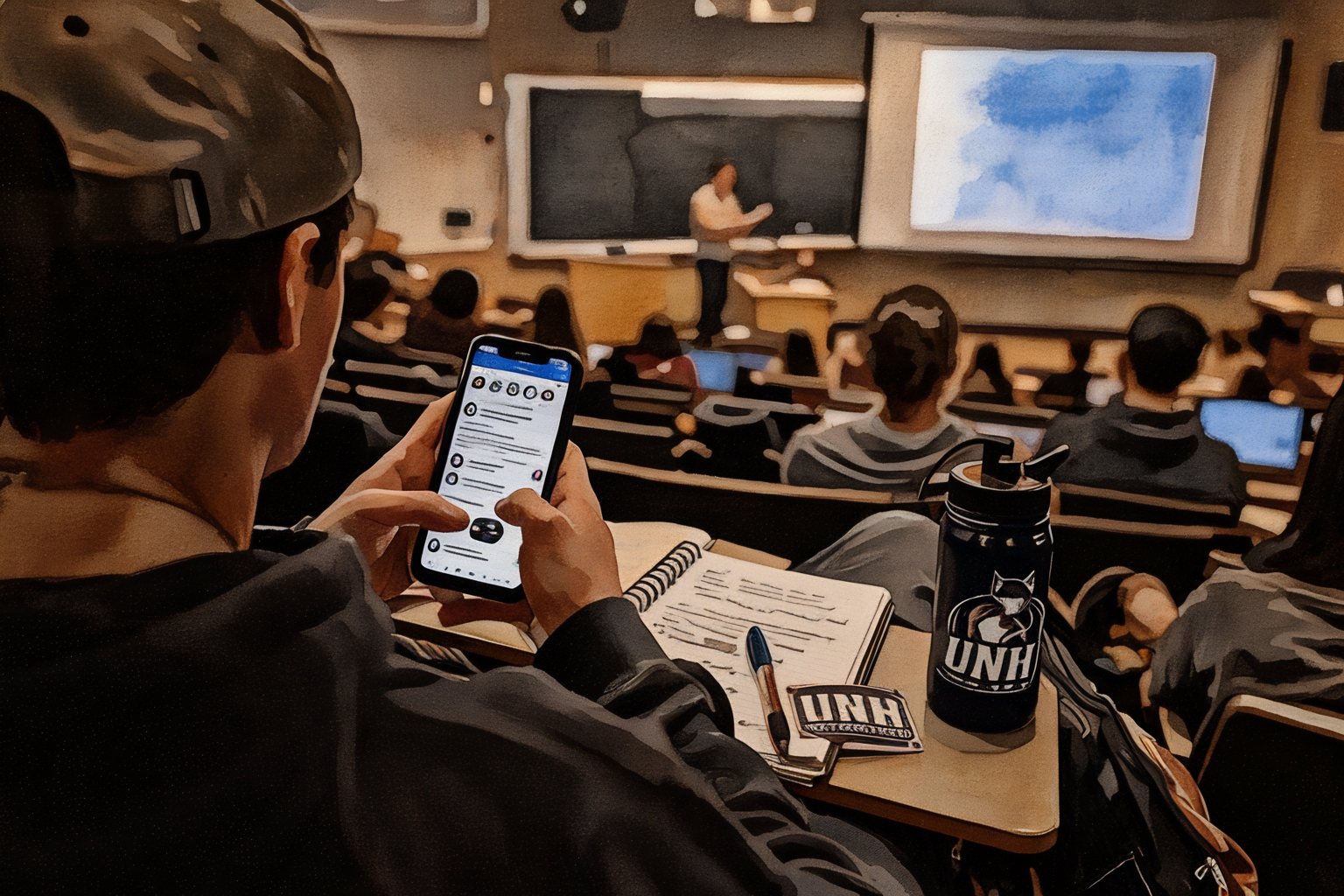
On a damp Tuesday afternoon in Durham, a freshman named Tom is scrolling Pinterest in the back row of a lecture hall at the University of New Hampshire.
He’s building a board called “First Apartment Vibes.” Exposed brick. String lights. A couch he can’t afford yet.
His phone buzzes: President floats idea of “taking over” Cuba.
He swipes past it.
Another alert: U.S. strike escalates tensions with Iran — Supreme Leader Ali Khamenei assassinated overnight.
He taps back to Facebook.
Tom isn’t stupid. He’s just not tuned in. Politics feels like background noise — something old people argue about on cable news while he’s figuring out whether his meal plan covers weekends and if he should switch majors to Business.
He reposts the occasional meme about “saving democracy.” He has never read a bill.
And that’s the hinge.
Authoritarian power doesn’t harden because everyone cheers. It hardens when enough people detach.
Strongmen usually rise on crisis. Collapse first. Then rescue. The rescue creates gratitude. Gratitude becomes permission.
When Adolf Hitler took power, Germany was staring at economic devastation. When Vladimir Putin consolidated control, Russia had just endured financial implosion. Stabilization felt like salvation.