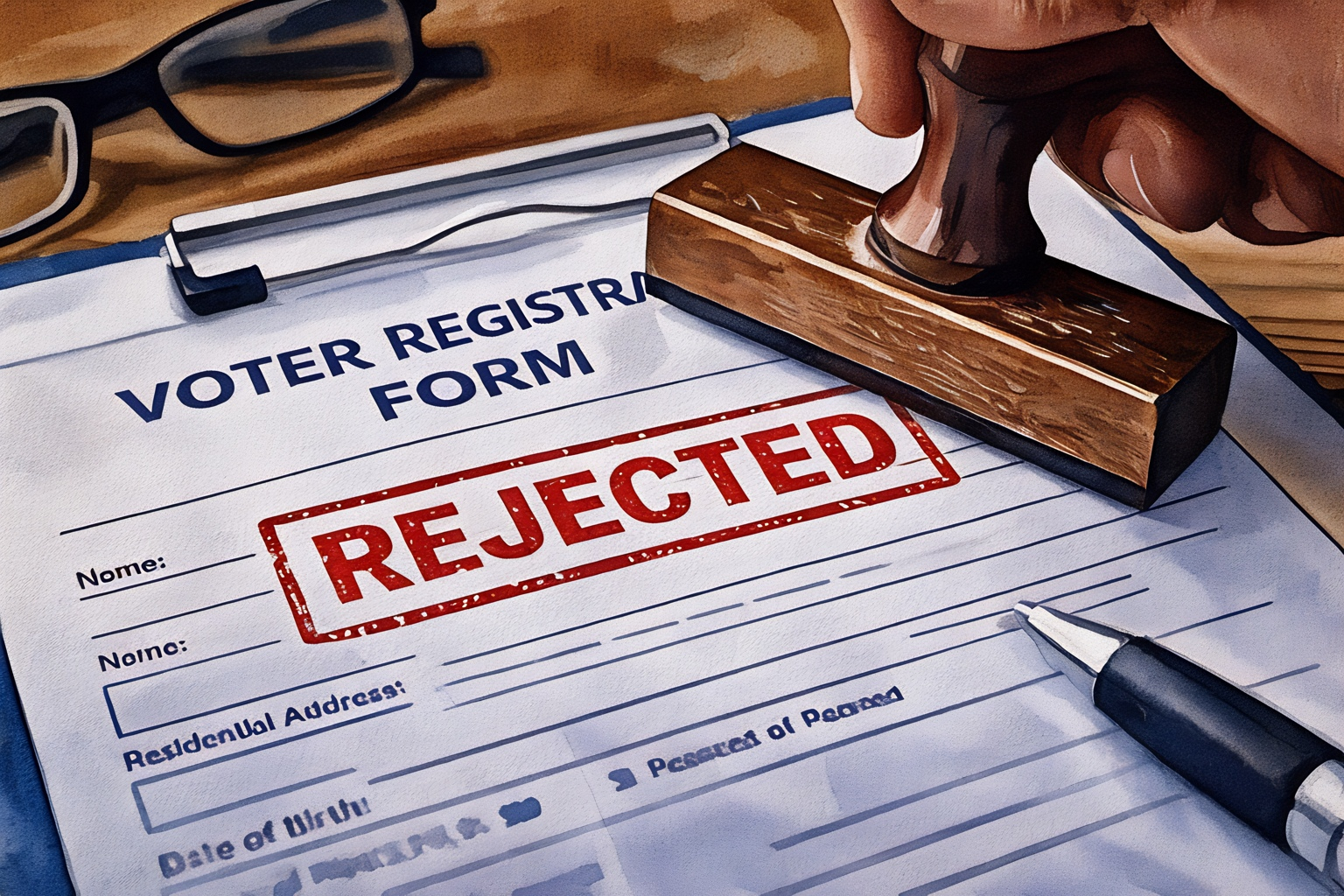
My wife and I were married in Switzerland. Two Americans, both born in the United States.
Under the SAVE America Act, that marriage certificate could one day determine whether she is allowed to vote.
Fifty years ago, we walked into a Swiss municipal office with our U.S. passports. We signed a few forms, and walked out married. She took my last name.
Simple. Or at least it used to be.
Because under the SAVE America Act, it is entirely possible that the last election she voted in was the last one she will ever be allowed to vote in—not because she isn’t a citizen, but because the paperwork connecting her citizenship to her current name sits on a thin Swiss marriage certificate written in French.
And here is the strange part: nothing about her citizenship has changed in fifty years. Only the paperwork rules have.
In the world the SAVE Act creates, citizenship is not the problem. Paperwork is.
My wife’s birth certificate carries her maiden name. Her passport carries my last name. The legal bridge between those two identities is that Swiss marriage certificate.
To us, the connection is obvious. But to a county election clerk in Arizona or Georgia, sitting at a desk with a stack of registration forms and a foreign marriage certificate written in French, the connection might not be obvious at all.
The SAVE America Act would require voters registering for federal elections to present documentary proof of U.S.