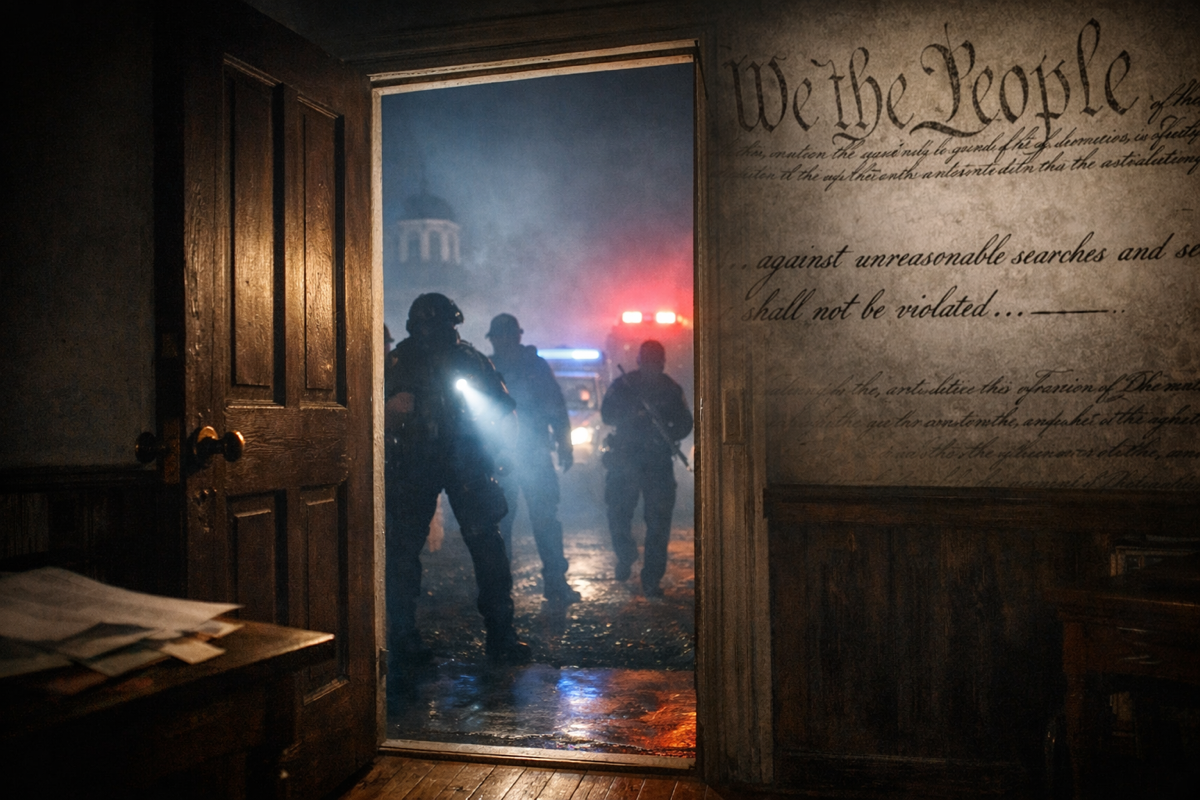
Search, intrusion, and the Constitution’s oldest fear
It was January 20, 2026, Mikie Sherrill’s first day as the newly elected governor of New Jersey, and the room had barely settled when she spoke.
She did not begin with a policy or a promise. She began with a list.
“He has refused his assent to laws,” she said. “He has obstructed the administration of justice. He has made judges dependent on his will alone. He has kept among us, in times of peace, standing armies, without the consent of our legislatures.”¹
The Declaration of Independence, read aloud in a room with fluorescent lights and a state seal on the wall, two and a half centuries after it was written. Staffers were still finding their seats. Aides were still opening folders. Sherrill did not wait. She read the charges as if they had been written for the moment, not the museum.
She did not say Donald Trump’s name. She did not need to. Everyone in the room understood why a new governor would open her term by reading an indictment of a king.
What she did not quote was the part of the founding story that feels less like marble and more like splintered wood.
Before the Revolution was arguments in pamphlets, it was strangers in your home.
In 1761, fifteen years before Jefferson drafted the Declaration, a thirty-year-old Boston lawyer named James Otis stood in a crowded courtroom to argue against what were called writs of assistance. They were not warrants in any modern sense. They named no house, no person, no crime.