Shelley Powers had three days left.
Her Chatham County absentee ballot was mailed June 1. It reached her 12 days later, leaving only three days to get it back before Georgia’s deadline. Powers relies on mail voting because of mobility limitations. “What happens if people aren’t getting their ballots this fall?” she asked.¹
That delay was not caused by President Donald Trump’s proposed new ballot-mail rules. They are not yet in effect. But Powers’ experience shows how little margin already exists between a ballot mailed by an election office and a ballot returned by a voter. There are too few days and too many ways for an envelope to arrive too late. Trump’s answer is to add another checkpoint.
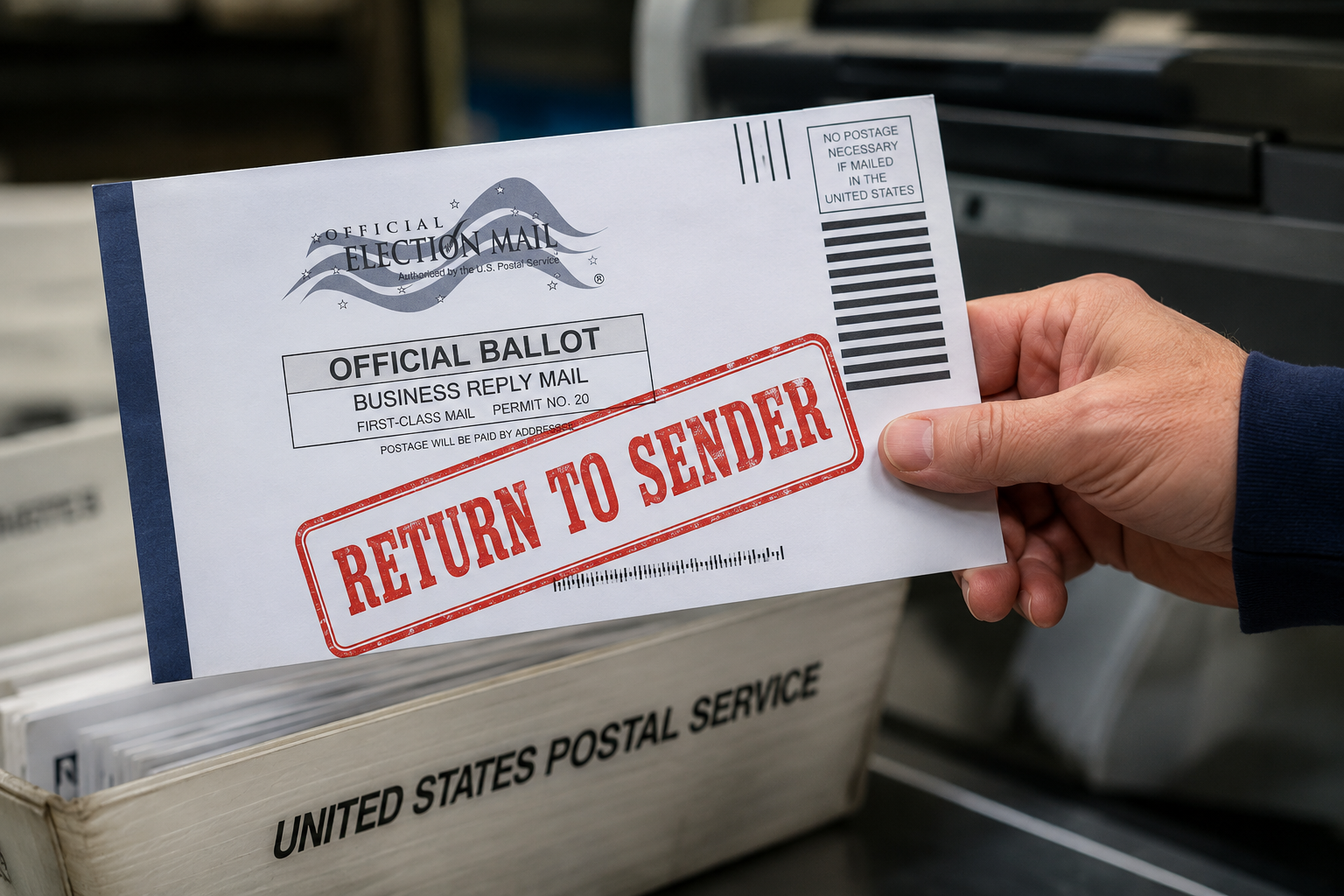
At his direction, the U.S. Postal Service has proposed requiring state and local election offices to provide the names and addresses of voters receiving mail ballots, along with unique barcodes assigned to the outgoing and return envelopes. Before accepting covered federal ballot mailings, postal workers would verify that the mailing meets new envelope standards and matches information submitted through a federal portal.²
And when something does not match, the proposed rule is blunt. The mailing “will not be accepted and will be returned.”²
Election officials would have to identify the problem, correct it and present the ballots again. USPS says it would assume no responsibility for the mailing, or for resulting delays, until the ballots were finally accepted. That would turn the Postal Service from the carrier of lawful election mail into a federal gatekeeper standing between election officials and voters.