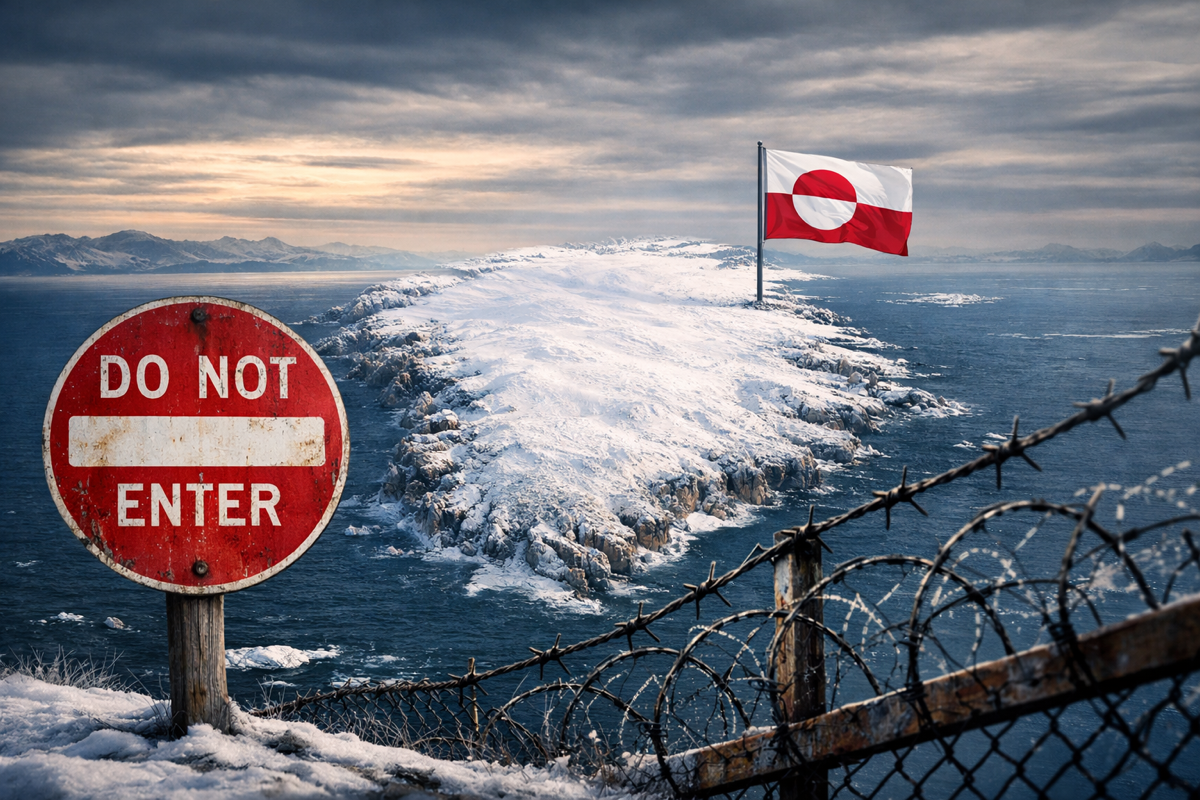
What Happens When the Monroe Doctrine Meets the Global Supply Chain
Donald Trump’s plan to take Greenland rests on an idea that should have been retired along with sailcloth and powdered wigs.¹
The Monroe Doctrine—now casually revived in Trump’s orbit as “Donroe Doctrine”—was written for a world where distance protected power. A world where trade crossed oceans slowly, where economies sold finished goods, and where a strong country could bully its neighborhood without triggering consequences far beyond the horizon.²
That world no longer exists.
Trying to run a twenty-first-century economy on a nineteenth-century doctrine isn’t nostalgia. It’s sabotage.
Trump’s threats matter not because they are uniquely reckless, but because they expose a recurring American temptation: the belief that territorial power can still be exercised without destabilizing the systems that make modern prosperity possible. The danger isn’t that a takeover of Greenland might succeed militarily. It’s that such an act assumes the United States can alienate allies, violate sovereignty, and still enjoy the smooth, largely invisible machinery that keeps American prices down and American production on schedule.
It can’t.
In 1823, if a shipment of whiskey or furniture arrived late, someone complained, and life went on. In 2026, if a three-dollar sensor or a single precision subassembly fails to arrive on time, a fifty-thousand-dollar machine doesn’t ship, a factory line goes idle, and hundreds of workers are sent home early. Modern trade is not primarily about goods. It is about timing.³