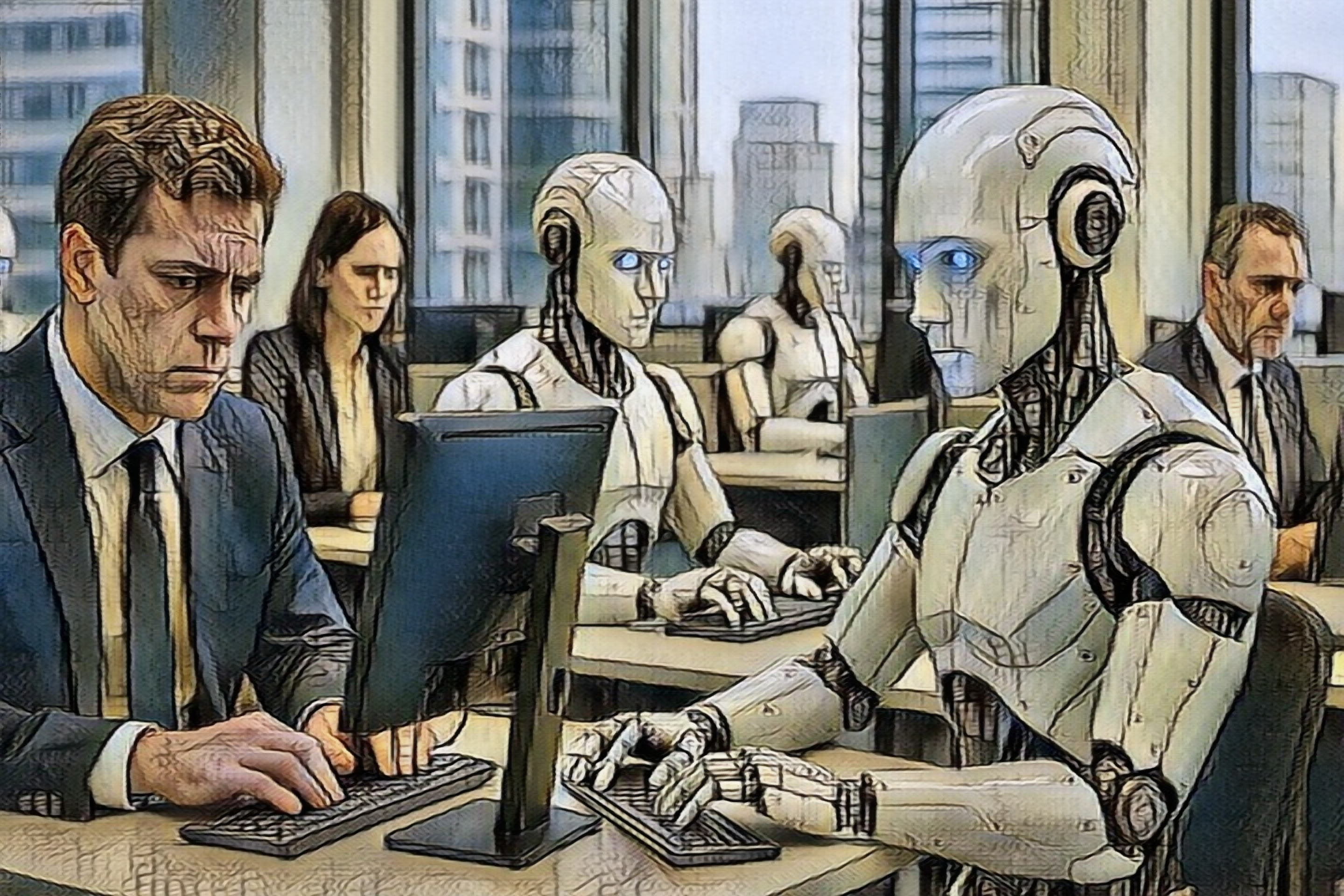
It started with a look. Blank, polite, a little scared—the kind students give when you ask what they’re majoring in and they hesitate before saying “journalism,” or “finance,” or “communications.” The look that says they’re wondering if you’ll laugh. Or worse: nod with pity.
They know. Somewhere between TikTok and ChatGPT-4, they started to suspect that the world they were preparing for no longer exists.
Their professors haven’t caught up.
One student, second-year, had just finished a legal research project when she found out the tool she’d used—the one her professor warned against—had already been adopted by three firms in Boston. Not as a shortcut. As protocol.
She shrugged. “Guess we’re not supposed to learn how it really works until we’re already obsolete.”
“We are preparing students for jobs that won’t exist, with tools that are already obsolete.”
—David Autor, MIT labor economist
This isn’t just about AI eating the bottom rungs of white-collar work. It’s about higher education clinging to a model built for a world where knowledge stayed still. It doesn’t anymore. And the gap between what universities teach and what the future demands is no longer academic. It’s catastrophic.
Some schools try to keep pace by doubling down on speed—faster bootcamps, slicker tech stacks, new credentials that sound like app updates. But these are surface fixes.