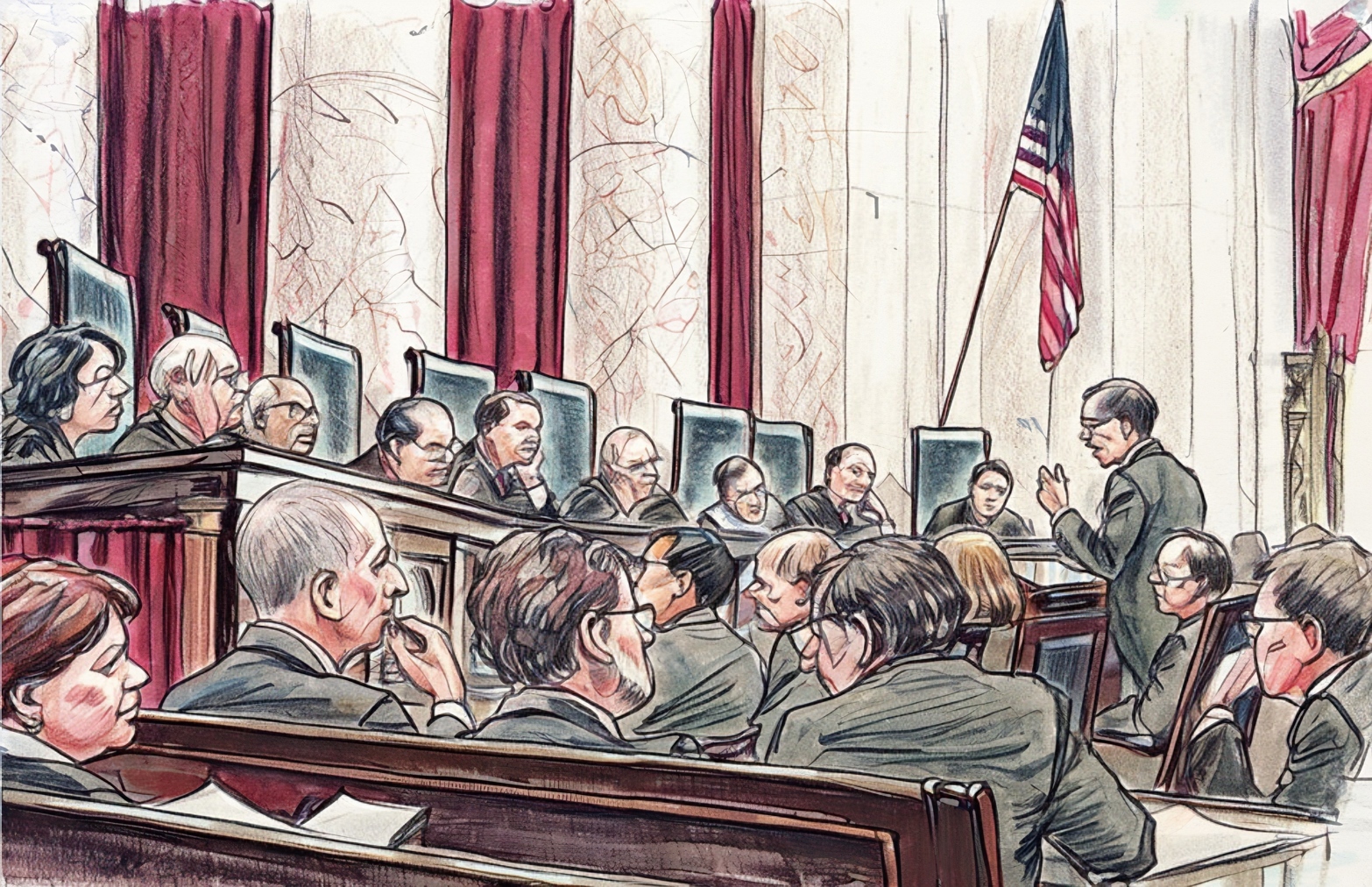
It smelled like floor polish and wet wool.
The man in the black coat—three buttons, slightly frayed—stood just inside the doors of the Supreme Court rotunda, blinking as his glasses fogged from the November cold. He’d flown in from Indiana the night before, missed a connection in Newark, and caught the first train from Union Station that morning. He owns a small company that imports STEM toys—wooden blocks, tactile math puzzles, bilingual learning kits—from a factory in Shenzhen he’s used for over a decade. Customs paperwork used to take an hour. Now it’s a migraine. Ever since the new 10 percent tariff blanketed nearly every import, his warehouse margins haven’t just thinned—they’ve evaporated.
He isn’t a plaintiff in the case. But he came to hear it argued, because what happens in that chamber could decide whether he’s still in business by Christmas.
The courtroom doors opened precisely at 9:55 a.m., and by 10:00 the justices were seated. The first lawyer stood. It was Neal Katyal, representing a coalition of small businesses, a dozen states, and trade associations rarely seen on the same docket. He didn’t start with theory. He started with clarity.
“Tariffs are taxes,” he said. “And the president cannot rewrite the tax code by proclamation.”¹
The sound system buzzed faintly, amplifying the weight behind every word. No one in the room missed the implication: the president had, without a single vote in Congress, imposed a ten‑percent tax on almost every product entering the United States. What began as retaliation against rising Chinese imports and political pressure to “protect American jobs” had expanded into a global duty system by executive order.
Across the lectern, D. John Sauer—arguing for the administration—rose with equal confidence.