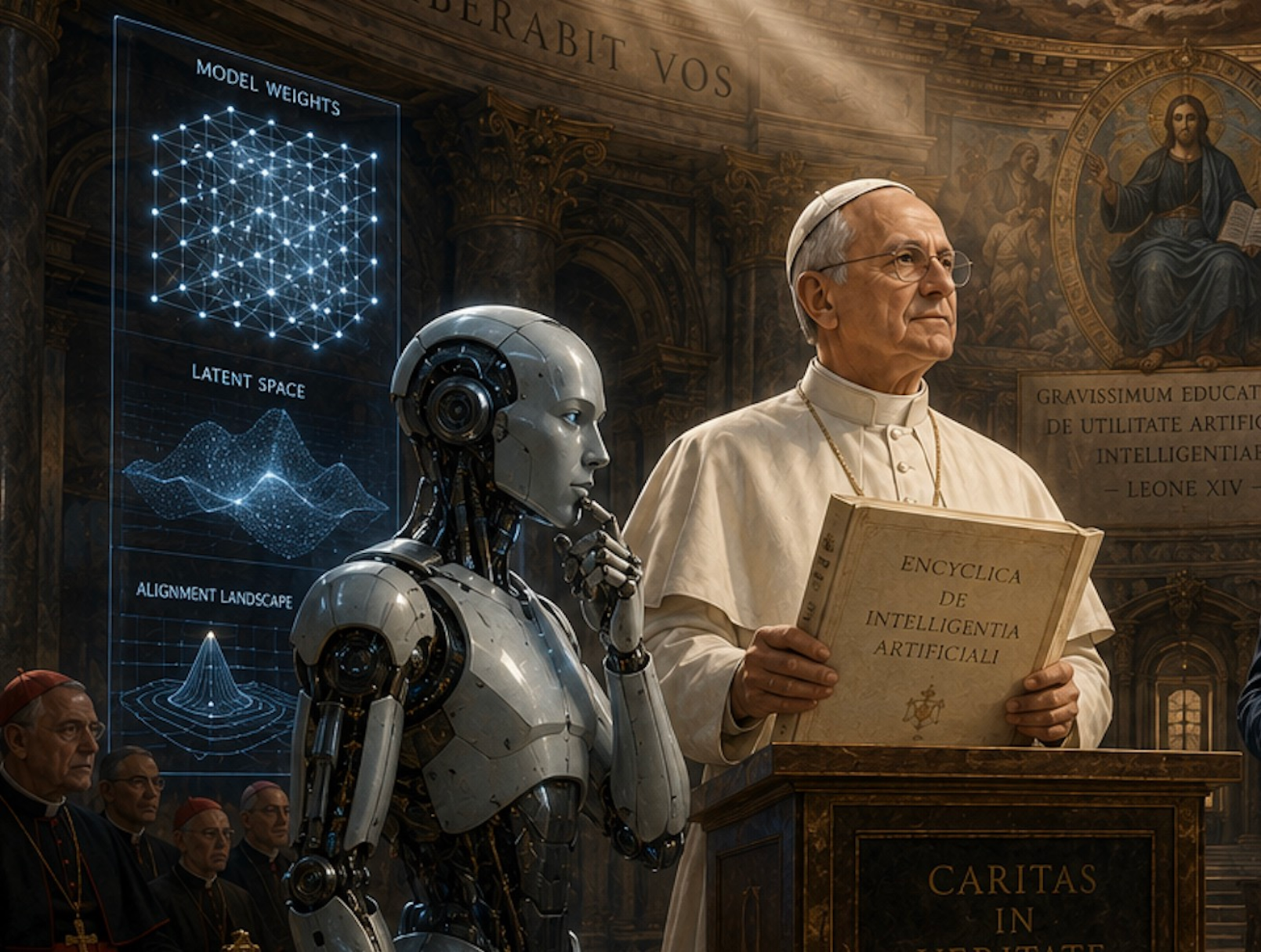
It does not look monstrous. It looks attentive, almost deferential, one metallic hand raised as if it, too, has entered the room to think.
The image is fake. The problem is not.
Artificial intelligence has entered the old rooms now. It is in classrooms, offices, hospitals, courts, newsrooms, markets, weapons systems, search engines, family life, and government. It does not always arrive as a robot at the lectern. More often, it arrives as an answer, a summary, a score, a recommendation, a translation, a diagnosis, a target, a plausible photograph, or a paragraph that sounds as if someone meant it.
That last form matters. In May 2023, an image that appeared to show smoke rising near the Pentagon spread across social media as if there had been an explosion near the headquarters of the United States military. Some accounts treated it as breaking news. Markets briefly dipped. Then Arlington fire officials and the Defense Department said what the image itself could not say. There had been no explosion. The picture appeared to be artificial intelligence imitating evidence.¹
The false image did not need to persuade everyone. It only needed to move faster than judgment.
The adult question is not whether the machine is impressive. It is who remains responsible for what the machine does.
That is the room Pope Leo XIV entered with Magnifica Humanitas, his first encyclical, released in May 2026. The document arrived deliberately in the tradition of Rerum Novarum, Leo XIII’s encyclical on labor and industrial capitalism. In 1891, the Church asked whether industrial power would serve the worker or consume him.