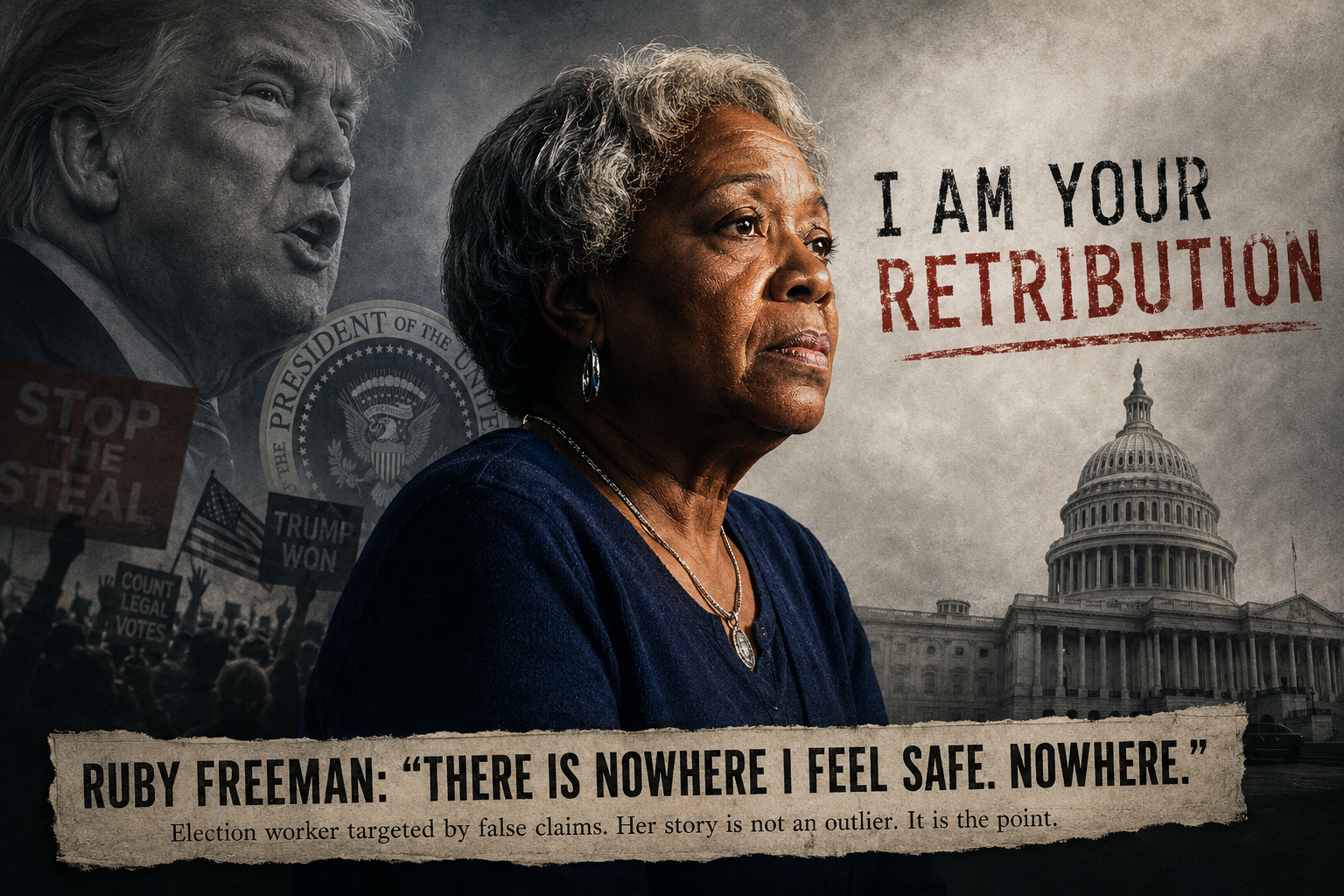
Ruby Freeman did not run a government. She did not command troops, write laws, sit on a court, publish a newspaper, or lead a political party. She counted ballots in Fulton County, Georgia — and that was enough.
After the 2020 election, Freeman and her daughter, Wandrea “Shaye” Moss, were pulled into a false story Donald Trump and his allies used to explain away his loss in Georgia. Rudy Giuliani told legislators the two women had passed around USB drives like “vials of heroin or cocaine.” Under oath, Moss explained what her mother had actually handed her: a ginger mint.¹
The lie was ridiculous. The consequences were not. The threats came. The racist messages came. Freeman stopped wearing the shirt that identified her as Lady Ruby. Around January 6, the FBI told her to leave her home for her own safety. She had lived there for 21 years.¹
Georgia officials later found no evidence of the fraud Trump and his allies had alleged. By then, the damage had already been done.²
When Freeman testified, she said, “There is nowhere I feel safe. Nowhere.” Then she was asked what it felt like to be targeted by the President of the United States.¹
That is the question. Not which label from the last century can be pasted onto the present. Not whether America looks enough like some old catastrophe to make the comparison stick. The better question is closer to home: what kind of system turns an election worker into an enemy of the people?
There is a political-science term worth knowing: competitive authoritarianism. It describes a system where the familiar rituals of democracy remain. Elections happen. Courts open. Newspapers publish. Opposition parties campaign.