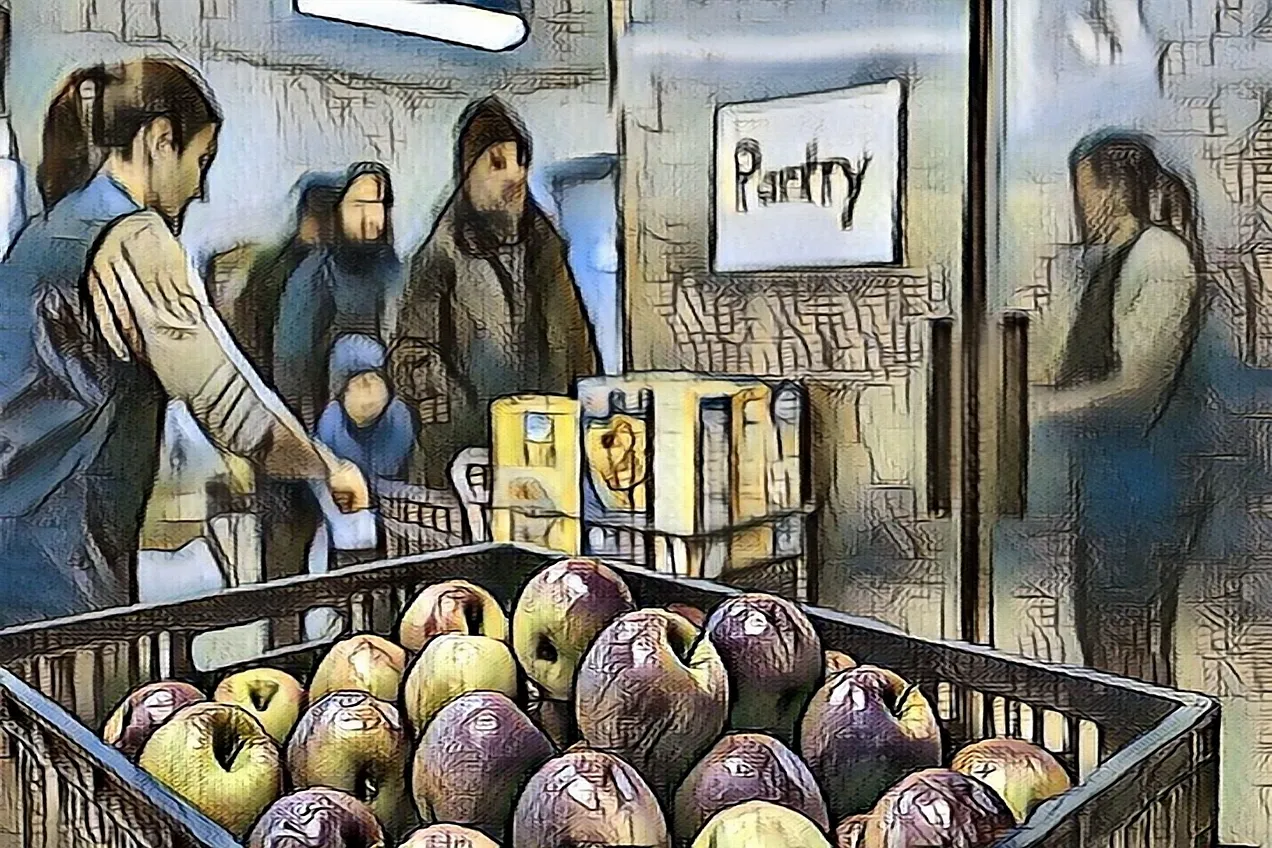
—bright and waxy, a sweet note beneath the metallic hum of the cooler—as the pantry door in Kittery swings open and parents edge past a cart of cereal. Megan Shapiro-Ross, sleeves shoved high, moves like a line cook: scanning, swapping signs, nodding a volunteer toward diapers. She says they’ve seen hundreds of new households since January, some driving in from towns that never used to send anyone. A dad studies gallons of milk, then the propane bill in his pocket. Shapiro-Ross keeps her voice even. “The power of community is what’s going to allow us all to survive,” she says, and for a beat “power” means a walk-in that still hums and a check that clears before the freezer flickers.
Pantries stretch until they don’t. Federal shipments thin; the pantry buys retail; retail is where tariffs land first. That’s the loop along Route 1: groceries climb just as more families need them. In economics it’s pass-through. In a kitchen it’s a single beep at checkout.
Across the river in Brunswick, Nikaline Iacono watches spreadsheets turn into stomach knots. Wine, cheese, olive oil—anything that crosses a border—ticks up, then up again. She can cushion some of it, but margins aren’t yoga mats. In Scarborough, roaster Troy Cobb loads Brazilian beans into the drum and admits he stocked up to dodge the tariff cliff. That bought weeks, not safety. “The last thing we want to do is raise prices,” he says, and the roaster spins at a flat, unheroic whir.
As tariffs ripple, big-box buyers replenish at higher costs; corner shops don’t get memos—just invoices. In a Kittery cart: rice up a notch, oil up a notch, coffee up a notch—one notch times a winter.
By midmorning in Exeter, New Hampshire, the line wraps past pails of pet food. “A lot of new families,” says Molly Zirillo, who can time the surge to the minute school lunches stop. The upstream food bank is out a chunk of support; when those pallets thin, pantries buy, and buying food is the costliest way to run a free market.