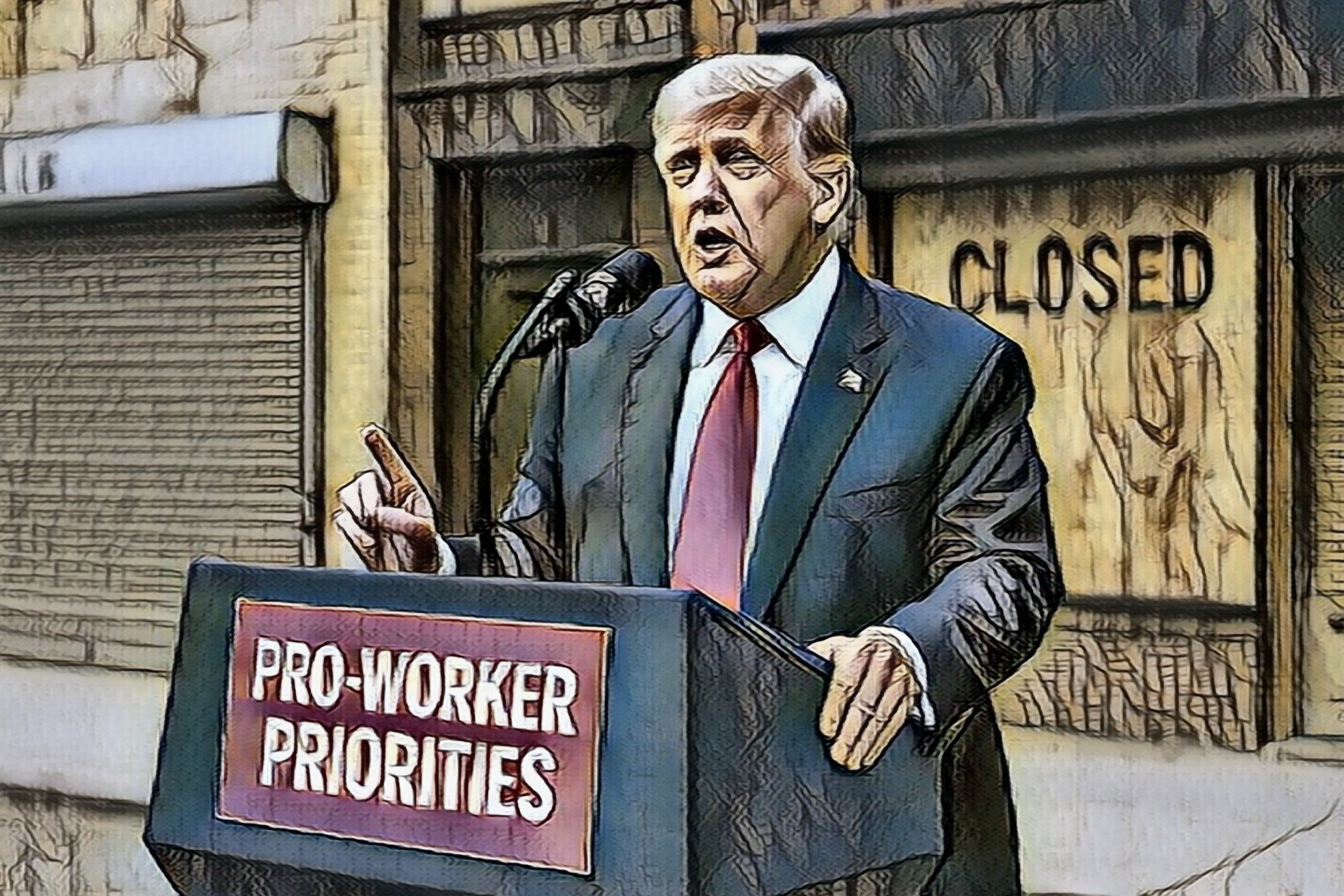
The sign said Pro-Worker Priorities. Block letters, white on red—like a campaign sticker slapped on a wrecking ball. A Trump aide placed it on the podium moments before the cameras rolled. No one mentioned the fine print—least of all the man with the microphone.
Behind the showbiz came the math: $1.1 trillion in cuts to Medicaid, SNAP, Pell Grants. The top 0.1%? They walk away with more than most families make in a decade.
“A waitress might save fifty bucks. A billionaire saves half a million.”
That line came from Michael Linden, a former senior budget official under Obama. “It’s not a tax policy,” he told NBC News. “It’s a transfer scheme—from poor and working families to people who don’t need help.”
Trump’s 2025 Big Beautiful Bill isn’t new. It’s a sequel. The bill breathes life back into the 2017 tax cuts and adds more: deeper carve-outs for corporations, estates, and the ultra-wealthy. It cleared the House with all the usual fanfare—and beneath it, a harsh truth: the richer you are, the richer you get. Everyone else? They pay for it.
The numbers are precise. The Tax Policy Center found the top 1% would get an average tax cut of $44,000. The top 0.1%? Nearly $390,000. Middle-income families would lose around $700 per year once temporary credits expire in 2026.
The cuts go even deeper: Medicaid slashed, SNAP gutted, IRS enforcement defunded, housing and college aid on the chopping block.
“It’s the largest upward wealth transfer in U.S. history—written in legislative ink.”
Sharon Parrott of the Center on Budget and Policy Priorities didn’t flinch when she said it. And the cost? At least $3 trillion added to the deficit.