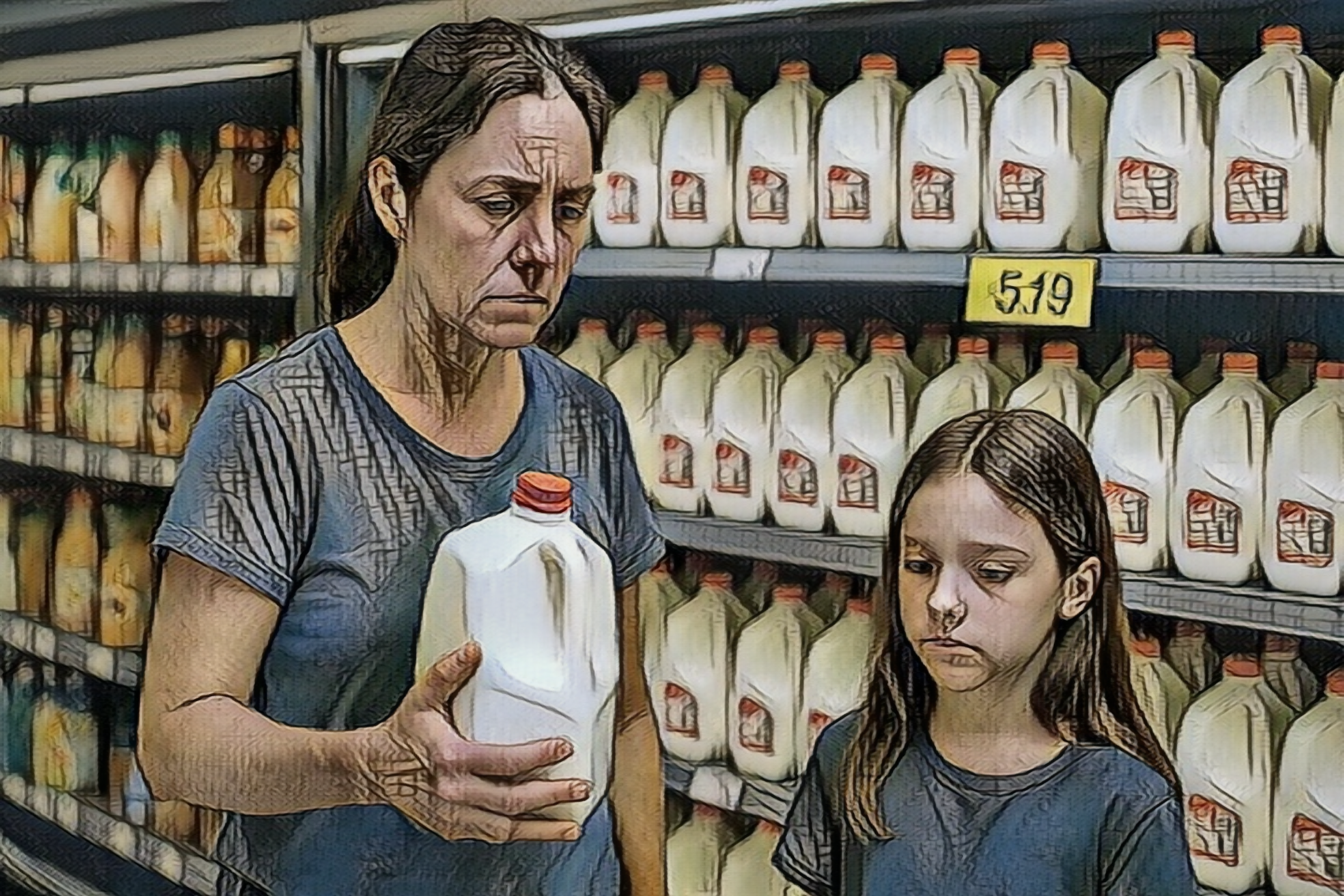
Maggie’s daughter doesn’t ask for milk anymore.
She used to pour a glass with every breakfast—out of habit, not entitlement. Now it’s just water. No complaints. No protest. Just absence. Like she’s figured out that some things aren’t worth asking for anymore.
At the Stop & Save in Visalia, milk costs $5.19 a gallon. Maggie only buys it on sale. She keeps an eye on the flyers.
She works the front desk at a dental clinic, thirty-eight hours a week—just below the cutoff for benefits. Her husband patches HVAC systems in and around Fresno. Together they bring in just under $50,000 a year. It used to be enough. Enough to scrape by, enough to keep the lights on, enough to say yes now and then. But after the latest wave of tariffs and the rollout of HR1, enough has turned into not quite.
“We live like we’re always waiting for the next punch,” she says. “We don’t splurge. We survive. And even that costs more now.”
Gasoline alone eats $400 a month—up from $260 a year ago. Groceries are $160 more. Clothes? Only from Goodwill, and only if the sizes match. Her daughter’s shoes are six months old. The soles are peeling off, but she doesn’t say a word.
Trump’s tariffs added $4,560 a year to the cost of living for families like hers—before higher energy bills, before the repeal of the green tax credits that helped with their swamp cooler upgrade, before the dollar began to slide against nearly every major currency. Now the costs are layered: imported staples, electronics, even diapers—everything is just a little more expensive. And HR1? It gave her nothing. No savings. No lift.
It just took.