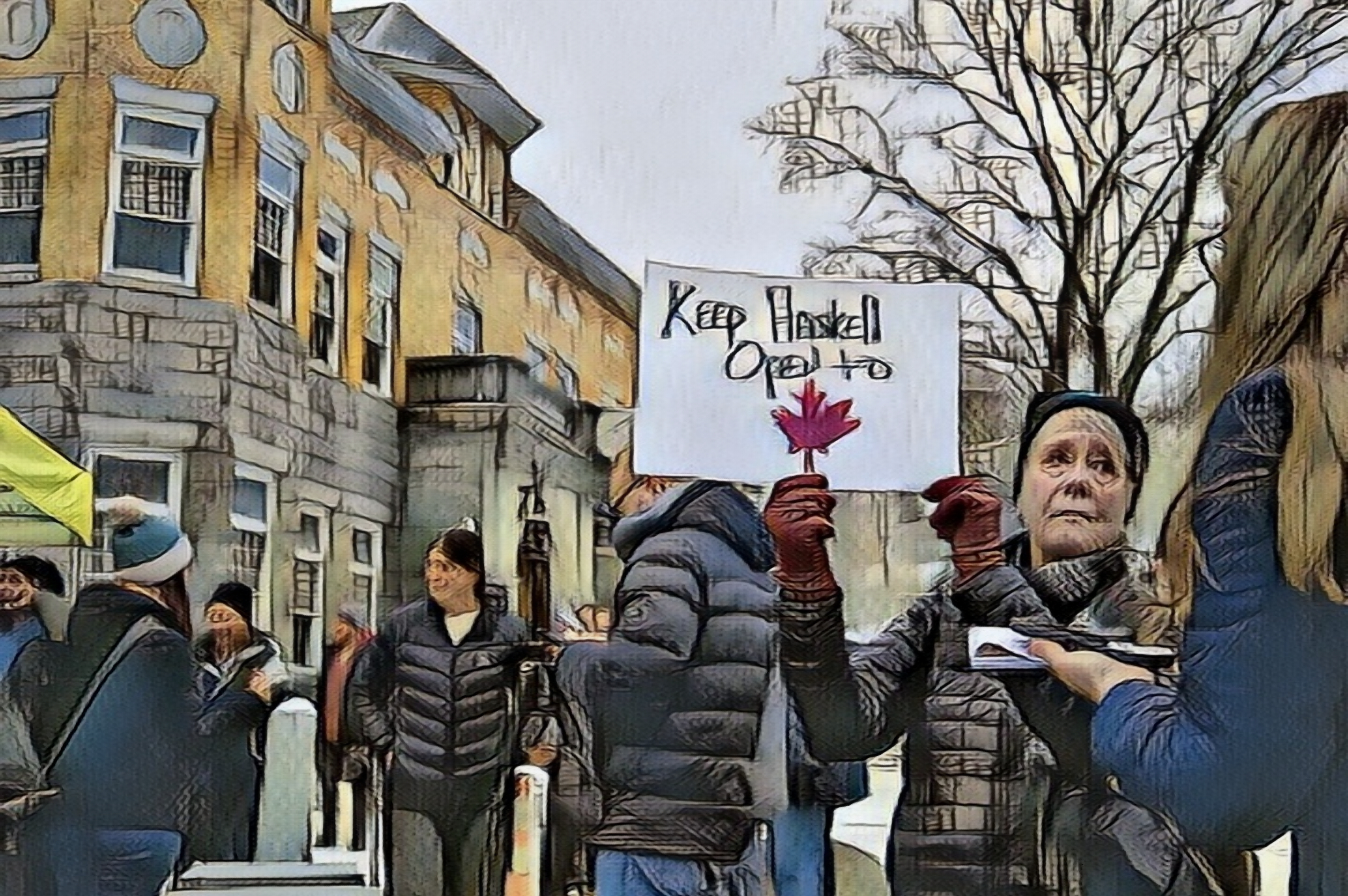
By the time they told Canadians to use the back door, the building had already made its point.
For 121 years, the Haskell Free Library and Opera House stood as a living contradiction: a building split by a border that refused to divide. Inside, a black line sliced the hardwood floor, marking where the United States ended and Canada began. But locals didn’t step over it. They ignored it.
One door. Two nations. No checkpoints.
That door is now closing.
The Haskell was never just a library or a stage. It was a civic experiment made of stone and story—a gift from a Canadian widow and her American son in 1904, built with the belief that culture could bridge countries. The opera house would fund the library. The library would feed the mind. And the building itself would straddle a political boundary, on purpose. A blueprint for cooperation.
You could sit in Vermont, watch an actor perform in Quebec, and forget about borders entirely. You could check out a book shelved in Canada after walking through a door on American soil. The Haskell made it all feel normal. A black line on the floor, not a wall.
“The border may exist in theory, but not in the hearts of those who use this place.” — Rick Ufford-Chase, Mayor of Newport, Vermont