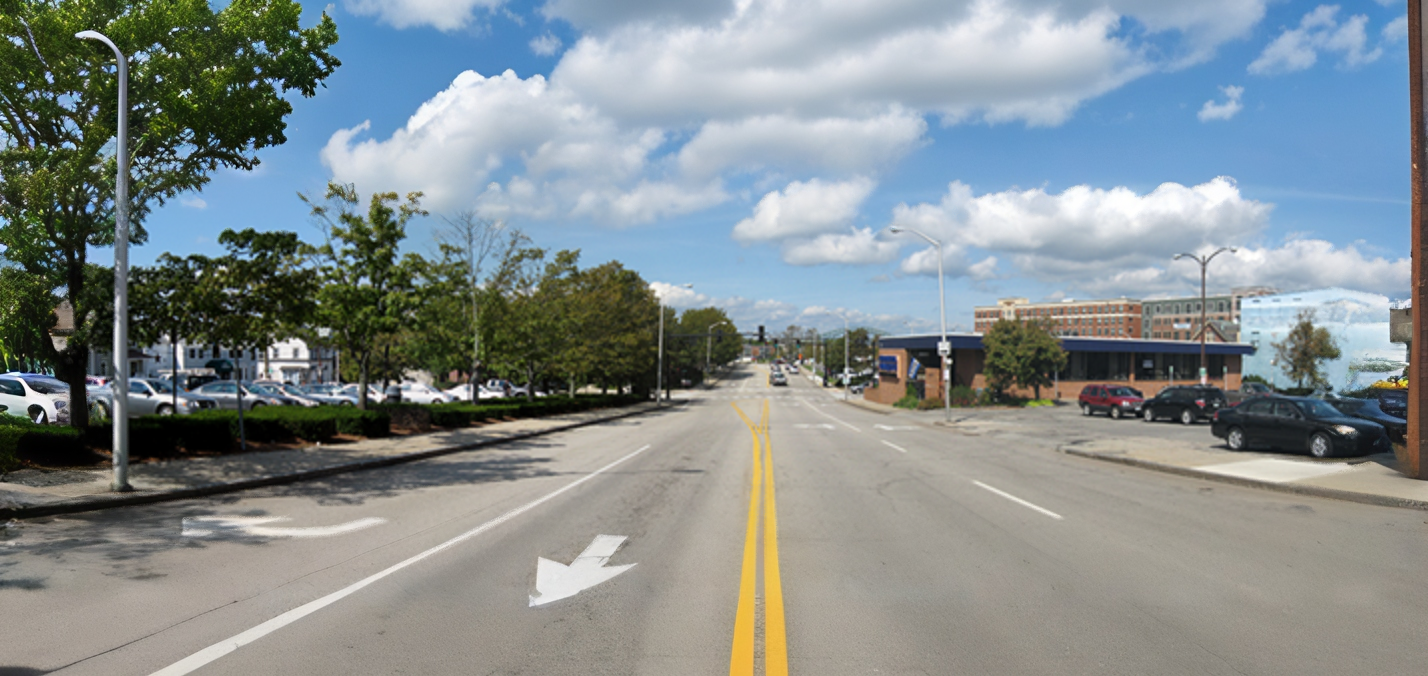
A Portsmouth resident looking at the crosswalk at Dennett and Maplewood did not need a spreadsheet to know something was wrong.
“The crosswalk at Dennett and Maplewood is VERY dangerous,” Peter Geremia wrote to the city’s Parking and Traffic Safety Committee. Drivers were moving too fast. Signs were being ignored. The warning was plain because the problem was plain. A person wanted to cross the street without being hit.
Once the problem entered government, it became a packet, a committee agenda, a timestamp, a staff discussion, a traffic-safety item, and eventually one small piece of a larger municipal system. That system includes parking revenues, street design, school traffic, downtown construction, neighborhood complaints, police enforcement, budget assumptions, and citywide priorities.
Portsmouth has meetings, packets, spreadsheets, videos, agendas, minutes, staff responses, public-comment windows, committee referrals, and archived attachments. Much of the machinery is available to anyone with the time and patience to chase it. The harder question is whether residents can understand what they are seeing.
Modern local government increasingly runs through technical systems ordinary citizens cannot realistically audit. Budgets are one such system. Parking funds are another. Energy aggregation, school technology, preservation review, visitor analytics, software contracts, insurance costs, and special-education placements all carry public consequences. Each can be explained. Few can be easily understood by a resident who has a job, a family, and a life.
That is the widening gap between public process and public understanding.
Portsmouth’s proposed FY27 budget is $157,971,390. That number is easy to find. It is up $7,676,450, or 5.11 percent. The estimated tax rate is $12.07, up 56 cents, or 4.88 percent. Those clean numbers fit in a paragraph, while the explanation sprawls across budget categories, staff responses, policy choices, and assumptions most residents will never see in one place.
To understand the budget, a resident has to know that salaries and benefits account for 76 percent of the proposed increase. Then the resident has to know that the salary and wage line itself rises by only 2.33 percent, while health insurance rises by 21.42 percent. A salary line may look like a large raise when it is something else.