The Court That Governs by the Pause
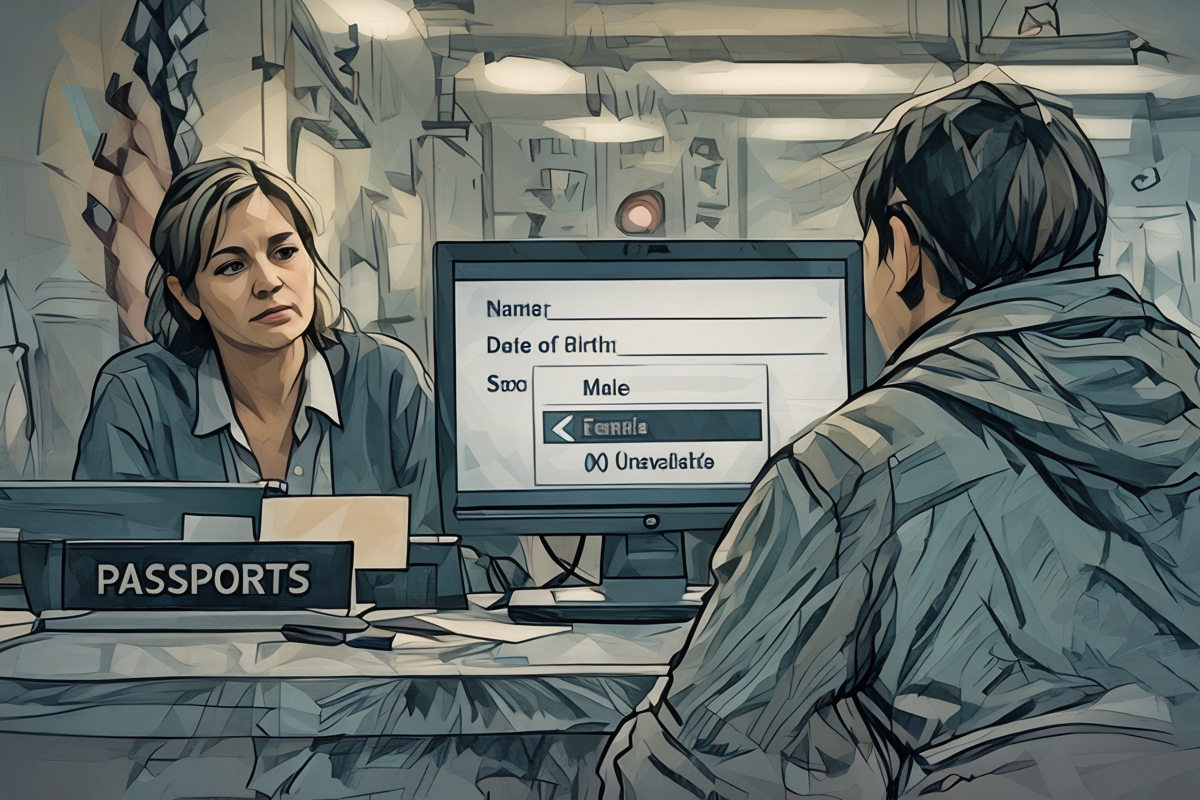
The clerk did not look up when she slid the form across the counter.
It was a federal building on a weekday morning, fluorescent lights humming overhead. Outside, a flag snapped against its halyard in a February wind. Inside, the line shuffled forward, coats draped over arms, phones tucked back into pockets as people prepared to be processed.
The form had already been filled out — name, date of birth, place of birth, sex. The applicant hesitated for half a second, then checked the box that matched the marker they had carried on every federal document for years.
The clerk typed, paused, and frowned.
“That option isn’t available anymore,” she said gently.
She turned the screen just enough for the applicant to see. The field had changed.
There had been no notice in the mail, no hearing anyone remembered, no explanation taped to the glass. Somewhere, between a federal judge’s injunction and a future court decision that might not come for months, the government had been given permission to act — not because it had prevailed on the law, but because it had asked for a stay.¹
The passport would be issued. The marker would change. And the policy’s legality would remain unsettled.
Rights, in this version of America, would exist only after you survived the interim.