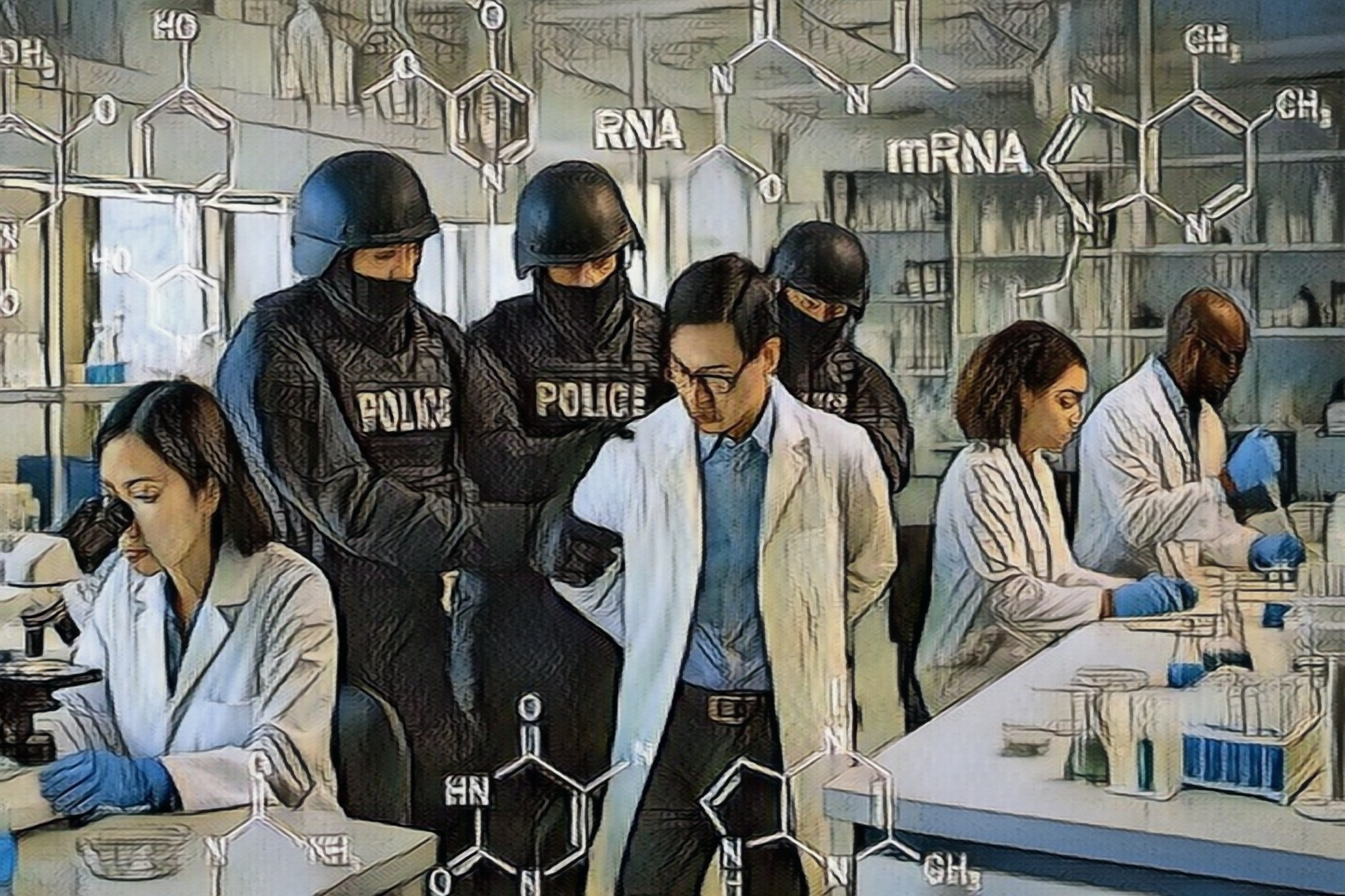
The floor smells of warm toner and burnt plastic—the breath of an overworked machine. Linh leans against the counter, one palm resting on a manila folder stamped FY2026 REPROGRAM. The copier whirs and spits a page. Fluorescent light drains the room to grayscale. Somewhere upstairs, someone is crying.
The sound comes in short, rhythmic bursts—like breath hiccupping through fabric. Linh doesn’t know the woman’s name. Just that she came from Peru, just got her visa renewed, just published a piece on stem cells in Nature Communications. The kind of paper that once opened doors.
The copier beeps. Paper jam. Linh opens the tray and tugs free a half-melted page. The text is skewed sideways: …termination of contracts under the Biomedical Advanced Research and Development Authority…
What’s breaking isn’t the machine. It’s the promise.
Three years earlier, the molecule in that memo had become a global hero. By the end of 2021, mRNA vaccines had averted over 20 million deaths worldwide, according to The Lancet—echoed by estimates from the WHO and Africa CDC.
“It’s not magic,” Karikó told a Hungarian interviewer in 2021. “It’s persistence.”
Persistence—and a scientific infrastructure that could move faster than any virus.
At the center was messenger RNA—a kind of biological text message your cells use to carry out instructions. If your DNA is like a recipe book locked in the back office, RNA is the sticky note that brings one dish’s instructions out to the kitchen. It tells the cell what protein to make, then disappears. That messenger had been known to scientists since 1961, when François Gros and Sydney Brenner first caught its trace. But only in the last decade did it become more than a middleman.