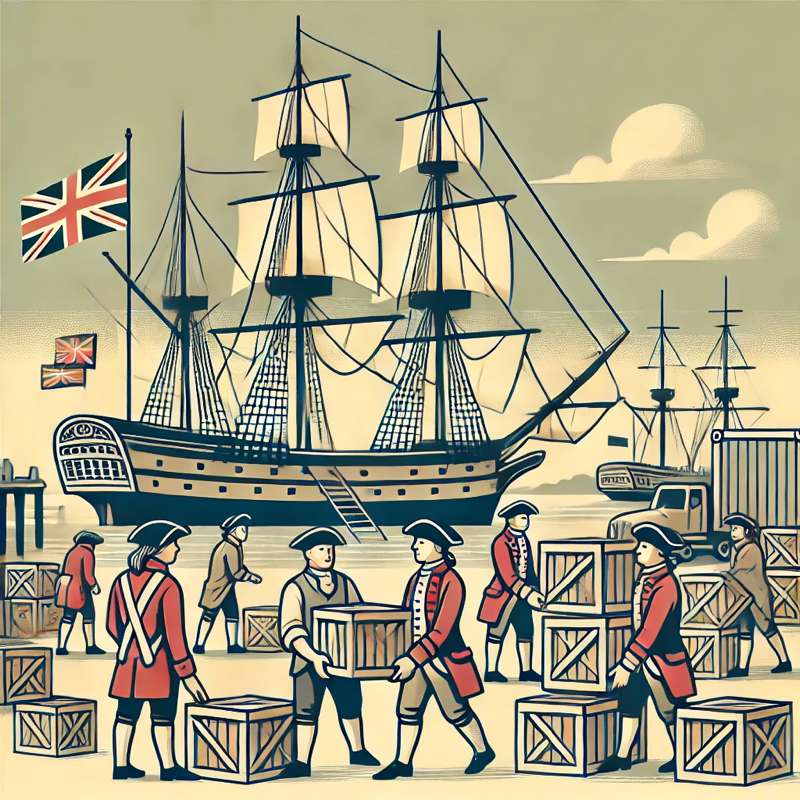
On a cold morning in 1808, the docks of Boston Harbor were unusually quiet. The bustling trade that had once filled the air with the sounds of workers shouting and unloading crates had slowed to a trickle. Merchants stood idly by their warehouses, staring at goods they could neither sell abroad nor replace with imports. The reason? The Embargo Act of 1807, a law passed by President Thomas Jefferson that prohibited American ships from trading with foreign nations.
The embargo was meant to punish Britain and France for interfering with American shipping during the Napoleonic Wars, but it ended up crippling American commerce instead. Business owners like Stephen Higginson Jr., a prominent Boston merchant, were vocal in their outrage. Higginson, whose firm depended on international trade, watched helplessly as his ships sat idle and his profits evaporated. "A blow that has ruined the country’s trade,” he lamented. Along the Canadian border, smugglers defied the embargo, sometimes clashing violently with federal agents. Jefferson even sent troops to enforce his policy, but it was useless. By 1809, the embargo was repealed, leaving behind a devastated economy.
Decades later, another crisis unfolded in South Carolina. In 1832, John C. Calhoun, then the sitting Vice President, led a rebellion against what Southerners called the "Tariff of Abominations." This protective tariff was designed to help Northern manufacturers, but it raised prices on imported goods, hurting the agrarian South. South Carolina declared the tariff unconstitutional and refused to collect it, an act of defiance that led to the Nullification Crisis. President Andrew Jackson, never one to back down from a challenge, responded with the Force Bill, threatening to use military action to ensure compliance. The standoff nearly led to war, but a compromise was reached before bloodshed. However, the crisis foreshadowed the bitter sectional divide that would explode into the Civil War three decades later.
A century later, in 1930, America made another devastating mistake.