Benjamin Gitlow wasn’t planning a revolution—he was writing about one.
In July 1919, he published the Left Wing Manifesto, a blunt call for socialism and class struggle. There were no bombs, no plots, no weapons. Just words. For that, he was arrested, tried, and sentenced to ten years in prison. His real offense wasn’t violence. It was language.
Today, the methods are less obvious—but the message is familiar: speech is only safe when it flatters power.
Gitlow v. New York was the first time the U.S. Supreme Court said, out loud, that the First Amendment applied to the states. It was also the first time the Court ruled that states could still punish political speech if it merely hinted at danger. Gitlow’s words didn’t incite a riot or lead to any violent act. But the Court decided they could—someday—and that was enough.
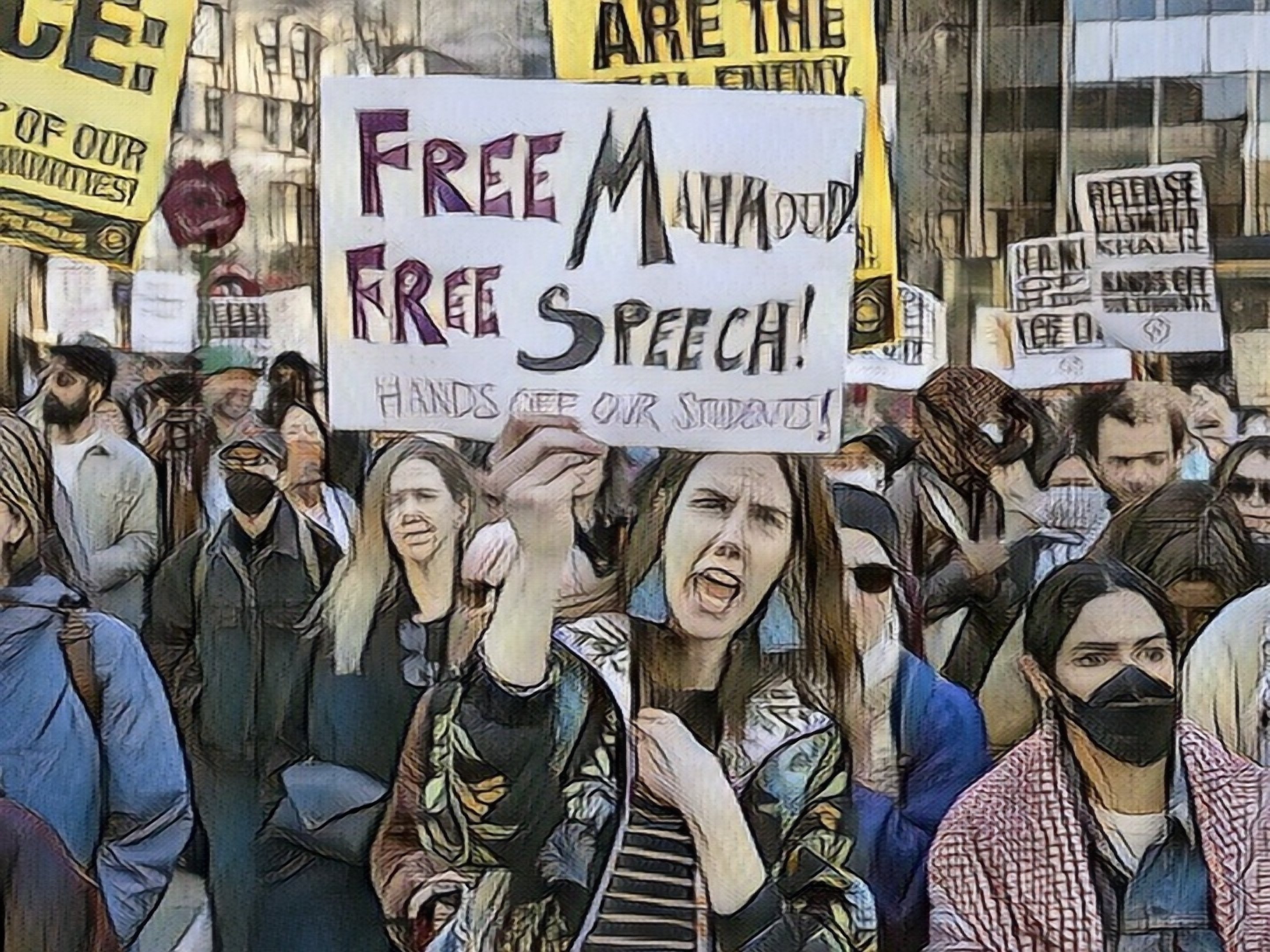
A century later, that same logic is getting a second life. Only now, it’s not manifestos that trigger government retaliation. It’s journalists, protesters, students, and the attorneys who represent them. Under the second Trump administration, the war on radical speech has returned. It’s just better dressed.
When the Supreme Court upheld Gitlow’s conviction in 1925, Justice Sanford described revolutionary speech as a “spark” that could “burst into a sweeping and destructive conflagration.” That metaphor—of words as fire—became the legal justification for jailing ideas.
In 2025, the flames are rhetorical, but the burn is real.
In April, Mahmoud Khalil, a Palestinian student at Columbia University, was detained by federal agents and slated for deportation. His alleged crime? Participating in peaceful protests against U.S. arms shipments to Israel. No violence, no vandalism, no incitement—just a placard, a chant, and a stance the administration didn’t like.