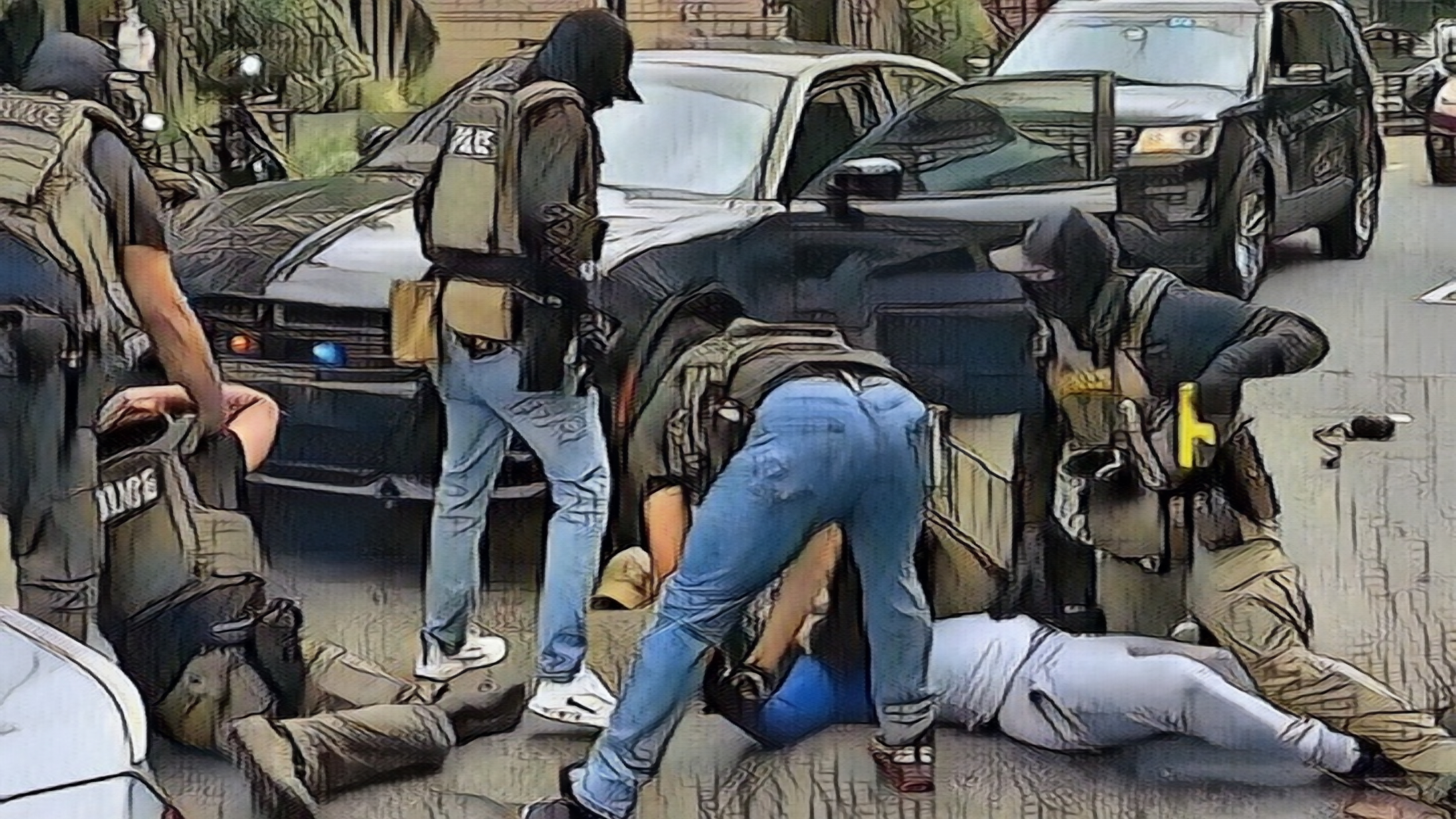
It begins with a smell—old varnish rising under institutional rot, dulling the air in a sealed courthouse waiting room. Fluorescent lights drone overhead. A guard snaps Velcro around his radio, the sound small but authoritarian. Outside, ICE agents load a man into a black van. Inside, a mother grips the edge of a Formica bench, her fingers sinking into the chips. Her shoulders tremble, but her face doesn’t move. Each clank of steel against steel sends her pulse racing.
No one meets her eyes. Every cough reverberates. Every door click sounds conclusive.
She can’t even be certain the face inside that van is her son
Later, speaking into a recorder, she whispered: “It wasn’t just the arrest—it was the not‑knowing. They erased the air before we could ask.”
That was a courtroom in El Paso just last week. But that same hush—rubberized floors, ink-stamped papers, “terrorism‑related” next to “journalist”—settles over cities from Portland to Phoenix to D.C., marking a uniformed absence and a widening distance between the state and its subjects.
In 2020, Portland’s streets became fragile battlegrounds. Medics in neon vests formed archways of care amid clouds of tear gas and pandemic anxiety. Oregon health officials warned that tear gas could worsen COVID‑19 spread. Physicians for Human Rights sent observers; some were caught in the crossfire. DHS began listing journalists in logs as “U.S. persons”—a designation a former counsel described as “bizarre.” It took a federal court order to push back the fog.
In August 2025, the Trump administration implemented plans to centralize policing in D.C., and granted ICE sweeping authority over protest surveillance. Courthouse arrests resumed—not for enforcement, but as ritual. One adviser described it as “shock and awe”—less strategy, more ceremony. Ultimatums were given to mayors of Boston, Chicago, Seattle and fifteen other sanctuary cities.
This pattern has precedent.