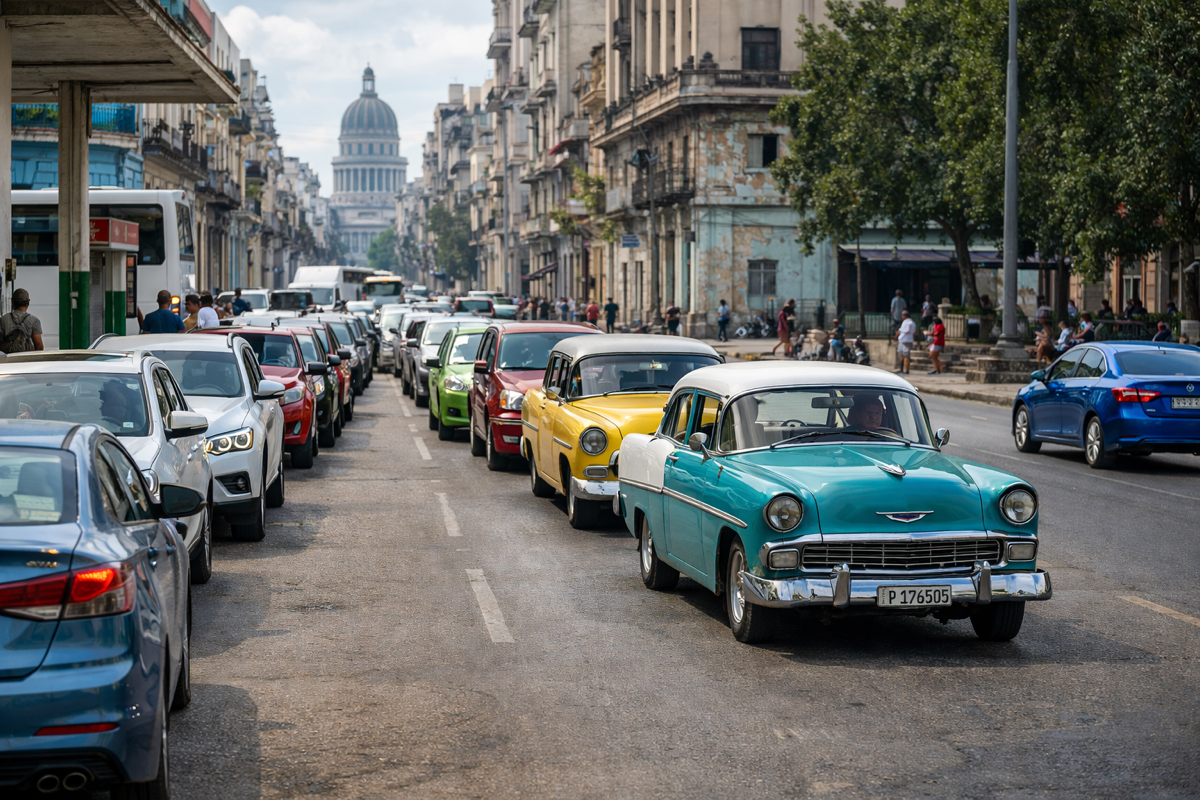
When a missed bus becomes the first sign that a country is running out of power
Solanda Oña expected to do what she has done for years: close her book stall in Havana’s breezy seaside district, count the day’s sales, and catch a bus back toward the working-class center of the city where she lives. One Thursday night in early February, the bus never came. The 64-year-old ended up sleeping in a nearby restaurant, waiting for morning, uneasy that the route she had trusted for years might be turning into something closer to rumor than transportation.¹
“I’m very worried,” she told the Associated Press. “Before, things were always difficult. But there was always one bus. One way to get home. Now, there are none.”¹
Fuel shortages often reveal themselves first not through empty roads but through small disruptions in routines people assume will hold.
In Washington, what is unfolding in Cuba is described in the language of leverage, sanctions, and national security. On the island, it appears in more practical terms: how people move, how food stays cold, how hospitals keep lights and ventilators running through the night. Reporting from The Wall Street Journal describes daily life slowing sharply as Cuban authorities ration fuel, furlough workers, cut transportation routes, and send schoolchildren home early while attempting to stretch shrinking energy supplies.²
Cuba did not enter this moment from a position of resilience. The country’s electrical grid depends heavily on imported fuel, its generation infrastructure is aging, and long-term economic constraints have limited backup capacity when shipments slow or stop.³