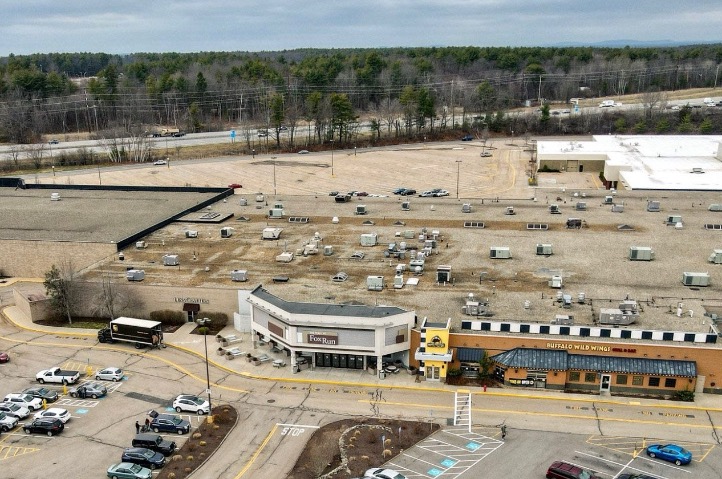
How Portsmouth, New Hampshire, is replacing retail with housing—and why Newington isn’t sure it can
The chain-link fence went up on a damp morning off Durgin Lane, the kind of coastal gray that flattens everything into a single tone until you notice the details—a forklift idling, a worker dragging plywood across the old entrance of the Bed Bath & Beyond, the faint geometry of parking lines that still pointed toward doors that no longer existed.
A man in a heavy winter jacket stopped near the curb, looked across the empty lot where the Christmas Tree Shops and Bed, Bath, and Beyond had been, and said to no one in particular, “That place paid for a lot more than what they sold.”
It did, though not in a way most people ever saw.
The loss of retail doesn’t just remove a store. It removes one of the most efficient components in a municipal tax system—an asset that generates high revenue while placing relatively limited sustained demand on services—and replaces it with something that may be more valuable on paper but behaves differently once people begin to live inside it.
That shift is what Portsmouth is now working through on this site, and what Newington is still negotiating around at Fox Run Mall.
The difference isn’t philosophical. It’s structural.
In New Hampshire, property taxes don’t distinguish between residential and commercial rates.