Trump did not invent political corruption. He made it tradable.
The old corruption needed weight. Land had to be seized. Gold had to be moved. Oil had to be pumped. Customs revenue had to be skimmed. Public money had to be wired through banks and hidden behind cronies, relatives, shell companies, palaces, or foreign accounts. Even when the theft was enormous, the machinery was usually visible. Someone controlled the treasury, the mine, the ministry, or the soldiers at the gate.
Donald Trump found a lighter instrument: a name, an office, a token, a deregulatory promise, and a market willing to price proximity to power.
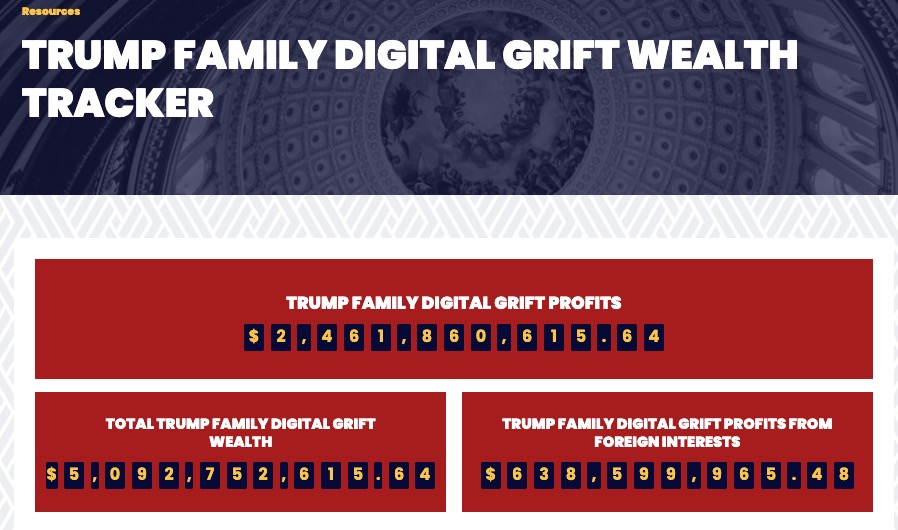
Reuters put the scale plainly: Trump’s family “raked in more than $800 million” from crypto-asset sales in the first half of 2025.¹ Reuters separately estimated that Trump-family crypto ventures produced about $802 million in income during those six months, compared with about $62 million from the family’s traditional real-estate, licensing, golf, and hospitality businesses.² The old Trump business took decades to build. The new presidency-linked digital business out-earned it many times over in half a year.
That is the hinge of the story. Suharto, Marcos, Mobutu, and Abacha stole more in total. They controlled states more directly and brutally. Trump’s place in the history of corruption rests on something narrower and more modern: the speed of the conversion. He has made public office legible to markets.
Crypto is the crucial instrument because it turns the old influence economy into something faster, more liquid, and harder to see. A hotel room or club membership is an old-fashioned payment for proximity. A token is different. It can be bought anywhere, traded anywhere, and priced by attention, loyalty, speculation, and regulatory expectation. The transaction does not have to announce itself as influence-buying. It can call itself investment.