How America’s Broken Grid Could Lose the AI Century
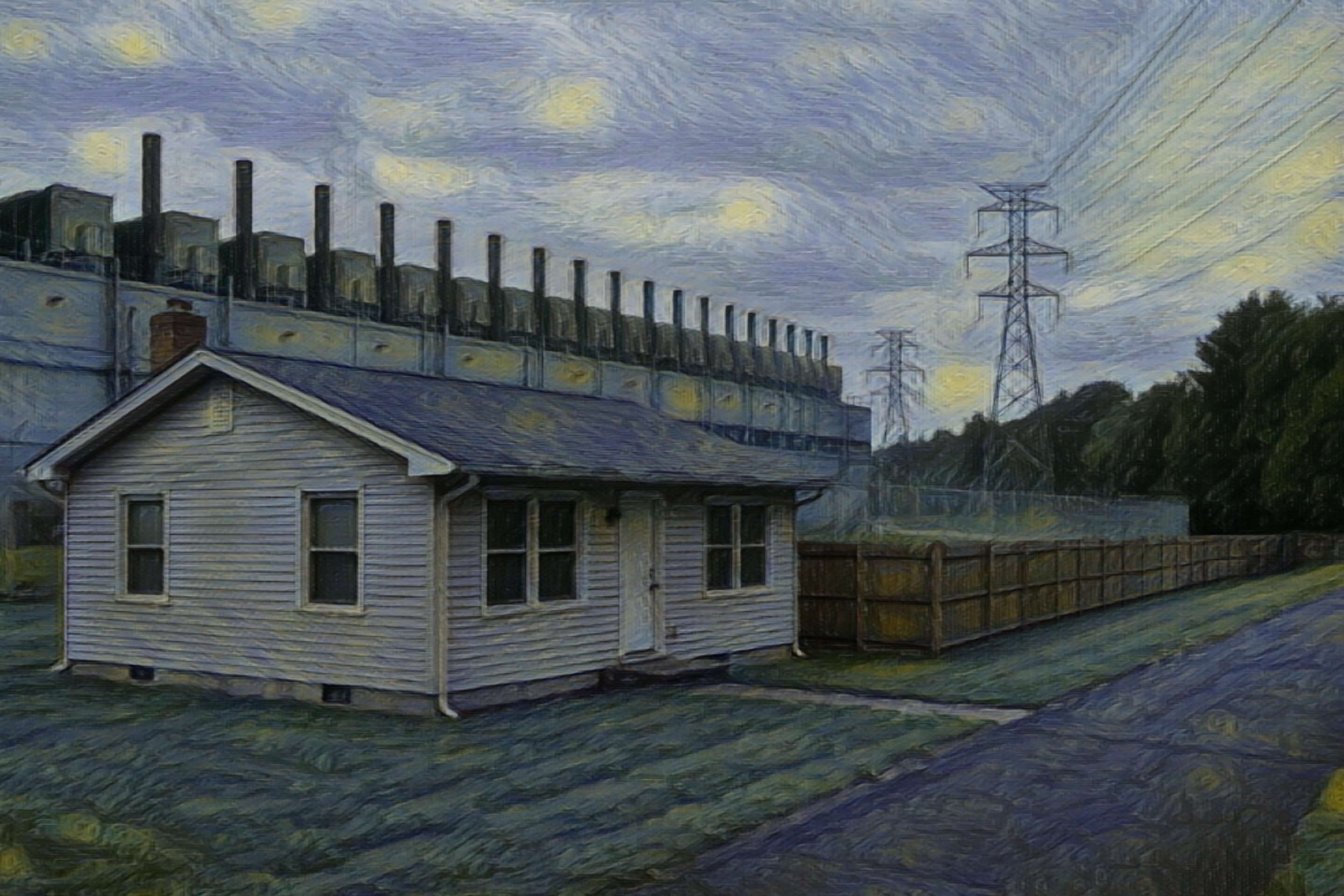
The hum starts before the sun. It comes through the drywall like breath—low, constant, a vibration behind the sink pipes that never goes silent. Mustafa Kaya says it sounds like a ship anchored outside his bedroom. He knows it’s not: it’s the rooftop diesel stacks of a hyperscale data center just beyond the fence line. Still, the metaphor holds.
His youngest stopped sleeping through the night. His wife gets migraines again, the kind she hadn’t had since they lived near the airport in Frankfurt. The noise wasn’t in the real estate listing.
Kaya’s town in Northern Virginia isn’t just a suburb anymore—it’s part of what insiders call “Data Center Alley.” Tech companies call it proximity to fiber. Locals call it sprawl. And when Dominion Energy proposed a new loop of high-voltage towers to reinforce the grid, neighbors packed the HOA clubhouse waving maps with red lines arcing over soccer fields and cul-de-sacs.
“We’re not opposed to data centers,” Kaya said that night. “But they shouldn’t break our lives to exist.”
The future we ordered showed up in someone’s backyard. And the lights don’t always stay on.
In the winter of 2025, a polar vortex clipped the mid-Atlantic and sent heating demand surging. Kaya’s kids huddled in the living room under blankets while alerts scrolled across their phones. The lights flickered again—barely enough to reset the microwave clock. Down the road, another diesel truck delivered backup fuel to the server facility. The hum, though, never stopped.
“We’re not out of electricity. We’re out of the ability to move it.”