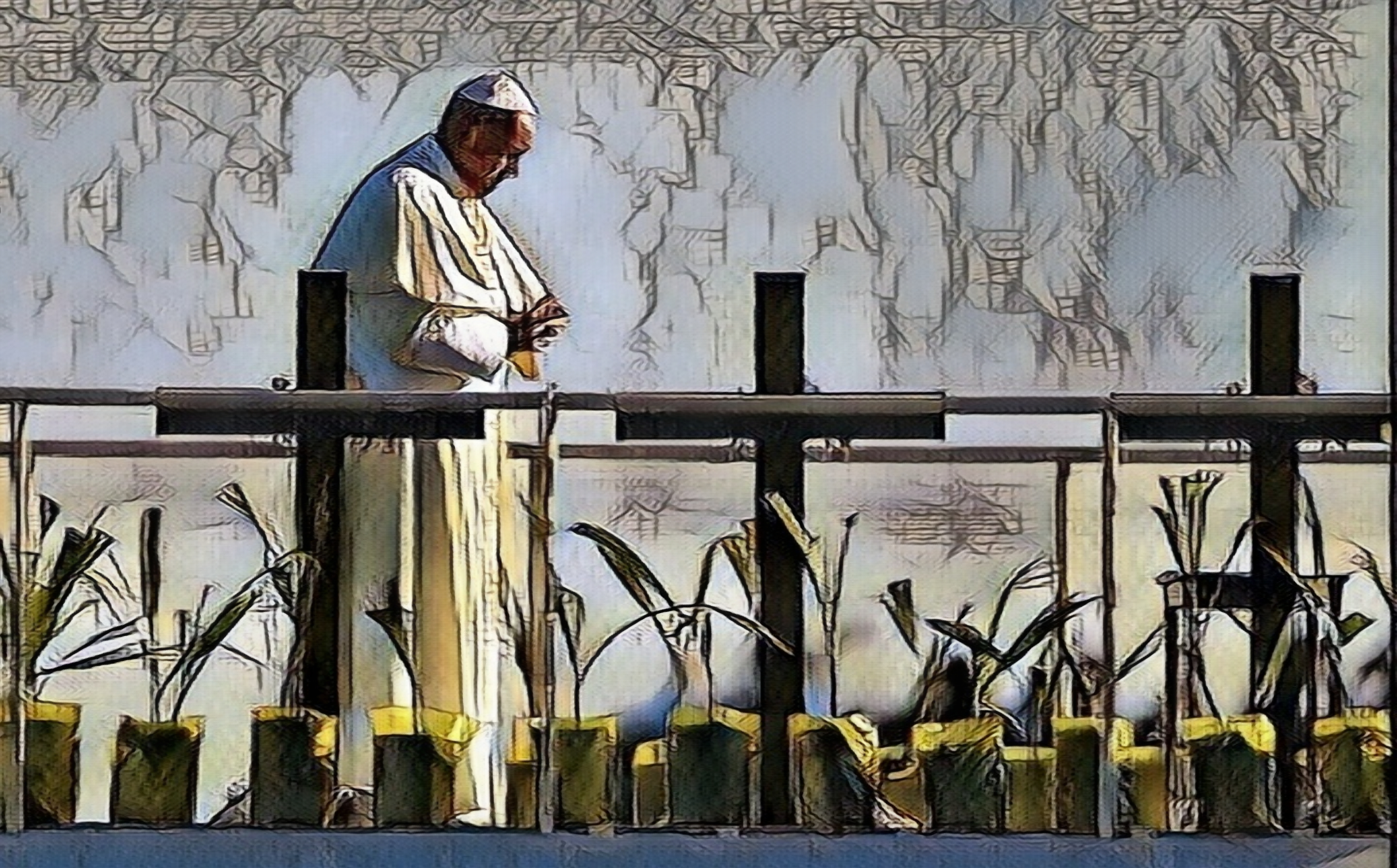
They gathered the boats, broken and splintered, from the shores of Lampedusa. That first summer, he stood there alone among them, laying a wreath into the sea. It was July 2013, and Pope Francis had been in office just four months. His voice rang out over the waters that swallowed so many: a condemnation of the "globalization of indifference."
PULL-Q UOTE:“What kills migrants is our indifference and that attitude of rejection.”
He began with gestures. Washing the feet of Muslim refugees. Airlifting Syrian families from camps to Rome. Celebrating Mass on an altar made from a wrecked migrant boat. But these weren’t just acts of mercy—they were political, theological, deeply intentional. Every public move was a warning: the way the world treats migrants is not a border issue. It’s a spiritual crisis.
Jorge Mario Bergoglio had been the son of immigrants. Born in Buenos Aires to Italian parents, he grew up knowing the dislocation of those who leave everything behind. As Archbishop, he walked the slums and rode city buses. As Pope, he built a theology around the migrant as Christ: exiled, unwelcome, carrying sacred dignity. He said it often, but in different ways: refugees are not problems. They are revelations.
PULL-QUOTE: “The flesh of Christ is in the flesh of refugees.”
By 2016, when Francis brought twelve Muslim Syrians back to Rome on his papal plane, the world had heard his message. Some embraced it. Many didn’t. Nationalist backlash across Europe turned migration into a wedge issue. In the U.S., then-candidate Donald Trump was building walls and winning elections on fear. Francis responded the only way he knew how—publicly, pointedly. "A person who thinks only about building walls," he said, "is not Christian."
Throughout his papacy, Francis offered more than sermons. He launched programs to shelter refugees in Vatican parishes. He created a Vatican office dedicated to migration.