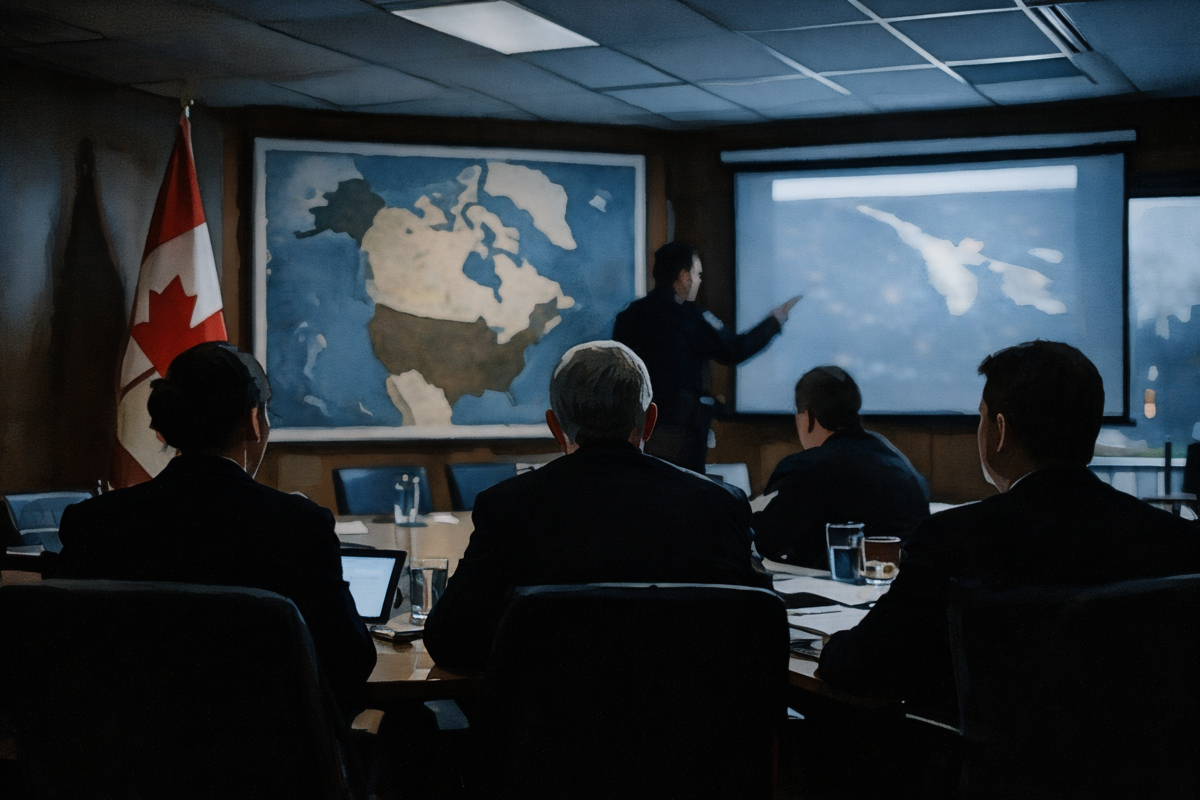
Why Canada can no longer build its future on American stability
Maybe it’s presumptuous for an American to offer advice to Canada. Fine. But I’ve watched my country twist itself into something unrecognizable, and I can see where the fractures lead. What the hell — here goes: Canada has a once-in-a-century chance to decide its own fate before someone else decides it for them.
Canada is entering a decade that will define its place in the world more than any era since Confederation, though most citizens will barely notice it happening. Strategy does not always arrive with fireworks or budgets or announcements; sometimes it arrives as a quiet choice made now that prevents a crisis ten years later. For more than seventy years, Canada’s assumptions have been stable: the United States would remain democratic, reliable, rational, and primarily outward-facing. That assumption built pipelines, train lines, trade routes, doctrine, and even identity. It created a mental architecture in which Canada understood itself primarily in relation to someone else.
Now the ground is shifting beneath that architecture. Whether Americans acknowledge it or not, the world can already see the United States entering a phase of volatility that could last a political generation. In one future, the U.S. rights itself and recommits to democratic norms. In another, it continues fragmenting into regional contest, institutional erosion, and punitive federal policy that treats allies as bargaining chips. There is also the middle future — perhaps the most likely — where America oscillates, neither collapsing nor stabilizing, but remaining fundamentally unreliable as a partner. Old assumptions are being pulled apart. Canada can either wait to see what emerges, or it can build a country capable of surviving all three versions of its neighbor.