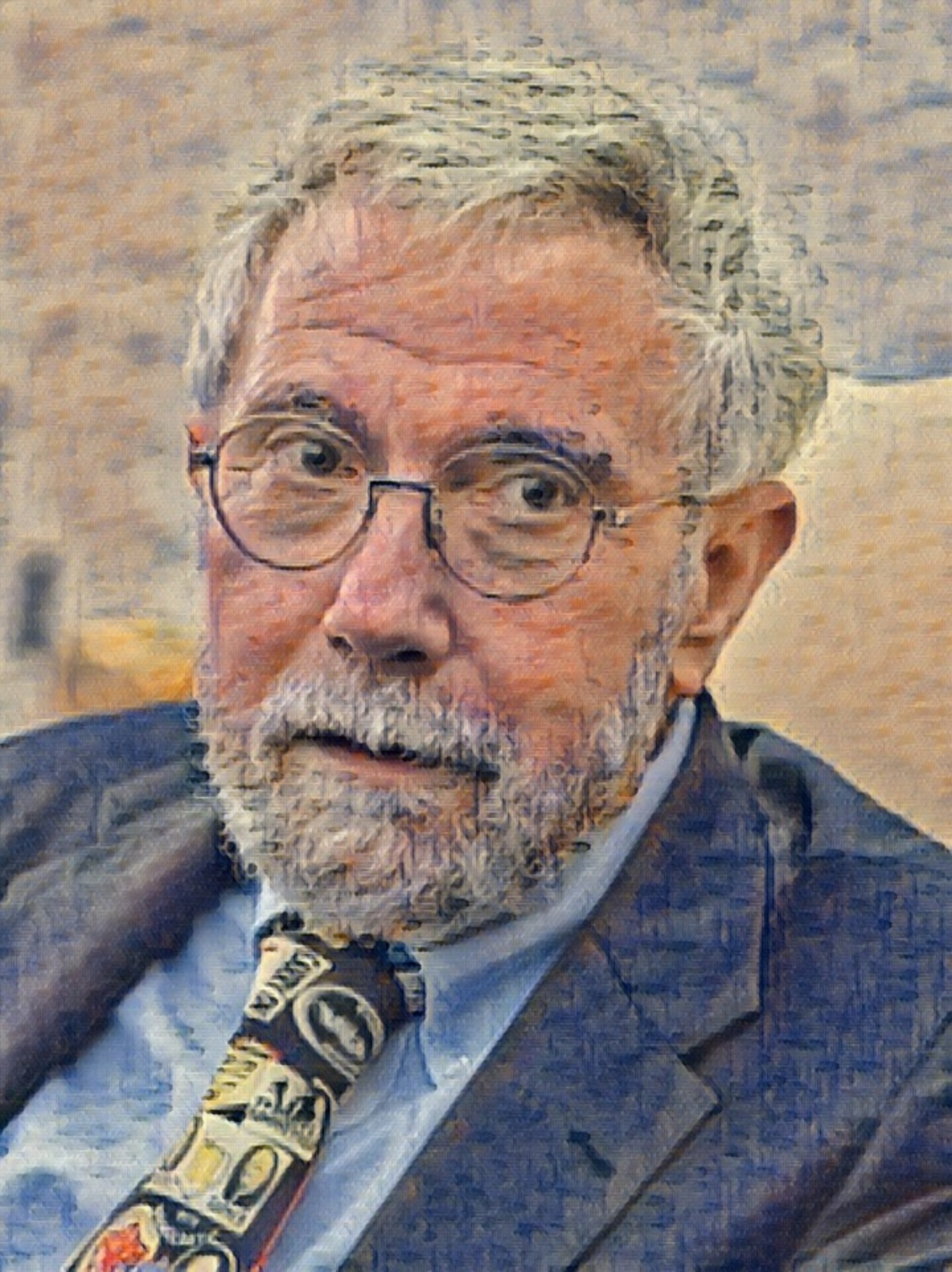
Paul Krugman has spent decades shaping economic thought. Now, the Nobel laureate finds himself branded a “Deranged BUM” by the sitting president — and the fight is about far more than words.
The glow of the MSNBC studio was cool and clinical, the light flattening every shadow. A makeup artist dusted powder across Paul Krugman’s forehead, dulling the shine. Behind the cameras, the faint hum of lamps filled the air like static. Lawrence O’Donnell gave the cue. Krugman adjusted his glasses and leaned in, voice steady.
“If you actually understand how jobs reports are compiled, it would necessitate hundreds, if not thousands, of individuals being involved in the conspiracy,” he said, with the tone of a man explaining why gravity exists.
Outside, the noise was relentless — the churn of Truth Social posts, cable sound bites, market boasts. Days earlier, President Donald Trump had called him a “Trump Deranged BUM,” misspelling “history” while hailing the “BEST MARKET IN HISTOY” and threatening lawsuits without naming a cause.
Krugman’s reply landed within the hour: “Now this is flattering: Last night Donald Trump called me a ‘Deranged BUM.’ Gonna add it to my profile.”
The quiet logic of an economics lecture and the chaos of political insult have been colliding in his life for decades. It’s a far cry from the order of the world he first imagined in Albany, New York, where he was born in 1953. Back then, the loudest sound might have been the clack of a library typewriter. His path to economics started not with equations, but with Isaac Asimov’s Foundation novels, where scientists use “psychohistory” to predict and save civilizations.
At Yale, then MIT, he followed that vision, studying under Rudi Dornbusch, who taught him economics as both science and moral craft.