The city lights were still on when the tide slid back into Charleston, turning every puddle into a mirror and every brick into a blade of color. A freezer truck idled, its compressor clicking like a tired metronome. The water had that harbor smell—brackish with a rasp of metal—and you could follow it by nose from the Battery’s seawall to the low streets that hold the night. Dale Morris kept his hands in his pockets, studying the ruler-straight stain the water had drawn across the brick. “Sea level rise is going to make that even worse,” he said, voice steady as a surveyor’s tape. Tide as metronome; tide as memo.
“When the tide becomes a calendar event, you start measuring life in inches.” —Dale Morris
A block away, a Market Street bodega unlocked “open” into ankle-deep water. The owner nudged a cooler back into place and tapped the espresso machine that drifted across the counter overnight. Each step set the bottles clinking in a crate—glass keeping time with the dawn. Outside, the city’s new sound was a low, continuous hiss: tires whispering through a film of harbor water that had no business turning a weekday street into shoreline.
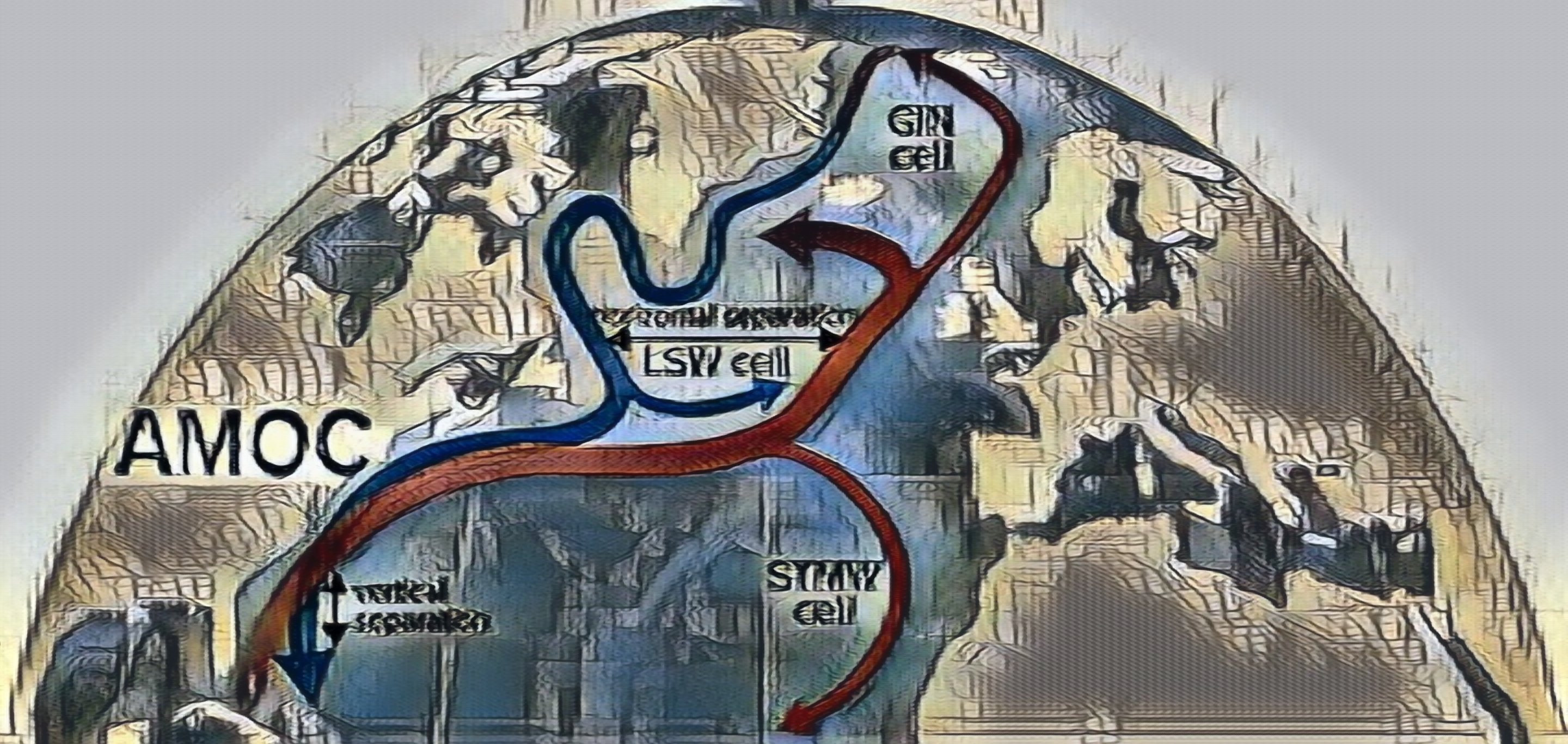
Quickly, the simple version. Think of the AMOC—the Atlantic Meridional Overturning Circulation—as the Atlantic’s lungs. At the surface, warm, salty water flows north; in the cold air it sheds heat, grows denser, and sinks. At depth, a colder return current flows south. That breath carries vast warmth toward Europe and shapes weather on both sides of the ocean. We know those lungs are weaker than they’ve been for much of the last millennium. What’s uncertain is how much, how fast, and whether a tipping point looms. What isn’t: weakening alone raises flood risk along the U.S. East Coast and can make European winters colder relative to global warming. No drama required; just physics.
By noon the low streets were a maze. Regina Duggins watched water hold at her mother’s sills for twenty hours and inventoried hazards—medicine runs, ambulances, the luck of timing. A few blocks away, Omar Santiago waded the brown sheet like a second shoreline, gauging depth by storefront, stride by stride—field notes, not policy.
“Right up to our knees. It’s insane.” —Omar Santiago