Trump brought a sledgehammer to that dialogue.
“Articles of the best kind, on the best terms,” Monroe had said when ordering his Blue Room suite from Paris². He wanted refinement to reflect the republic. Trump, by contrast, just wanted something loud enough to be seen from orbit.
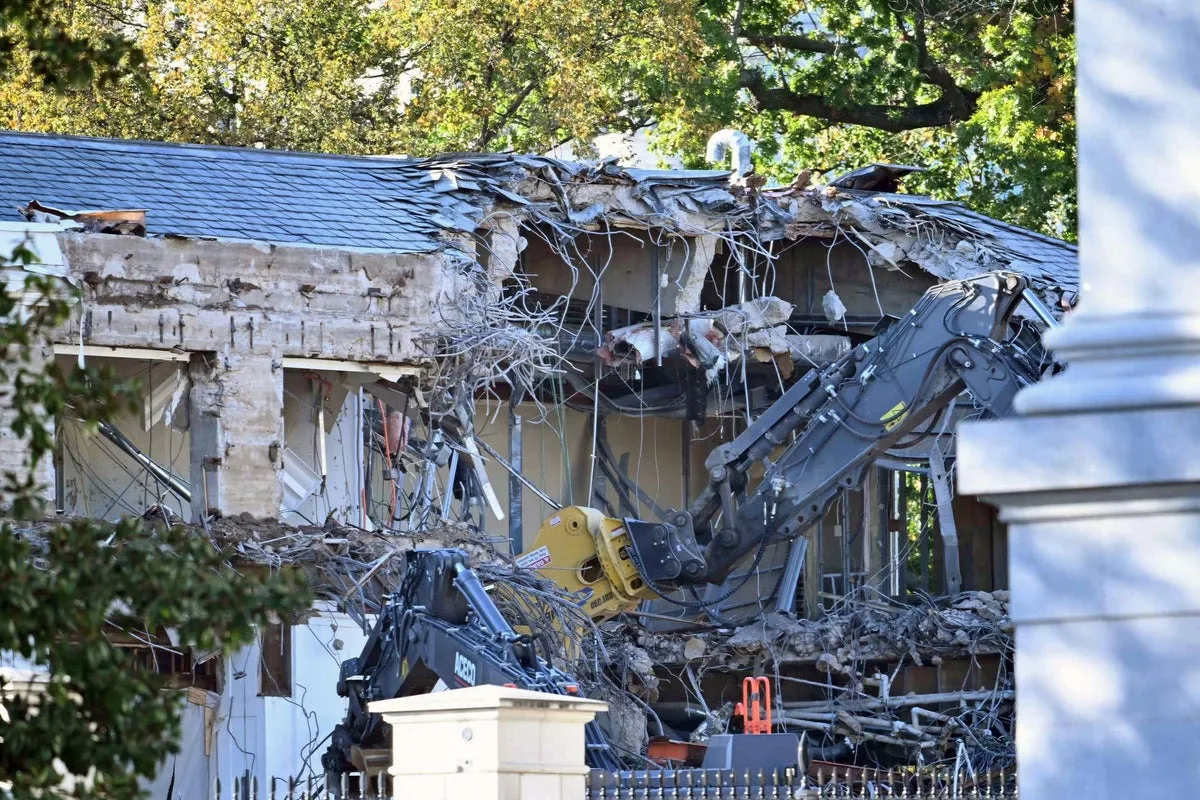
And so came the 90,000‑square‑foot ballroom. Plopped like a banquet hall onto a national landmark. No federal review. No architectural coherence. No trace of shame. Just renderings that looked like a cross between a gilded bunker and a hedge fund’s idea of Versailles.
“We have a lot of construction going on,” Trump said to a visiting sports team as if announcing a patio remodel⁴. “It just started today.”
This is the part where the country blinked. Not in surprise — that left years ago — but in weary disbelief.
To be fair, the White House has always reflected the president within it. Teddy Roosevelt demanded axial views and paneled oaks to banish Victorian clutter. Truman gutted the place down to its skin and built a steel interior after the floors nearly gave way, then installed the now‑iconic South Portico balcony — much to the horror of traditionalists, who called it a “mutilation.”⁶ But even then, Truman still cared about proportion. He defended his balcony on architectural grounds, not ego.
That’s the difference. The house was always unfinished. But it was never careless.
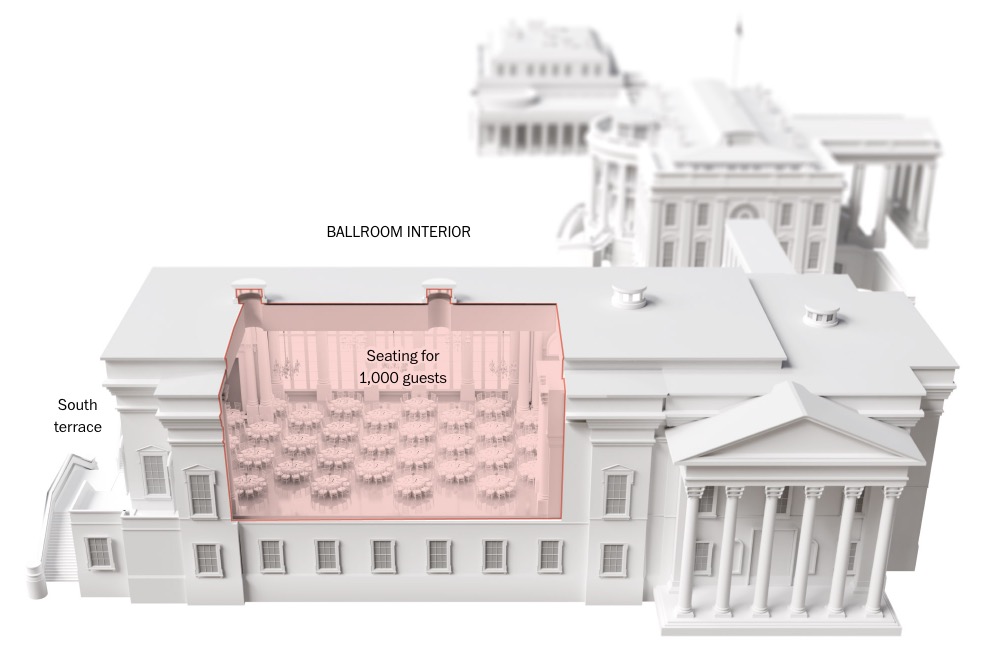
So now we ask: What next? How do we rebuild — not just the East Wing, but the idea that the People’s House isn’t a backdrop for spectacle?
We start here: remove the ballroom. Dismantle it, piece by oversized piece, and salvage what we can. Then rebuild the East Wing shell using historically respectful massing. Instead of another monument to ego, insert a discreet, flexible event space — enough for ceremony, not for showboating⁸.
“The White House is first and foremost a public trust,” reads the NPS Design Guidelines from 1997⁵. Somehow that line has aged better than half the furniture.
Above ground, the materials speak softly: painted masonry, limestone trim, and a hipped roof. No need to dazzle — only to harmonize.