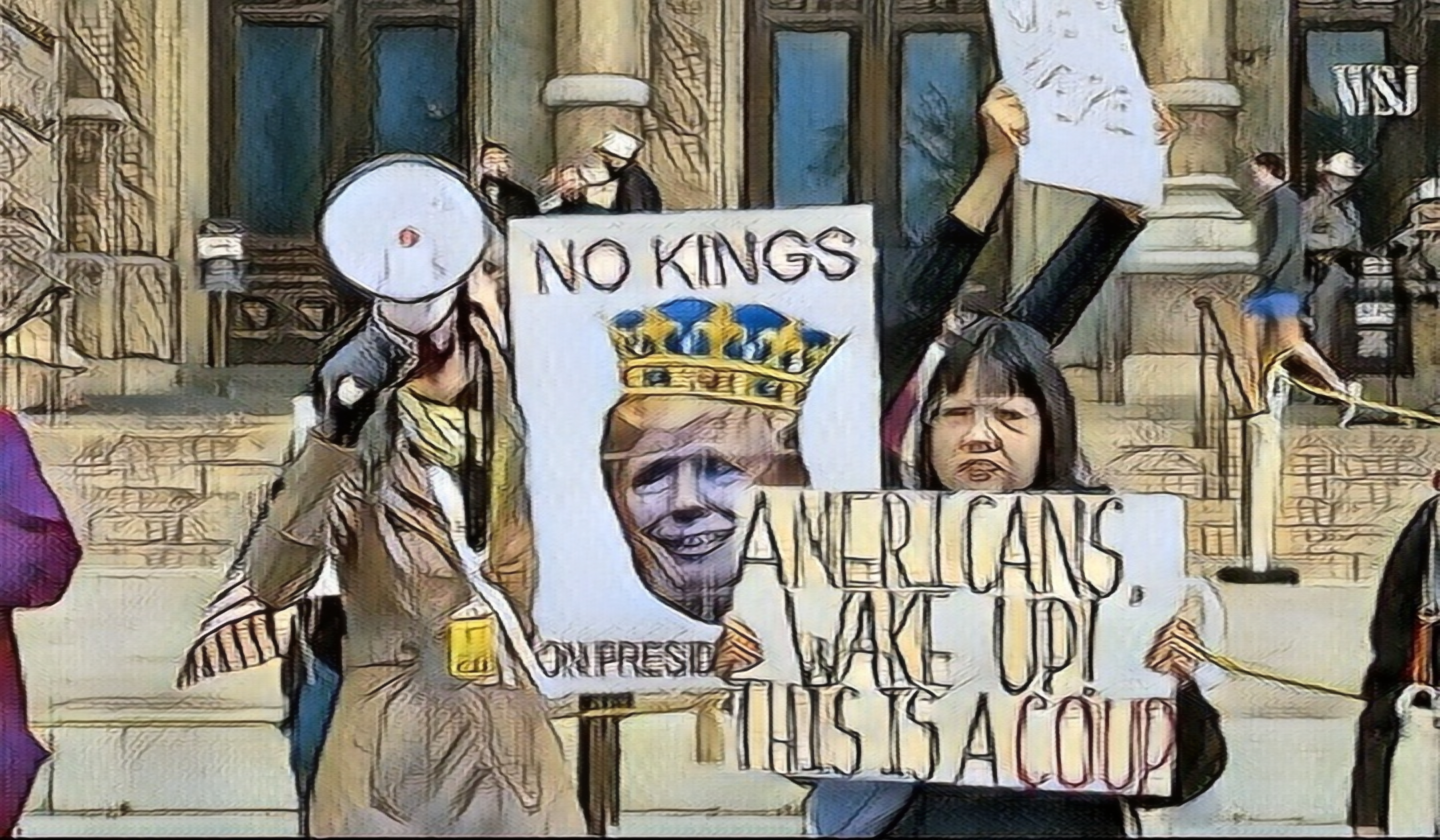
Trump won. Not just the election—he won the premise. He’s not back in office to govern. He’s here to rule.
He told Time magazine that the U.S. economy wasn’t a system or a network. It was something simpler: a store. “It’s a giant, beautiful store,” he said. “And on behalf of the American people, I own the store. I set prices.” He said this without irony, without metaphor. Not as a flourish. As fact.
“I own the store. I set prices.”
The message wasn’t subtle. It was territorial. In Trump’s second term, the country isn’t a republic to be led—it’s inventory to be managed. The president isn’t a public servant; he’s the landlord, the cashier, the security guard, and the guy locking up at night.
Within weeks, the machinery backed it up. When the U.S. Department of Transportation moved to block New York’s congestion pricing plan—a local initiative to reduce traffic and fund transit—Trump took credit personally. “CONGESTION PRICING IS DEAD. Manhattan, and all of New York, is SAVED,” he wrote on Truth Social. Then, in all caps: “LONG LIVE THE KING.”
The official White House account reposted the statement alongside a fake magazine cover showing Trump seated, robed, and crowned, against a photoshopped New York skyline. The image wasn’t satire. It was branding.
None of this is improvisational. The “I alone can fix it” line from 2016 wasn’t just bravado—it was the opening chapter. Trump has spent years laying down the same message in louder and sharper forms. He doesn’t trust systems. He doesn’t delegate authority. He doesn’t pitch coalitions. What he wants is obedience.
And now, with fewer legal guardrails, fewer advisors who say no, and a Republican Party largely remade in his image, he has the tools to impose it.