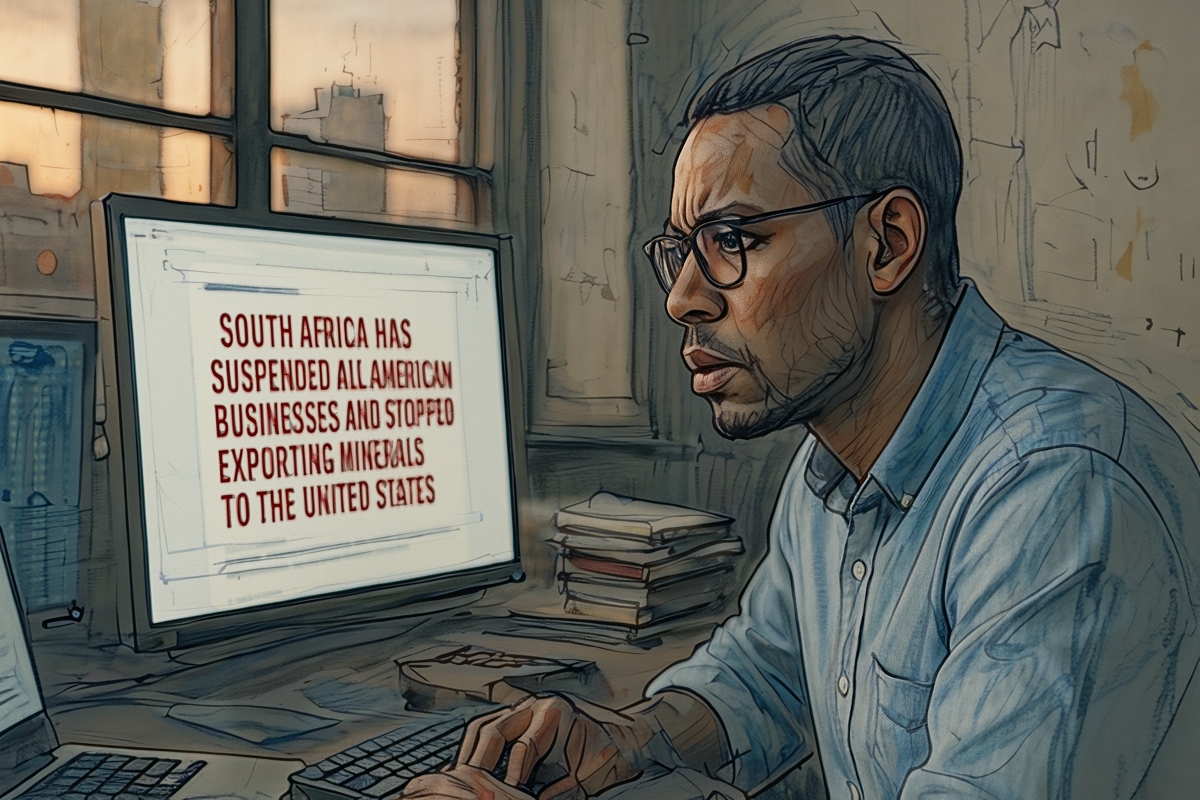
How Trump’s Africa Policy Left the U.S. Exposed to a Single Mineral Hoax
The light in the office had that late-afternoon shimmer—gold filtered through smog and glass, faintly metallic. Sipho clicked on the image again, frowning. It was everywhere: the same blurry screenshot of an all-caps post claiming South Africa had suspended all American businesses and cut off mineral exports to the United States. It smelled like theater, like the kind of online drama that surged hot and fast then vanished by morning. But the inbox was filling up. A German buyer wanted clarification. A stateside supplier flagged it as urgent. And someone from procurement had already slapped a warning label on the next shipment to Detroit.
There had been no directive. No memo. No freight hold. Just a whisper that metastasized.
He opened a new tab and typed faster.
“Facts are less shareable than fury,” a friend would text him later. Sipho already knew that.
What he didn’t yet know—and what the screens couldn’t show—was how the fantasy of a rupture had outpaced the reality of a rift. That reality, however, was already taking shape across boardrooms and bureaucracies.
Back in Washington, the timing couldn’t have been worse. Just days before the rumor detonated online, the Trump administration had frozen large tranches of foreign aid—starting with public health programs in South Africa long underwritten by USAID. Analysts at the Council on Foreign Relations called it a political broadside, one that collided with Pretoria’s land reform tensions and its genocide case against Israel at The Hague⁵. The message from Washington was unmistakable: no more money, no more patience.