What keeps running when the government “stops”
The shutdown begins on television.
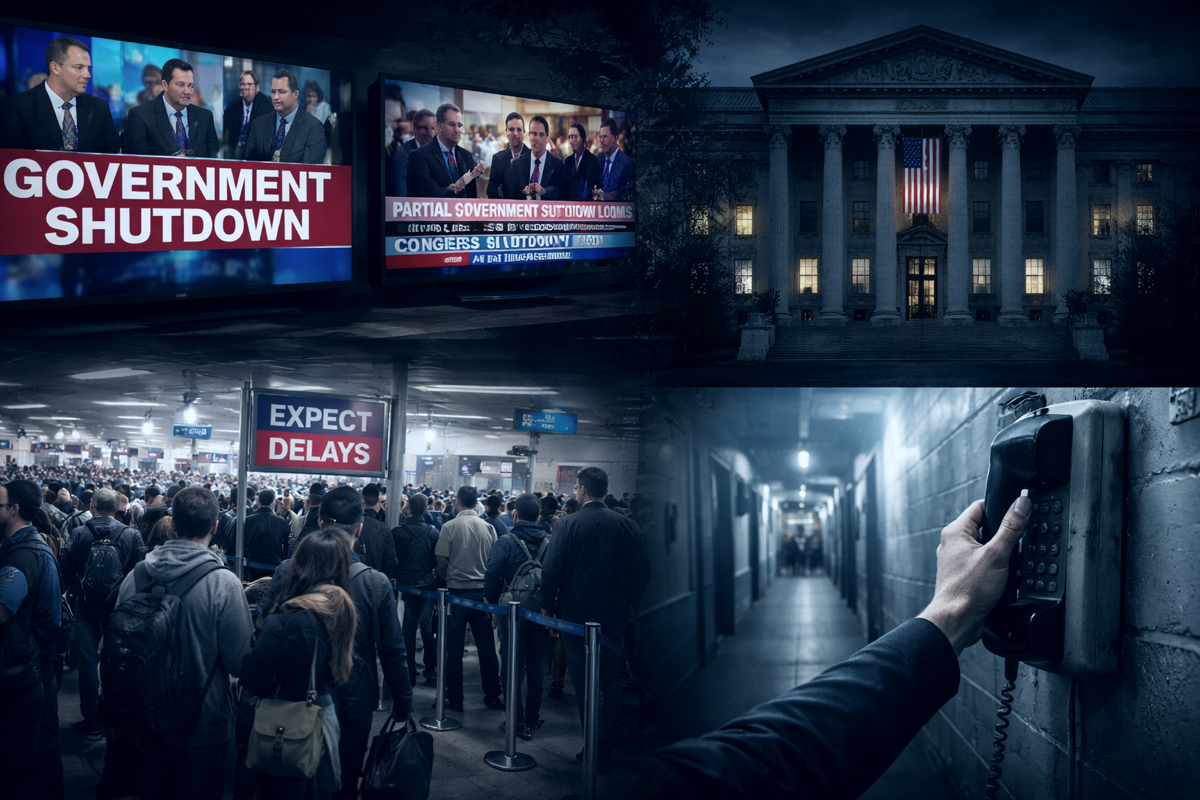
A banner rolls across the bottom of the screen. Lawmakers glare at each other in split boxes. The word border flashes in red. Reporters gather at airports to warn of long security lines and unpaid TSA agents. Viewers are invited to imagine padlocked federal buildings and darkened offices.
The Department of Homeland Security is “shut down.”
But shutdowns no longer reliably stop enforcement.
At 2:13 a.m., in a detention facility deep in the Florida Everglades, nothing looks shut down.
A lawyer in Fort Myers refreshes her phone in a fluorescent-lit hallway, waiting for a client to call. He is inside the facility. She has been told “communication options are available.” She has also been told she cannot make an unannounced visit. Two attorneys later told a federal court their clients could not call them using staff cellphones and that access was being constrained. A state contractor testified that communication channels existed. The judge has not yet ruled.¹
There is no siren. No spectacle. Just a phone that doesn’t ring.
That is what a shutdown looks like at ground level. Not a dramatic rupture. A delay. A procedural friction point. Access, technically present, functionally elusive.
In Washington, the version is louder. According to reporting in the Wall Street Journal, DHS funding lapses after a 52–47 Senate vote falls short of the 60 required.¹ The optics are immediate: airports, furloughs, press conferences.
The mechanics are quieter. The Journal reports that a lapse in DHS funding “won’t have an immediate effect on most DHS operations.” Essential employees continue reporting to work.