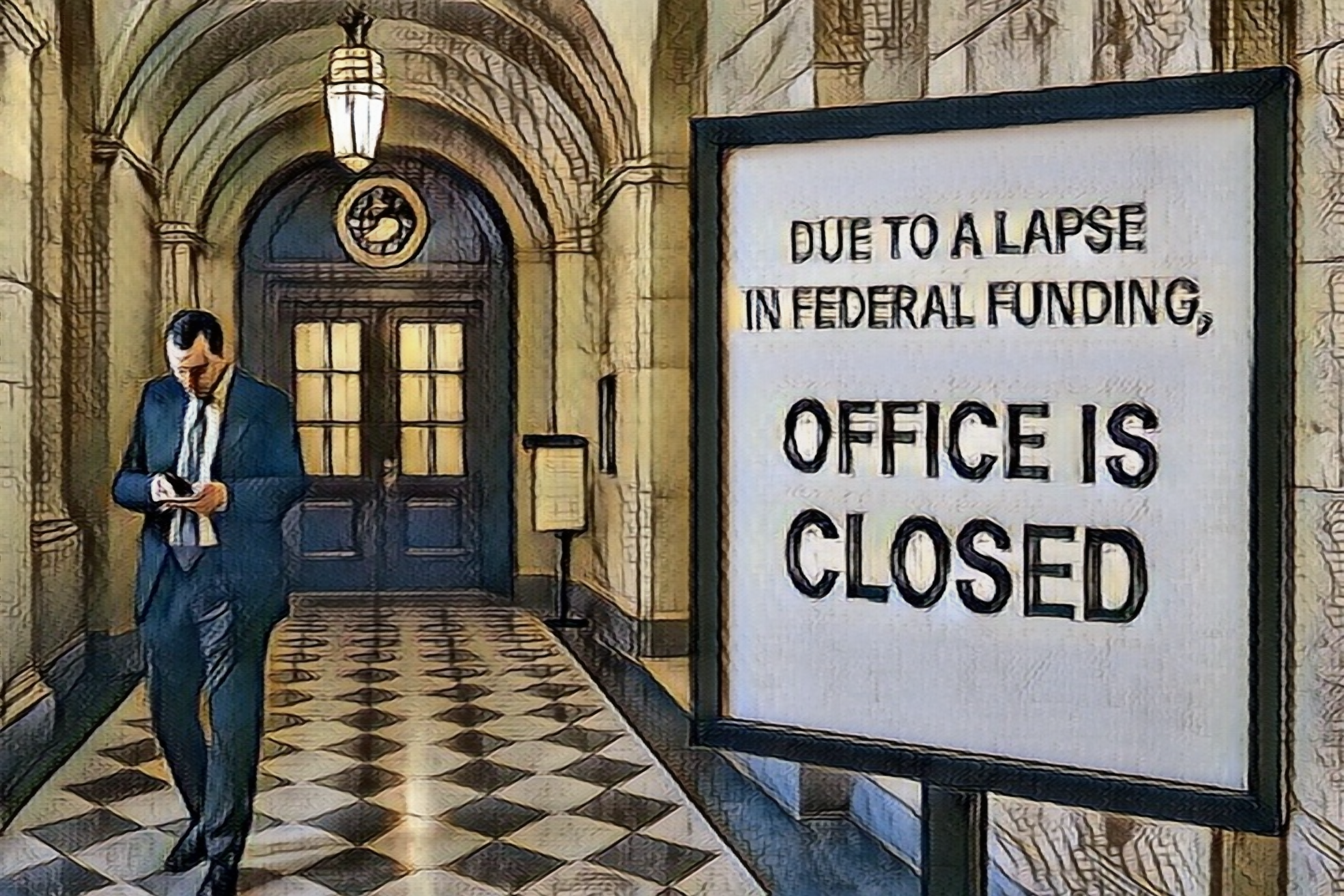
Capitol hallways always smell like reheated coffee. The scent clings to polyester suits and briefing folders, the background odor of September when the machinery of government stalls. By the end of the month, that smell isn’t just atmospheric—it’s diagnostic. The fiscal year is closing, and the system is again at risk of shutting down.
If Congress doesn’t pass twelve appropriations bills or a continuing resolution (CR) by midnight on September 30, the shutdown rituals begin: “non-essential” workers furloughed, “essential” staff reporting without pay, out-of-office notices scripted by law. The fallout spreads quickly—from families to airports to parks.
In October 2013, Jenny Brown, an IRS employee in Ogden, Utah, described the toll: “We’re really just a government family … Many of them now live paycheck to paycheck, and some had to turn to food banks during the sixteen days of the shutdown.”¹ Ten years later, her words still echo—the sense that a once-stable job had become a liability overnight.
“Many of them now live paycheck to paycheck, and some had to turn to food banks.”— Jenny Brown, IRS employee, October 2013¹
The arithmetic in 2025 is brittle. Republicans control both chambers of Congress but lack the 60 votes needed in the Senate to break a filibuster.² That leaves Democrats with one functional lever: block any CR that doesn’t include their demands. This year, those demands are specific—protect Affordable Care Act subsidies and reverse Medicaid cuts. House Republicans, pressed by Trump and the Freedom Caucus, refuse both. It’s a deliberate impasse.
In January 2019, during the longest shutdown in U.S. history, Nurel Storey, an IRS officer and union leader, put it bluntly: “You’ve worked for 10, 20, 30 years for the government. And all of a sudden things have just been shut off, for no fault of your own.”³