How power changes daily behavior long before it changes law
The horses started first.
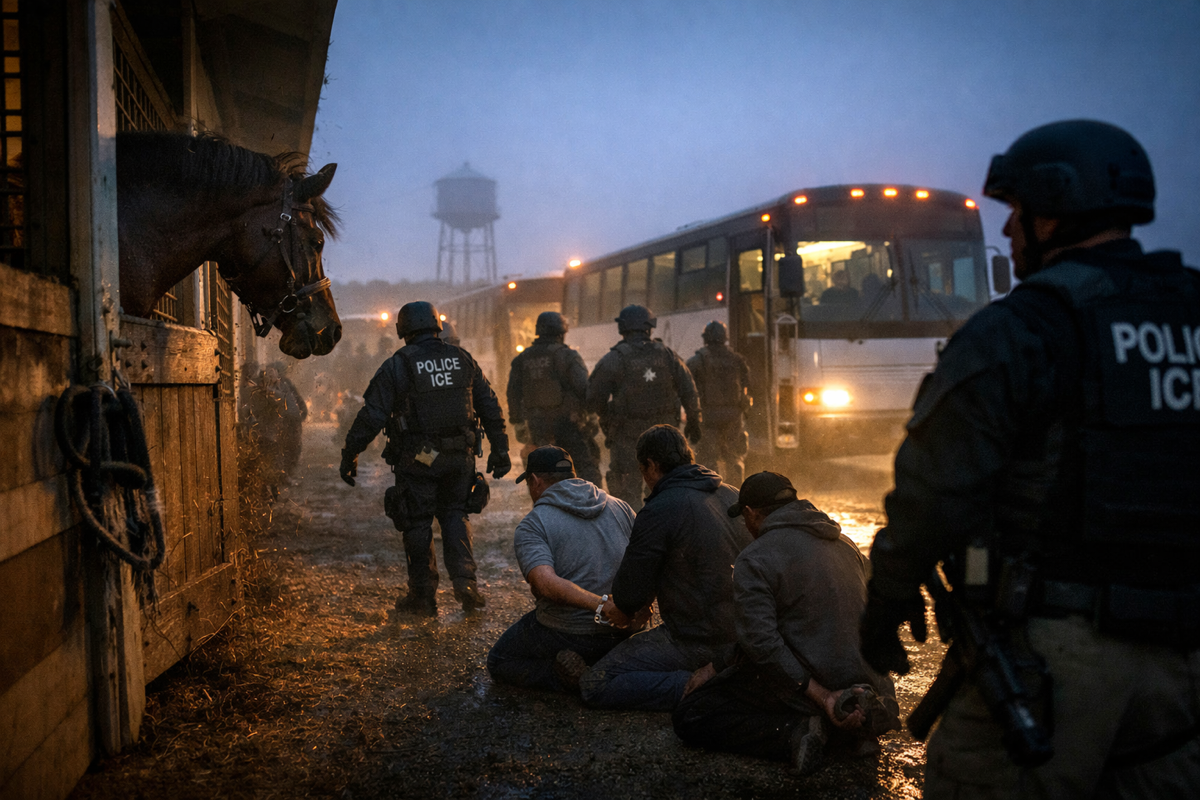
They usually do when something unfamiliar rolls across gravel before sunrise. The groom in Barn C in Caldwell, Idaho felt the vibration before he saw headlights — a low tremor through the stalls that made the animals shift and strike their doors. He had worked there long enough to know the difference between feed trucks and trainers. This felt wrong in a way he couldn’t name yet.¹
By the time he stepped outside, the buses were already turning in.
They didn’t rush. They didn’t hesitate. They came in slow, deliberate, like the drivers already knew exactly where to stop. They lined up behind the barns and idled long enough for coffee to go unfinished, long enough for conversation to stop mid-sentence, long enough for the horses to start kicking harder.
When the doors opened, it wasn’t chaos. It was routine. Agents stepped down in tactical gear, zip ties looped through their fingers. Workers were ordered to kneel. Some were pushed into straw and slurry. IDs stacked in bins. Phones bagged. Lockers opened. An eleven-year-old boy zip-tied beside adults while horses slammed stall doors behind him.¹
Three hours later, the buses were gone.
Officials later tied five arrests to the criminal investigation that justified the raid. Hundreds were detained anyway. The racetrack reopened the next morning. The groom noticed the horses settled more slowly when trucks passed. They flinched at engine noise that hadn’t bothered them before.¹