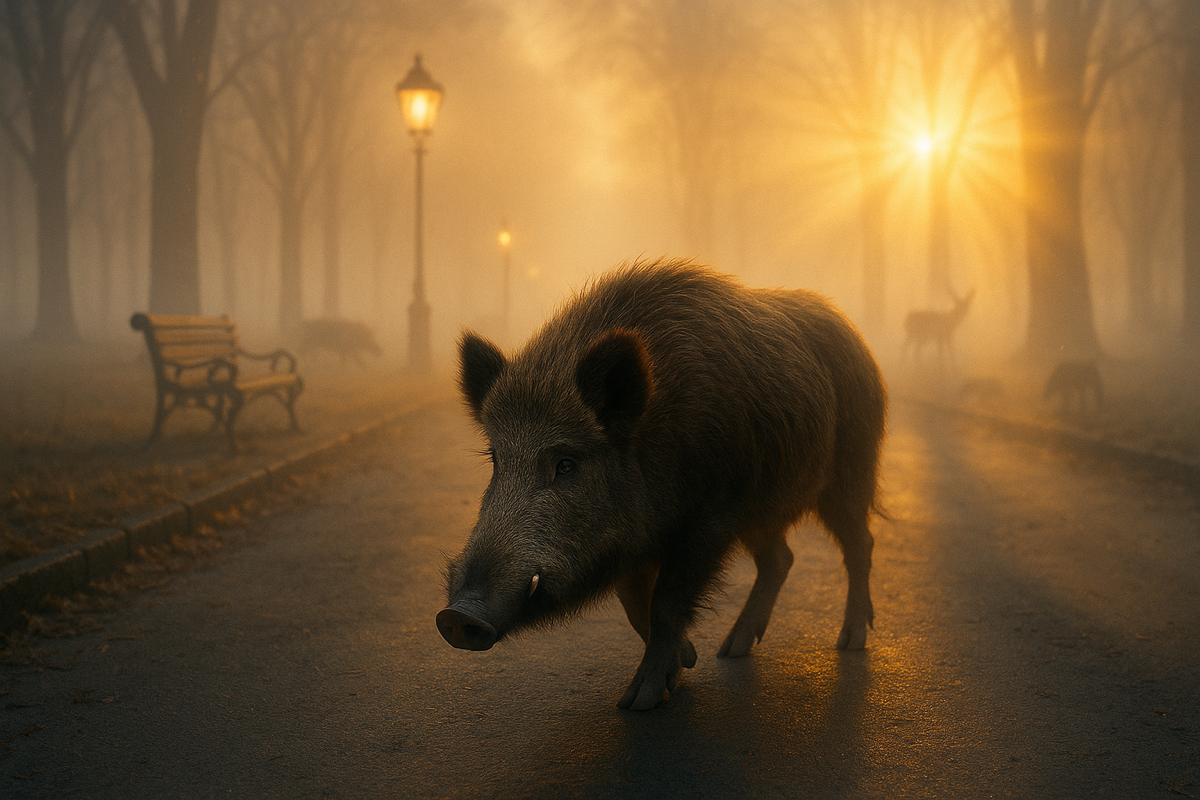
There are nights in Kyiv when the only thing louder than the drones is the laughter.
They’ve learned to live with it—the wail of sirens, the sudden blackouts, the rattle of windows from a blast miles away. That doesn’t mean they’ve gotten used to it.
A few weeks ago, Svitlanka, in Kyiv, wrote to me:
“Yesterday evening after the daytime drone attack and explosions in the forest near the military base, animals began to be noticed in the city that had never entered before... a wild boar was probably scared by the explosions and came into the city. This is in my city now, there are 12 drones, no casualties. We joke: that this is already a truce! Hahah."
"Twelve drones, no casualties. We call it a truce."
She followed up later with something heavier:
“You don't need to reply to this message. I don't want to ruin your morning and get into a conversation about this horrible event. I just want the world to know what's going on. When Trump says he's going to make a great deal with Russia... these are terrorists. It's not an accident. It happens almost every day. The missiles deliberately fly into houses. Many are dead. More are injured."
In Ukraine, that counts as peace. Not because it is, but because they’ve had worse. A house hit in Kyiv by a North Korean missile killed ten. Another night brought 44 Russian missiles and 64 drones across the sky. When you live like this long enough, you start measuring life by how bad the bad is.
This all hits home with me.
After fifty years, I still vividly remember what it feels like to be a civilian in war.